Skip to main content
Anatomy & Physiology
나의 코스
배우기
시험 준비
AI 튜터
학습 가이드
교과서적 해결책
플래시카드
탐험해 보세요
앱을 사용해 보세요
나의 코스
배우기
시험 준비
AI 튜터
학습 가이드
교과서적 해결책
플래시카드
탐험해 보세요
앱을 사용해 보세요
뒤로
Introduction to the Integumentary System definitions
9 학생들은 이 점이 도움이 되었다고 느꼈습니다
카드를 뒤집기 위해 탭할 수 있습니다.
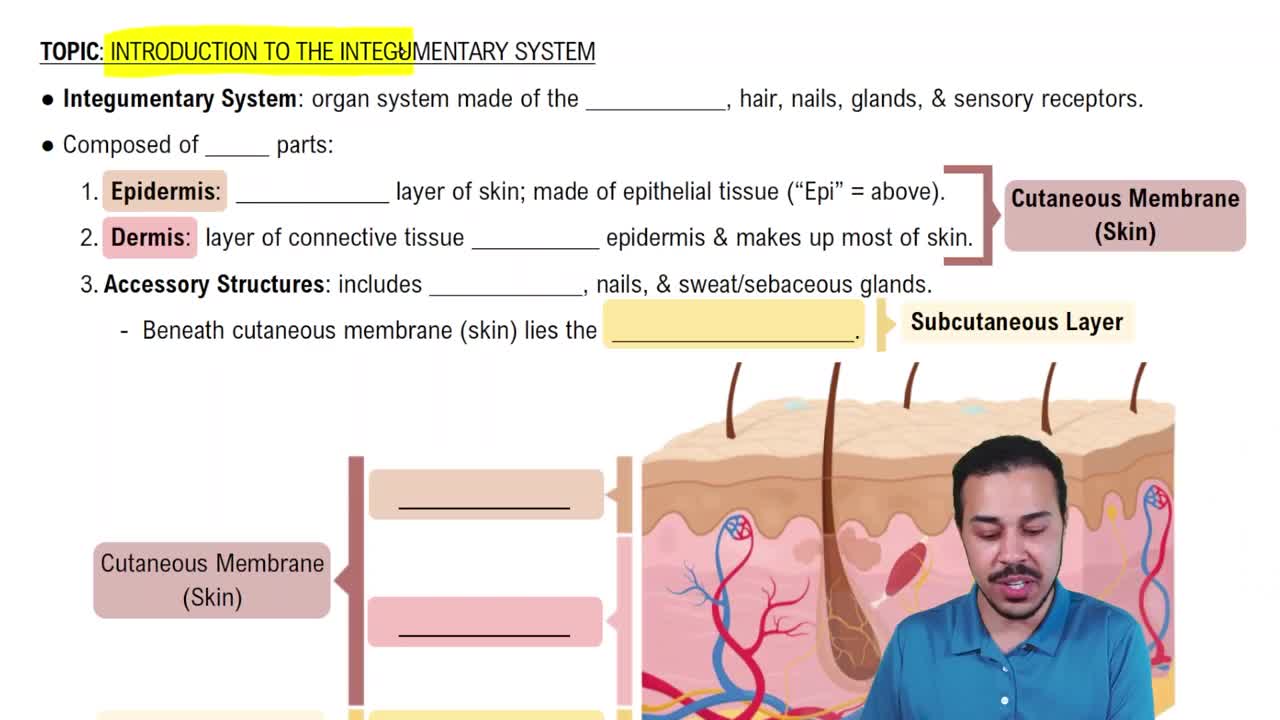
Integumentary System
카드를 뒤집기 위해 탭할 수 있습니다.
👆
Integumentary System
Comprises skin, hair, nails, glands, and sensory receptors, providing protection, sensation, and homeostasis.
진행 상황 추적
컨트롤 버튼이 '내비게이션' 모드로 변경되었습니다.
1/15
관련 플래시카드
관련 실천
추천 영상
Introduction to the Integumentary System quiz #1
Introduction to the Integumentary System
39 용어
Introduction to the Integumentary System quiz #2
Introduction to the Integumentary System
39 용어
Introduction to the Integumentary System quiz #3
Introduction to the Integumentary System
40 용어
Introduction to the Integumentary System
5. Integumentary System
4 문제점
주제
Bruce
Integumentary System: Thermoregulation
5. Integumentary System
1 문제
주제
Bruce
5. Integumentary System - Part 1 of 2
4 주제
8 문제점
장
Bruce
5. Integumentary System - Part 2 of 2
5 주제
8 문제점
장
Bruce
VideoThumbView.guidedCourse
06:54
Introduction to the Integumentary System
21966
views
743
rank
3
comments
VideoThumbView.guidedCourse
03:40
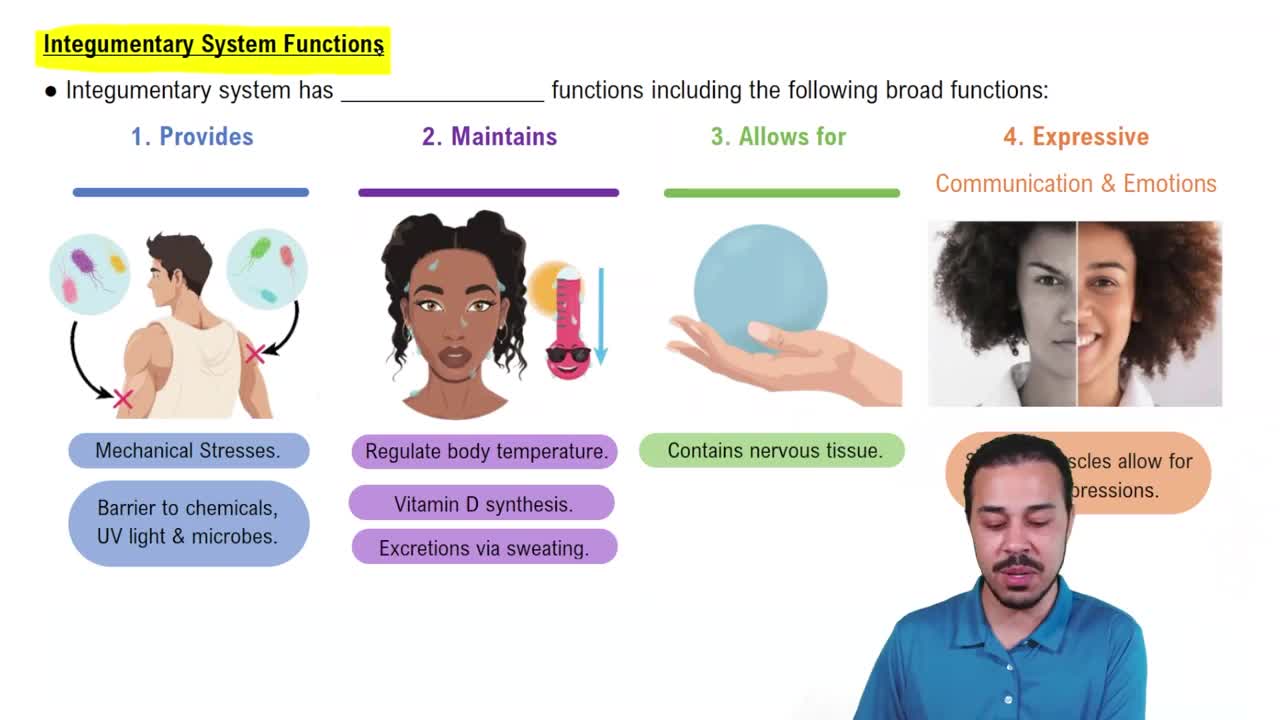
Integumentary System Functions
14253
views
364
rank
1
comments
VideoThumbView.guidedCourse
02:47
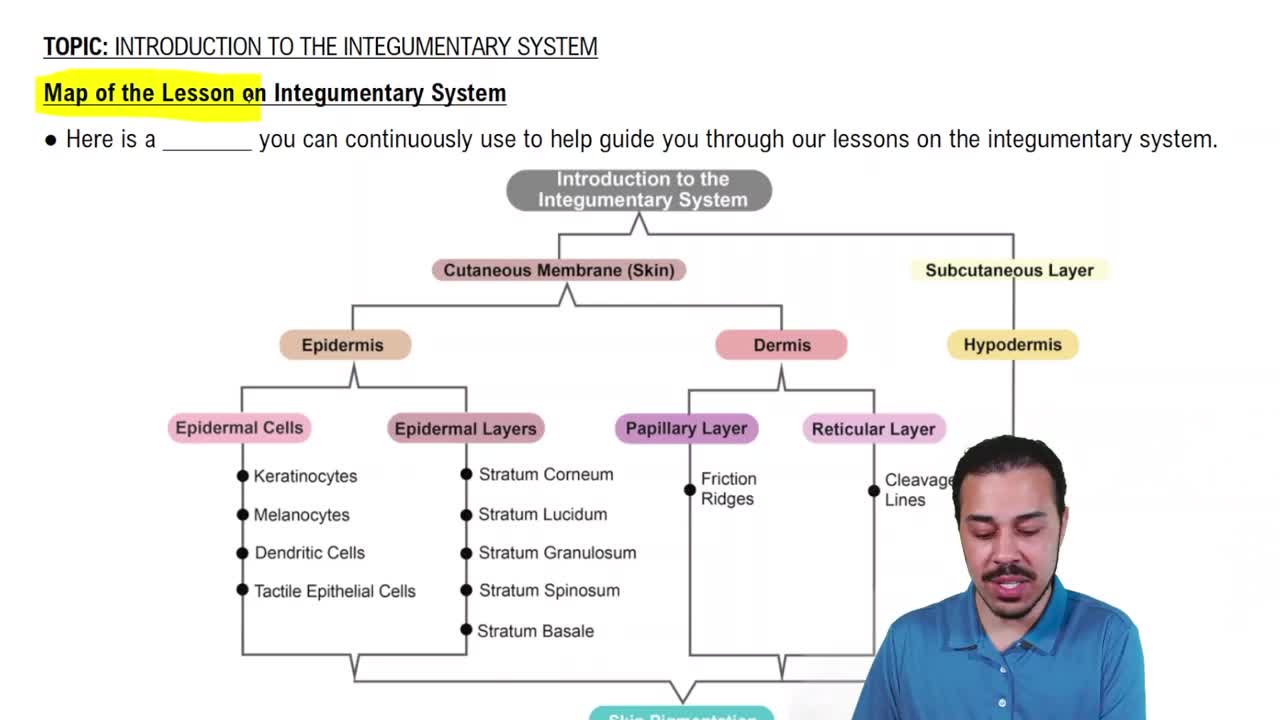
Map of the Lesson on Integumentary System
12506
views
587
rank
5
comments
이 집합의 용어 (15)
하이드의 정의
Integumentary System
Comprises skin, hair, nails, glands, and sensory receptors, providing protection, sensation, and homeostasis.
Epidermis
Outermost skin layer made of stratified squamous epithelial tissue, providing a barrier to the external environment.
Dermis
Layer beneath the epidermis, composed mainly of connective tissue, housing blood vessels, nerves, and glands.
Hypodermis
Subcutaneous layer beneath the skin, consisting of fat and connective tissue, providing insulation and cushioning.
Cutaneous Membrane
Another term for skin, consisting of the epidermis and dermis, serving as a protective barrier.
Accessory Structures
Includes hair, nails, sweat glands, and sebaceous glands, contributing to the skin's functions.
Stratified Squamous Epithelium
Type of epithelial tissue in the epidermis, consisting of multiple layers of flat cells.
Homeostasis
Process of maintaining stable internal conditions despite external changes, aided by the integumentary system.
Keratinocytes
Cells in the epidermis responsible for producing keratin, a protein that strengthens the skin.
Melanocytes
Cells in the epidermis that produce melanin, contributing to skin pigmentation and UV protection.
Sebaceous Glands
Oil-producing glands in the skin, helping to lubricate and waterproof the skin and hair.
Sweat Glands
Glands in the skin responsible for producing sweat, aiding in temperature regulation and waste excretion.
Sensory Receptors
Nerve endings in the skin that detect sensations such as touch, temperature, and pain.
Vitamin D Synthesis
Process initiated in the skin under UV light, crucial for bone health and calcium regulation.
Nonverbal Communication
Expression of emotions through facial expressions, facilitated by the skin and underlying muscles.
 뒤로뒤로
뒤로뒤로
 06:54
06:54