Skip to main content
Anatomy & Physiology
나의 코스
배우기
시험 준비
AI 튜터
학습 가이드
교과서적 해결책
플래시카드
탐험해 보세요
앱을 사용해 보세요
나의 코스
배우기
시험 준비
AI 튜터
학습 가이드
교과서적 해결책
플래시카드
탐험해 보세요
앱을 사용해 보세요
뒤로
Pressure in the Lungs and Pleural Cavity definitions
1 학생이 이 점이 도움이 되었다고 느꼈습니다
카드를 뒤집기 위해 탭할 수 있습니다.
Lungs
카드를 뒤집기 위해 탭할 수 있습니다.
👆
Lungs
Elastic organs that change size with the thoracic cavity, naturally tending to collapse due to elasticity and surface tension.
진행 상황 추적
컨트롤 버튼이 '내비게이션' 모드로 변경되었습니다.
1/15
관련 플래시카드
관련 실천
추천 영상
Pressure in the Lungs and Pleural Cavity quiz
Pressure in the Lungs and Pleural Cavity
10 용어
Pressure in the Lungs and Pleural Cavity quiz #1
Pressure in the Lungs and Pleural Cavity
11 용어
Pressure in the Lungs and Pleural Cavity
22. The Respiratory System
4 문제점
주제
Jason
Ventilation
22. The Respiratory System
1 문제
주제
22. The Respiratory System - Part 1 of 2
5 주제
9 문제점
장
Bruce
22. The Respiratory System - Part 2 of 2
1 주제
2 문제점
장
4:01
Pressure in the Lungs and Pleural Cavity Example 2
5169
views
89
rank
5:46
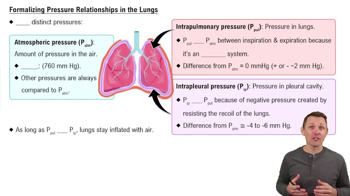
Formalizing Pressure Relationships in the Lungs
5957
views
117
rank
5:45
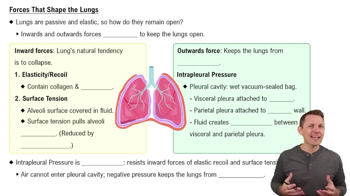
Forces That Shape the Lungs
8105
views
178
rank
1
comments
이 집합의 용어 (15)
하이드의 정의
Lungs
Elastic organs that change size with the thoracic cavity, naturally tending to collapse due to elasticity and surface tension.
Alveoli
Tiny air sacs in the lungs where gas exchange occurs, lined with fluid that creates surface tension.
Surfactant
Substance that reduces surface tension in the alveoli, preventing lung collapse.
Intrapleural Pressure
Negative pressure within the pleural cavity that prevents lung collapse by resisting elastic recoil.
Pleural Cavity
Space between the visceral and parietal pleura, containing fluid that creates adhesion.
Visceral Pleura
Membrane attached to the lung surface, part of the pleural cavity.
Parietal Pleura
Membrane attached to the chest wall, part of the pleural cavity.
Atmospheric Pressure
Pressure exerted by the weight of the atmosphere, typically 760 mmHg at sea level.
Intrapulmonary Pressure
Pressure within the lungs that equalizes with atmospheric pressure during breathing.
Elastic Recoil
Tendency of the lungs to return to their original size after being stretched.
Surface Tension
Cohesive force at the surface of a liquid, causing alveoli to tend to collapse.
Thoracic Cavity
Body cavity that houses the lungs and heart, changes size during breathing.
Collagen
Protein in connective tissue providing strength and structure to the lungs.
Elastin
Protein in the lungs that allows them to stretch and recoil like a rubber band.
Negative Pressure
Pressure lower than atmospheric, creating a suction effect in the pleural cavity.
 뒤로뒤로
뒤로뒤로

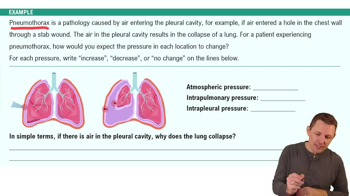
 4:01
4:01