Anatomy & Physiology
나의 코스
배우기
시험 준비
AI 튜터
학습 가이드
교과서적 해결책
플래시카드
탐험해 보세요
앱을 사용해 보세요
나의 코스
배우기
시험 준비
AI 튜터
학습 가이드
교과서적 해결책
플래시카드
탐험해 보세요
앱을 사용해 보세요
뒤로
Primary and Secondary Response of Adaptive Immunity definitions
카드를 뒤집기 위해 탭할 수 있습니다.
Adaptive Immunity
카드를 뒤집기 위해 탭할 수 있습니다.
👆
Adaptive Immunity
A type of immunity that develops as a response to exposure to an antigen, involving memory cells for future protection.
진행 상황 추적
컨트롤 버튼이 '내비게이션' 모드로 변경되었습니다.
1/15
관련 플래시카드
추천 영상
Primary and Secondary Response of Adaptive Immunity quiz
Primary and Secondary Response of Adaptive Immunity
10 용어
6:59
Primary and Secondary Response of Adaptive Immunity
1014
views
11
rank
이 집합의 용어 (15)
하이드의 정의
Adaptive Immunity
A type of immunity that develops as a response to exposure to an antigen, involving memory cells for future protection.
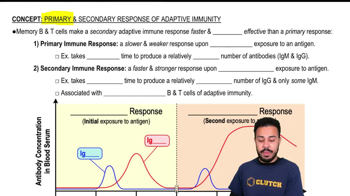
Primary Immune Response
The initial, slower, and weaker immune response upon first exposure to an antigen, primarily producing IgM antibodies.
Secondary Immune Response
A faster and stronger immune response upon re-exposure to an antigen, primarily producing IgG antibodies.
Memory B Cells
Cells that remember past antigens and enable a faster and stronger immune response upon re-exposure.
Memory T Cells
Cells that persist after an infection and help in mounting a quicker immune response upon re-exposure.
IgM Antibodies
The first class of antibodies produced in response to an initial antigen exposure, indicating a primary immune response.
IgG Antibodies
A more effective class of antibodies produced during a secondary immune response, allowing for rapid pathogen elimination.
Antigen
A substance that triggers an immune response, leading to the production of antibodies.
Antibody Class Switching
The process by which B cells change the type of antibody they produce, from IgM to IgG, for a more effective response.
Plasma Cells
Cells derived from B cells that produce antibodies to fight against antigens.
Immunological Memory
The ability of the immune system to respond more rapidly and effectively to pathogens that have been encountered previously.
Pathogen
An organism or substance capable of causing disease, targeted by the immune system.
Antibody Concentration
The level of antibodies present in the blood serum, indicating the strength of an immune response.
Exposure
The process of coming into contact with an antigen, triggering an immune response.
Tertiary Exposure
A subsequent exposure to the same antigen, leading to an even more effective immune response than the secondary response.