Skip to main content
Anatomy & Physiology
나의 코스
배우기
시험 준비
AI 튜터
학습 가이드
교과서적 해결책
플래시카드
탐험해 보세요
앱을 사용해 보세요
나의 코스
배우기
시험 준비
AI 튜터
학습 가이드
교과서적 해결책
플래시카드
탐험해 보세요
앱을 사용해 보세요
뒤로
Anatomy & Physiology: also unit 1 prep
카드를 뒤집기 위해 탭할 수 있습니다.
What happens when NAD+ becomes NADH?
카드를 뒤집기 위해 탭할 수 있습니다.
👆
What happens when NAD+ becomes NADH?
NAD+ is
reduced
and
gains chemical energy
by accepting electrons.
진행 상황 추적
컨트롤 버튼이 '내비게이션' 모드로 변경되었습니다.
1/39
추천 영상
VideoThumbView.guidedCourse
06:20
Phases of Glycolysis
19957
views
350
rank
VideoThumbView.guidedCourse
01:29
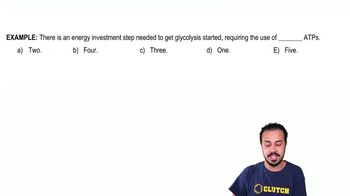
Glycolysis Example 1
15874
views
202
rank
VideoThumbView.guidedCourse
02:49
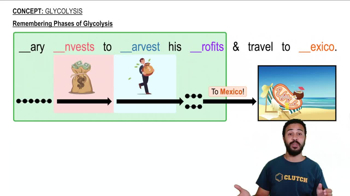
Remembering Phases of Glycolysis
18147
views
282
rank
이 집합의 용어 (39)
하이드의 정의
What happens when NAD+ becomes NADH?
NAD+ is
reduced
and
gains chemical energy
by accepting electrons.
Order the stages of cellular respiration correctly.
Glycolysis, pyruvate oxidation, citric acid cycle, and the electron transport system.
Which coenzymes shuttle electrons for the electron transport system?
NADH
and
FADH2
shuttle electrons.
What is true about the electron transport chain?
It
requires oxygen
and involves proteins in the
inner membrane of mitochondria
.
What is the final electron acceptor in cellular respiration?
Oxygen is the final electron acceptor, combining with electrons and protons to form water.
During glycolysis and the citric acid cycle, glucose energy is converted to what?
Energy is converted to
electrons on NADH and FADH2
.
How is energy from glucose breakdown used in mitochondria?
It creates a
proton gradient
used to generate ATP.
What does the formula C6H12O6 represent?
A molecule with 6 carbon, 12 hydrogen, and 6 oxygen atoms.
Which four elements make up about 96% of body weight?
Carbon, oxygen, hydrogen, and nitrogen.
What characterizes lipids referred to as oils?
They contain
unsaturated fatty acids
.
How is genetic information coded in DNA?
By the
sequence of nucleotides
.
Which statement does NOT characterize proteins?
Proteins are
not
the molecular carriers of coded hereditary information.
Which organelle produces ATP aerobically?
The
mitochondrion
produces ATP aerobically.
What forms the mitotic spindle?
Microtubules form the mitotic spindle.
Which organelle packages proteins for membrane insertion or exocytosis?
The
Golgi apparatus
packages proteins.
What is the nonpolar region of a phospholipid?
The
fatty acid tails
are the nonpolar region.
What is the polar, hydrophilic region of a phospholipid?
The
phosphate head
is polar and hydrophilic.
During anaphase, what happens to chromosomes?
Chromosomal centromeres split and chromosomes migrate to opposite ends.
What happens during telophase?
Chromosomes uncoil to form chromatin.
What is the role of the endoplasmic reticulum?
It plays a role in synthesizing steroid-based hormones and proteins.
Which organelle facilitates peptide bond formation between amino acids?
Ribosomes facilitate peptide bond formation.
What is the function of microtubules in cells?
They form spindle fibers, organize organelles, and give shape to the cell.
What are nucleoli?
Dense spherical bodies in the nucleus that synthesize ribosomal RNA.
Where is most of the cell's genetic material housed?
In the nucleus.
Which RNA brings amino acids to the ribosome during protein synthesis?
Transfer RNA (tRNA) brings amino acids.
Describe the plasma membrane.
A
phospholipid bilayer
surrounding the cell.
What happens to cells in a hypertonic solution impermeable to solute?
Cells lose water and shrink.
Which RNAs play a role in protein synthesis?
Messenger RNA (mRNA), transfer RNA (tRNA), and ribosomal RNA (rRNA).
What is mitosis?
Division of genetic material within the nucleus.
What is a centriole?
A pinwheel array of 9 triplets of microtubules forming a hollow tube.
If DNA template strand is ACGTT, what is the mRNA sequence?
The mRNA sequence is UGCAA.
What are passive membrane transport processes?
Movement of substances down their concentration gradient without ATP.
How does oxygen enter cells during aerobic respiration?
Oxygen passively diffuses into cells down its concentration gradient.
What does a concentration gradient established by active transport represent?
Potential energy harnessed when molecules diffuse down the gradient.
Which RNA has an anticodon and attaches to specific amino acids?
Transfer RNA (tRNA).
What is cytokinesis?
Division of the cytoplasmic mass into two parts.
What is exocytosis?
The process of discharging particles from inside a cell to the outside.
What happens to a red blood cell in a hypotonic solution?
The cell swells and may burst.
Why will a cell without a nucleus ultimately die?
It cannot produce essential proteins or replicate DNA.
 뒤로뒤로
뒤로뒤로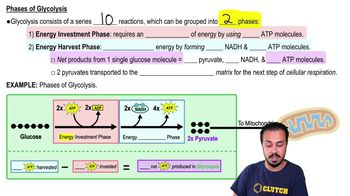
 06:20
06:20