 뒤로
뒤로Anatomy & Physiology: Anatomical Position, Directional Terms, Movements, Cavities, and Quadrants
 02:40
02:40
이 집합의 용어 (24)
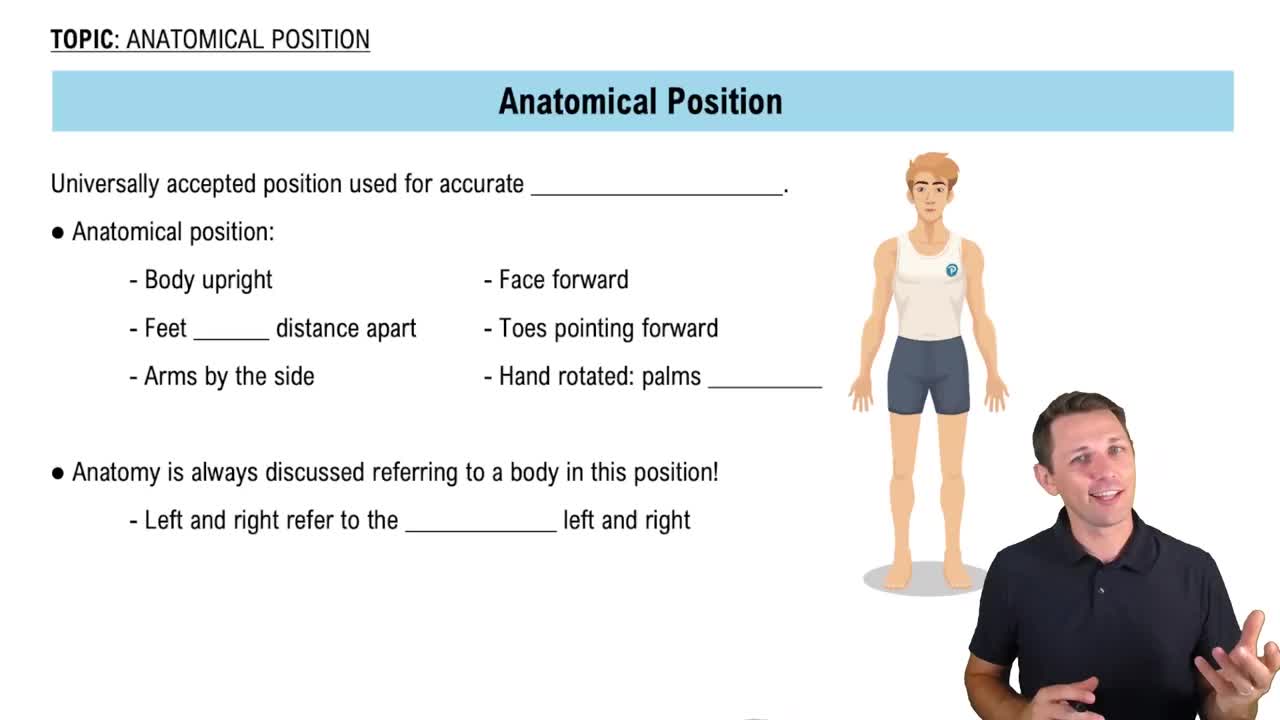
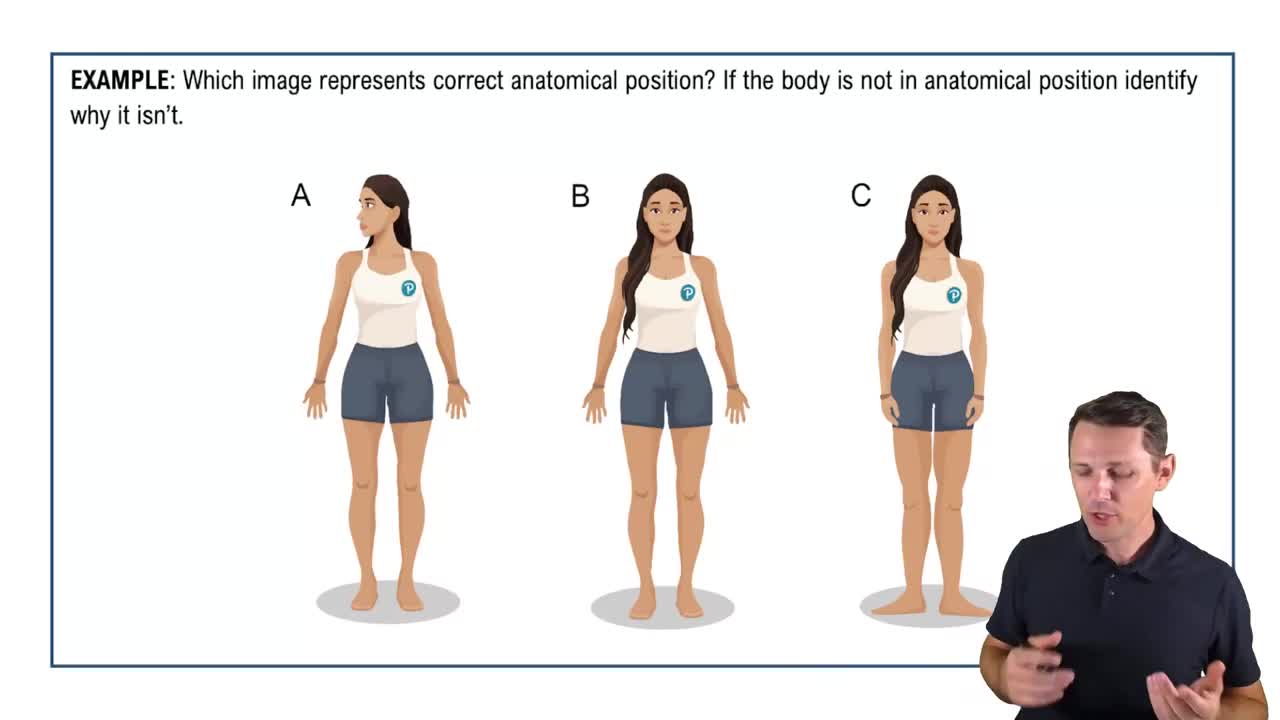
The anatomical position is the body standing upright, facing forward, arms at the sides with palms facing forward, and feet parallel.
It provides a consistent frame of reference for anatomical terminology, ensuring clear and unambiguous communication among healthcare professionals and anatomists.
Superior means toward the head or upper part of a structure.
Inferior means away from the head or toward the lower part of a structure.
Anterior (ventral) means toward the front of the body.
Posterior (dorsal) means toward the back of the body.
Medial means toward the midline of the body.
Lateral means away from the midline of the body.
Proximal means closer to the point of attachment or origin.
Distal means farther from the point of attachment or origin.
Superficial means toward or at the body surface.
Deep means away from the body surface; more internal.
Flexion is decreasing the angle between two body parts, like bending the elbow.
Extension is increasing the angle between two body parts, like straightening the knee.
Abduction is moving a limb away from the midline, like raising the arm sideways.
Adduction is moving a limb toward the midline, like lowering the arm to the side.
Rotation is moving a bone around its longitudinal axis, like turning the head side to side.
Cranial cavity: brain.
Vertebral cavity: spinal cord.
Thoracic cavity: heart and lungs.
Abdominal cavity: digestive organs.
Pelvic cavity: reproductive and some excretory organs.
The heart (in the pericardial cavity) and the lungs (in the pleural cavities).
Right Upper Quadrant (RUQ), Left Upper Quadrant (LUQ), Right Lower Quadrant (RLQ), and Left Lower Quadrant (LLQ).
The liver, gallbladder, and part of the colon.
The stomach, spleen, and part of the colon.
The appendix, cecum, and part of the small intestine.
Part of the descending colon and small intestine.