 뒤로
뒤로Anatomy & Physiology: Anatomical Terminology and Integumentary System
 02:40
02:40
이 집합의 용어 (27)
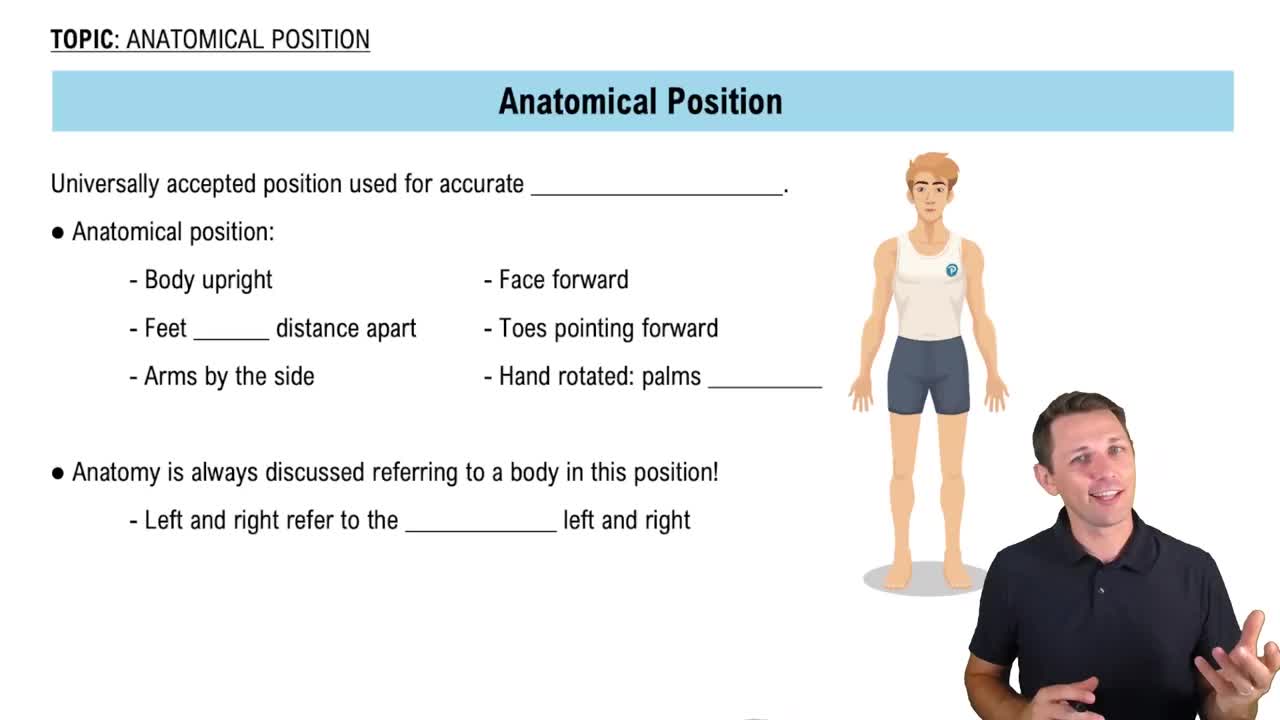
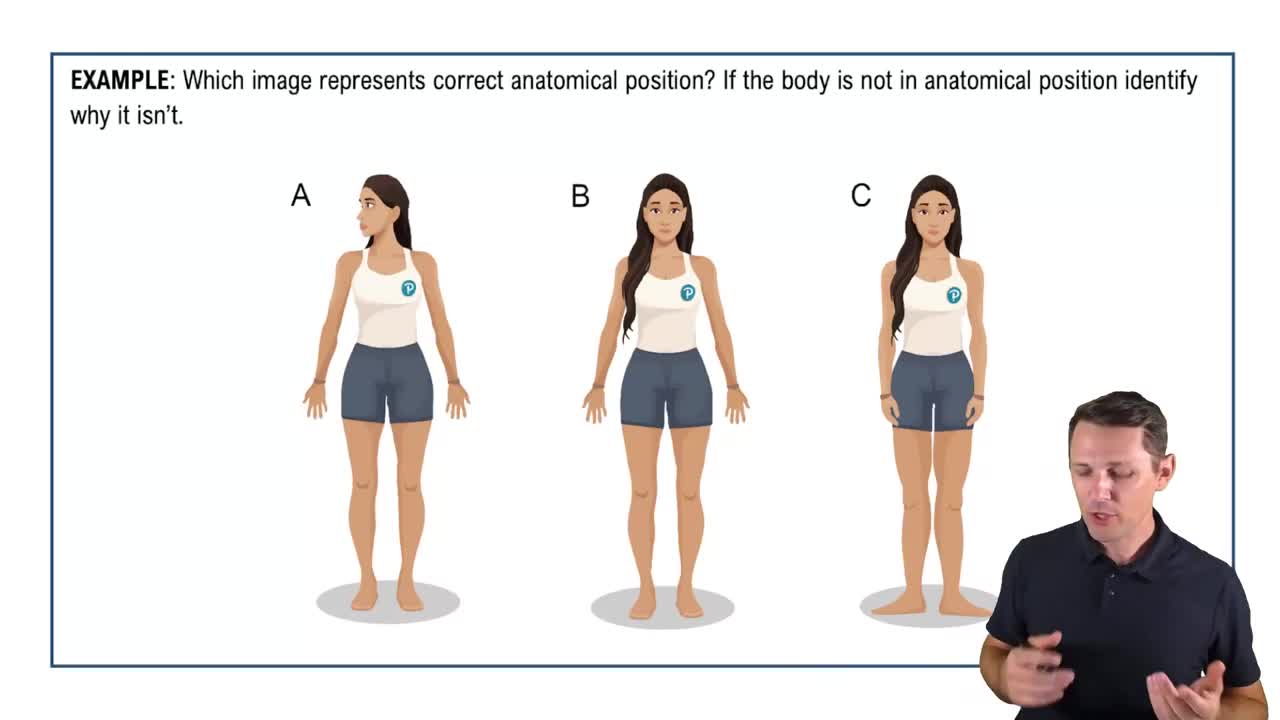
The standard reference position in anatomy where the body is standing upright, facing forward, arms at the sides with palms facing forward. It is important for consistent directional terminology.
Directional term meaning toward the head or upper part of a structure.
Directional term meaning away from the head or toward the lower part of a structure.
Directional term meaning toward the front of the body.
Directional term meaning toward the back of the body.
Directional term meaning toward the midline of the body.
Directional term meaning away from the midline of the body.
Directional term meaning between a more medial and a more lateral structure.
Directional term meaning closer to the origin of a body part or point of attachment.
Directional term meaning farther from the origin of a body part or point of attachment.
Directional term meaning toward or on the surface of the body.
Directional term meaning away from the surface, more internal.
Body plane that divides the body into left and right parts. The midsagittal plane divides equally.
Body plane that divides the body into anterior (front) and posterior (back) parts.
Body plane that divides the body into superior (upper) and inferior (lower) parts.
Includes the cranial cavity (brain) and spinal cavity (spinal cord).
Includes the thoracic cavity, mediastinum, and abdominopelvic cavity.
Right upper (RUQ), left upper (LUQ), right lower (RLQ), left lower (LLQ) used to locate organs.
From deep to superficial: stratum basale, stratum spinosum, stratum granulosum, stratum lucidum, stratum corneum.
Two layers: papillary layer (superficial) and reticular layer (deep).
Subcutaneous layer beneath the dermis composed mainly of fat and connective tissue.
Structure in the skin from which hair grows, includes hair bulb and hair papilla.
Small muscle attached to hair follicles that causes hair to stand up (goosebumps).
Sweat gland responsible for producing sweat to regulate body temperature.
Oil gland that secretes sebum to lubricate skin and hair.
Deep pressure receptor located in the dermis and hypodermis.
Touch receptor located in the papillary layer of the dermis.