 뒤로
뒤로Anatomy & Physiology: Anatomical Terms, Body Sections, Regions, and Microscopy Basics
 02:40
02:40
이 집합의 용어 (30)
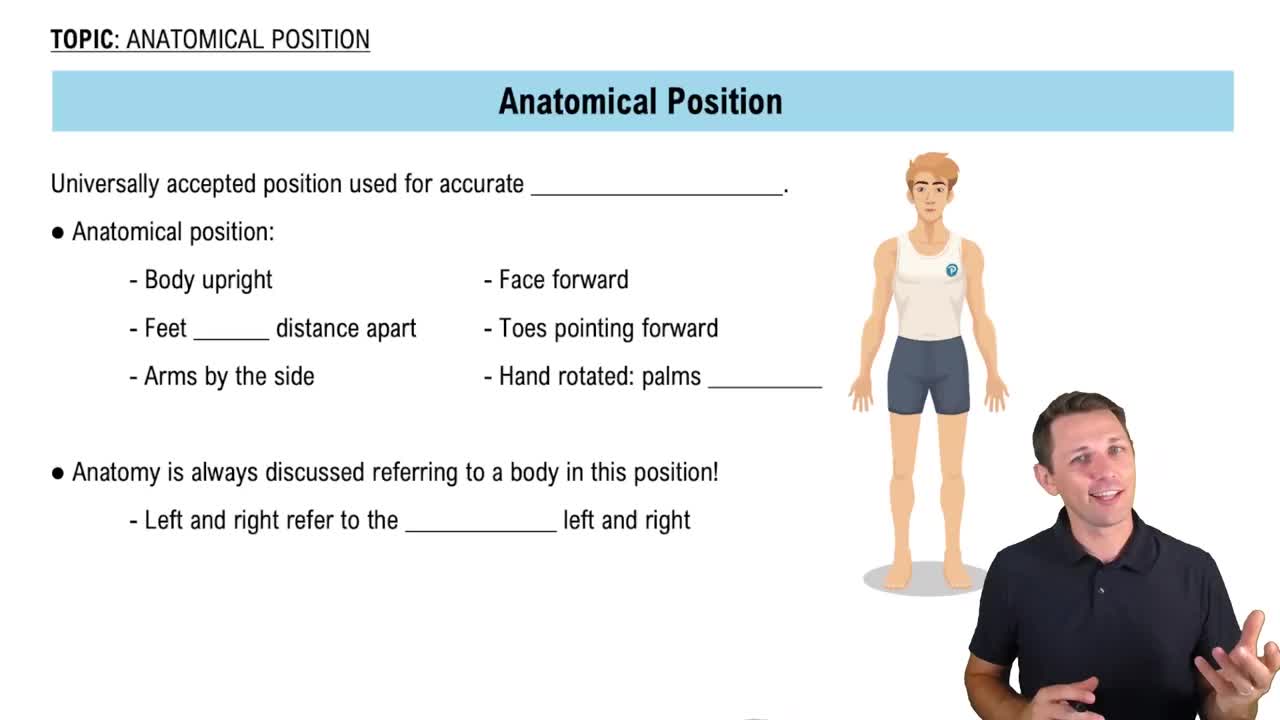
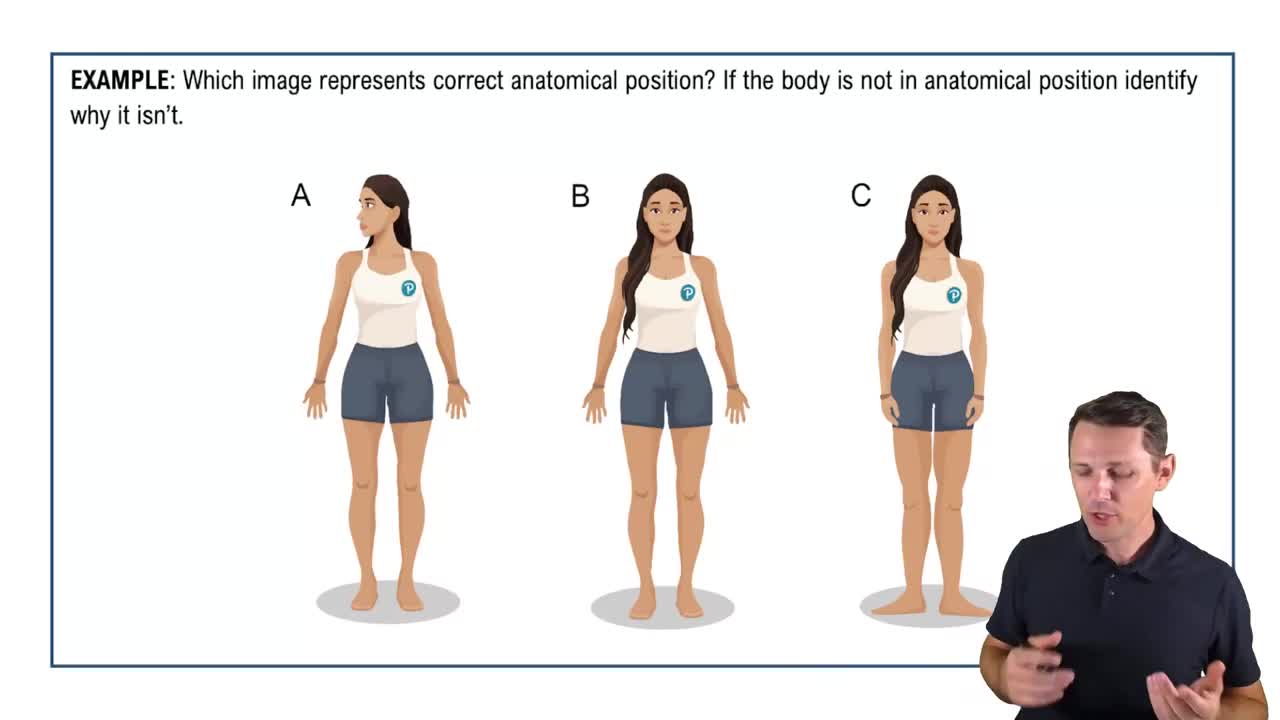
What is the anatomic position in humans?
The standard reference position where the body stands upright, facing forward, arms at the sides with palms facing forward.
Superior means toward the head or upper part of a structure; inferior means away from the head or toward the lower part.
Anterior means toward the front of the body; posterior means toward the back.
Cranial means toward the head; caudal means toward the tail or lower part of the body.
Dorsal refers to the back side; ventral refers to the front or belly side.
Proximal means closer to the point of attachment or origin; distal means farther from the point of attachment. Example: The elbow is proximal to the wrist.
Medial means toward the midline of the body; lateral means away from the midline.
Sagittal section divides the body into left and right parts; frontal section divides into front (anterior) and back (posterior); transverse section divides into upper (superior) and lower (inferior) parts.
The pectoral region refers to the chest area overlying the ribs.
The mammary region is the area of the breasts.
The sternal region is the area over the breastbone (sternum) in the center of the chest.
The abdominal region is the area between the chest and pelvis, containing digestive organs.
The umbilical region is the central area of the abdomen around the navel (belly button).
The inguinal or groin region is where the thigh meets the trunk, near the crease of the hip.
The perineum is the pelvic floor area between the anus and the reproductive organs.
The costal region refers to the area over the ribs.
The lumbar region is the lower back area between the ribs and pelvis.
The gluteal region is the buttock area.
The flank is the side area of the body between the ribs and the hip.
The axilla is the armpit area.
Carpus is the wrist; brachium is the upper arm (shoulder to elbow); antebrachium is the forearm (elbow to wrist).
Cubital refers to the posterior elbow; antecubital refers to the anterior elbow.
Palmar is the palm of the hand; digital refers to the fingers or toes.
Thigh is the upper leg from hip to knee; leg is the lower limb from knee to ankle; calf is the posterior lower leg.
The popliteal region is the area behind the knee.
Tarsal is the ankle region; plantar is the sole of the foot.
The coxal region refers to the hip area.
Key parts include ocular lens (eyepiece), objective lenses, condenser, head, arm, base, nosepiece, stage with mechanical controls, coarse and fine adjustment knobs, illuminator, and voltage regulator.
The condenser focuses light onto the specimen and is kept at the highest position; the diaphragm controls the amount of light passing through.
Microscopes should be handled carefully, cleaned after use, stored covered in a dry place, and adjusted properly to avoid damage.