 뒤로
뒤로Anatomy & Physiology: Basic Chemistry and Biomolecules
 02:13
02:13
이 집합의 용어 (27)
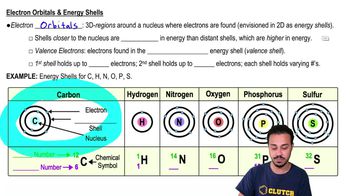
Electrons are negatively charged and orbit the nucleus. Protons are positively charged and located in the nucleus. Neutrons have no charge and are also in the nucleus.
An atom is the smallest unit of matter with properties of an element. An element is a pure substance made of only one type of atom.
The four major elements are oxygen (O), carbon (C), hydrogen (H), and nitrogen (N).
Atomic number is the number of protons. Mass number is protons plus neutrons. Isotopes are atoms of the same element with different neutrons. Radioisotopes are unstable isotopes that emit radiation.
Isotopes are produced by varying the number of neutrons in the nucleus of atoms of the same element.
The three types are solutions, colloids, and suspensions. A solvent dissolves substances, and a solute is dissolved.
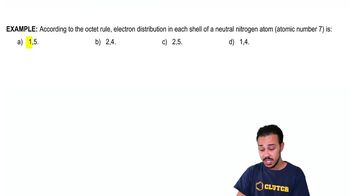
Atoms with full valence shells are stable. Atoms tend to gain, lose, or share electrons to fill their valence shell and form chemical bonds.
A molecule is two or more atoms bonded. A compound is a molecule with different elements. An ion is an atom or molecule with a charge.
Ionic bonds form by electron transfer. Nonpolar covalent bonds share electrons equally. Polar covalent bonds share electrons unequally.
A hydrogen bond is a weak attraction between a hydrogen atom and an electronegative atom. It causes water molecules to stick together, creating surface tension.
Atoms or molecules rearrange to form new substances by breaking and forming chemical bonds.
Endergonic reactions absorb energy. Exergonic reactions release energy.
The three types are synthesis, decomposition, and exchange reactions.
Factors include temperature, concentration, particle size, catalysts, and enzymes.
Enzymes speed up reactions by lowering activation energy without being consumed.
Water is a solvent, has high heat capacity, participates in chemical reactions, and provides lubrication.
Hydrophilic molecules interact with water (polar). Hydrophobic molecules repel water (nonpolar).
Acids release hydrogen ions (H+). Bases accept hydrogen ions or release hydroxide ions (OH-).
The pH scale measures hydrogen ion concentration; values below 7 are acidic, 7 is neutral, and above 7 is basic.
Buffers maintain stable pH by neutralizing excess acids or bases.
Salts dissociate into ions. Electrolytes conduct electrical impulses essential for nerve and muscle function.
Monomers are single units. Polymers are chains of monomers linked by dehydration synthesis and broken by hydrolysis.
Carbohydrates: sugars and starches. Lipids: fats and oils. Proteins: amino acid chains. Nucleic acids: nucleotide chains.
Carbohydrates provide energy. Lipids store energy and form membranes. Proteins build structures and enzymes. Nucleic acids store genetic info.
Primary: amino acid sequence. Secondary: alpha helices and beta sheets. Tertiary: 3D folding. Quaternary: multiple polypeptides.
Protein shape determines its ability to bind and perform specific biological functions.
ATP hydrolysis: \(\mathrm{ATP + H_2O \rightarrow ADP + P_i + energy}\). ATP provides energy for cellular processes.