 뒤로
뒤로Anatomy & Physiology Basics: BIOL 2401 Study Guide
 05:04
05:04
이 집합의 용어 (29)
Cell
Tissue
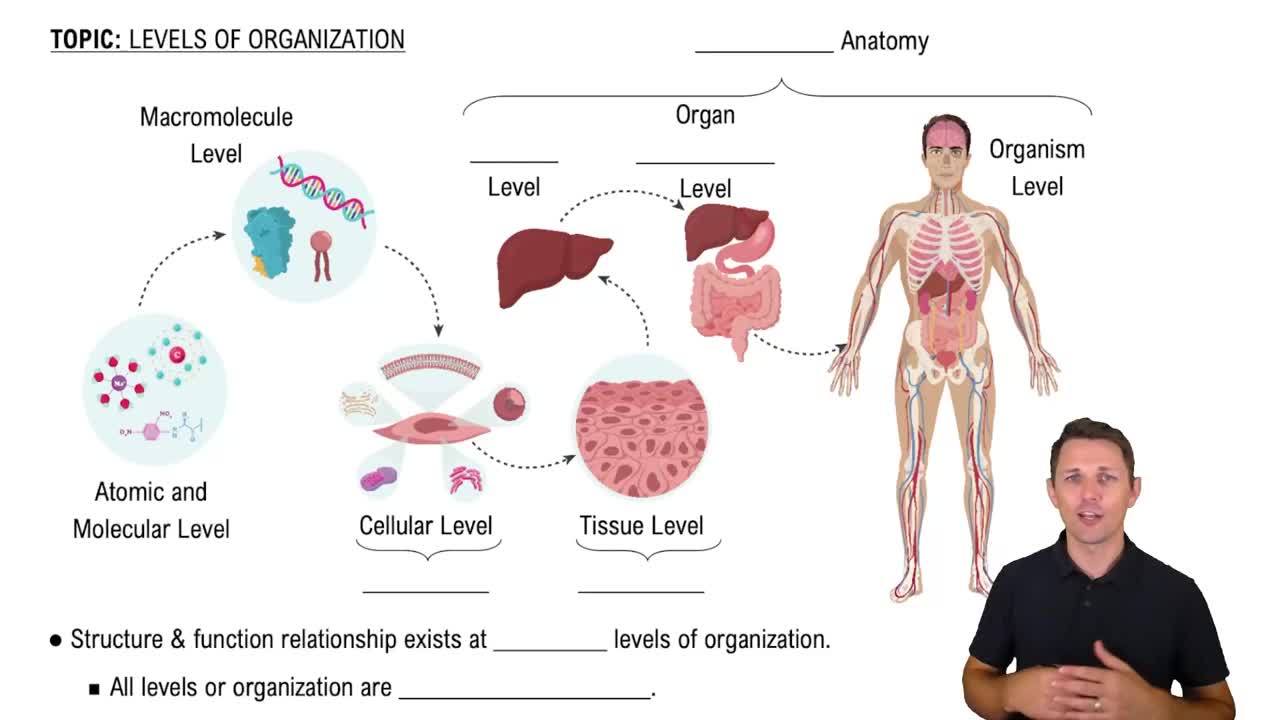
Cell → Tissue → Organ → Organ System → Organism
Metabolism, responsiveness, movement, growth, differentiation, reproduction
Oxygen, water, nutrients, normal body temperature, atmospheric pressure
Maintenance of a relatively stable internal environment despite changes inside or outside the body
Reverses a change and brings the body back toward its normal range
Sweating to cool the body when temperature rises
Amplifies or increases the original change
Childbirth contractions increasing oxytocin release until delivery
Stand upright, face forward, arms at sides, palms forward, feet forward
Toward the head or above (e.g., head is superior to the stomach)
Toward the feet or below (e.g., stomach is inferior to the heart)
Toward the front (e.g., sternum is anterior to the heart)
Toward the back (e.g., spine is posterior to the heart)
Toward the midline (e.g., nose is medial to the eyes)
Away from the midline (e.g., ears are lateral to the nose)
Proximal = closer to point of attachment; Distal = farther from point of attachment
Sagittal plane
Frontal (coronal) plane
Transverse (horizontal) plane
Brain
Spinal cord
Heart, lungs, trachea, esophagus, thymus, major blood vessels
Stomach, liver, gallbladder, pancreas, spleen, small and large intestines, kidneys
Urinary bladder, internal reproductive organs, rectum
Diaphragm
Closer to the body surface (e.g., skin is superficial to muscle)
Farther inside the body (e.g., muscle is deep to skin)