Skip to main content
Anatomy & Physiology
나의 코스
배우기
시험 준비
AI 튜터
학습 가이드
교과서적 해결책
플래시카드
탐험해 보세요
앱을 사용해 보세요
나의 코스
배우기
시험 준비
AI 튜터
학습 가이드
교과서적 해결책
플래시카드
탐험해 보세요
앱을 사용해 보세요
뒤로
Anatomy & Physiology: Body Organization and Terminology
카드를 뒤집기 위해 탭할 수 있습니다.
What is the anatomical position?
카드를 뒤집기 위해 탭할 수 있습니다.
👆
What is the anatomical position?
The standard position where the body is erect, facing forward, with palms facing forward, used to communicate anatomical information.
진행 상황 추적
컨트롤 버튼이 '내비게이션' 모드로 변경되었습니다.
1/20
추천 영상
05:04
The Levels of Organization
44936
views
1297
rank
4
comments
02:22
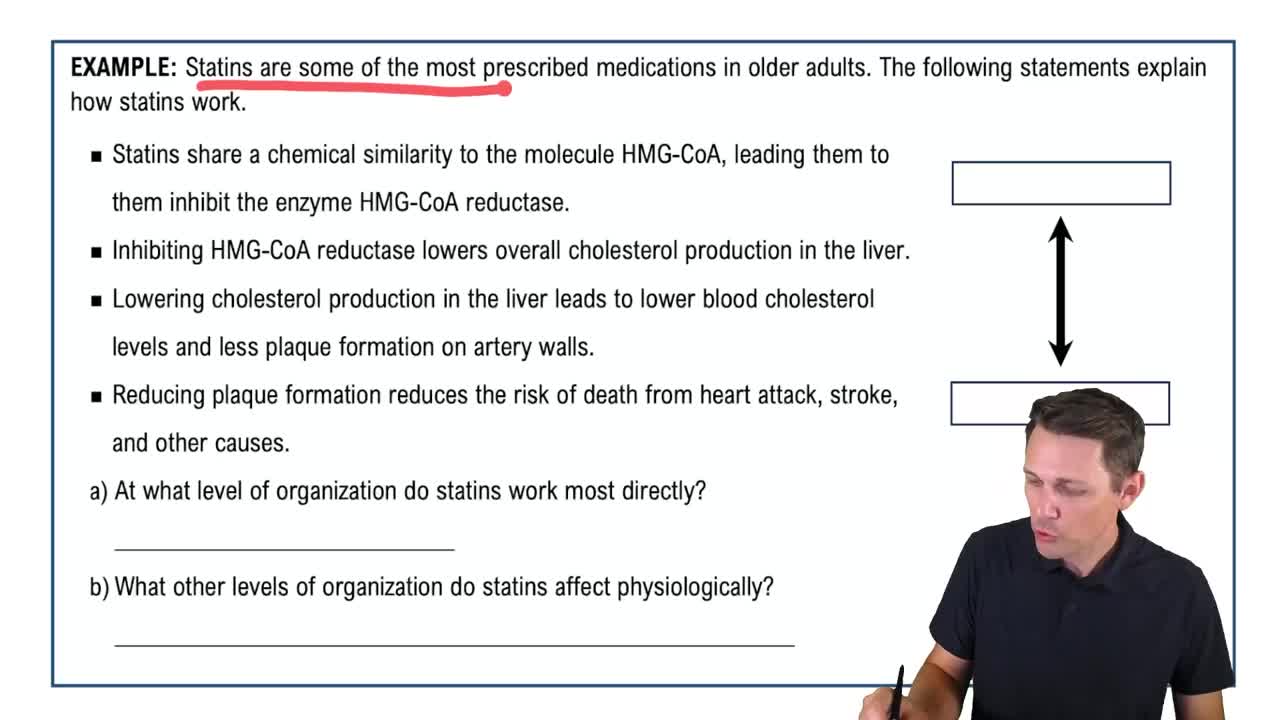
Levels of Organization Example 1
24841
views
517
rank
2
comments
이 집합의 용어 (20)
하이드의 정의
What is the anatomical position?
The standard position where the body is erect, facing forward, with palms facing forward, used to communicate anatomical information.
Define anterior (ventral) in anatomical terms.
Toward the front of the body. Example: The palms are on the anterior side.
Define posterior (dorsal) in anatomical terms.
Toward the back of the body. Example: The occipital bone is posterior to the cranium.
What does superior (cranial) mean?
Toward the head or upper part of the body. Example: The nose is superior to the mouth.
What does inferior (caudal) mean?
Toward the tail or lower part of the body. Example: The umbilicus is inferior to the chest.
Define proximal in anatomical terms.
Closer to the point of origin, usually the trunk. Example: The knee is proximal to the ankle.
Define distal in anatomical terms.
Farther from the point of origin, usually the trunk. Example: The wrist is distal to the elbow.
What does medial mean?
Closer to the midline of the body or body part. Example: The index finger is medial to the thumb.
What does lateral mean?
Farther from the midline of the body or body part. Example: The thumb is lateral to the index finger.
Define superficial.
Closer to the surface of the body. Example: The skin is superficial to the muscles.
Define deep.
Farther below the surface of the body. Example: Bone is deep to the skin.
What are the two broad regional divisions of the body?
Axial region (head, neck, trunk) and appendicular region (upper and lower limbs).
What is a body cavity?
A space within the body that protects organs and allows them to move.
Name the two main posterior body cavities.
Cranial cavity (protects the brain) and vertebral (spinal) cavity (protects the spinal cord).
What fluid fills the posterior body cavities?
Cerebrospinal fluid (CSF), which bathes the brain and spinal cord.
What are the subdivisions of the thoracic cavity?
Pleural cavity (surrounds lungs), mediastinum (between pleural cavities), and pericardial cavity (inside mediastinum).
What are the subdivisions of the abdominal pelvic cavity?
Abdominal cavity (superior) and pelvic cavity (inferior).
How is the abdominal cavity further divided?
Into four quadrants: RUQ, LUQ, RLQ, LLQ, and nine regions.
What does the term 'left' and 'right' refer to in anatomy?
The sides of the body as seen in the anatomical position.
Give an example of a proximal-distal relationship.
The shoulder is proximal to the elbow; the wrist is distal to the elbow.
 뒤로뒤로
뒤로뒤로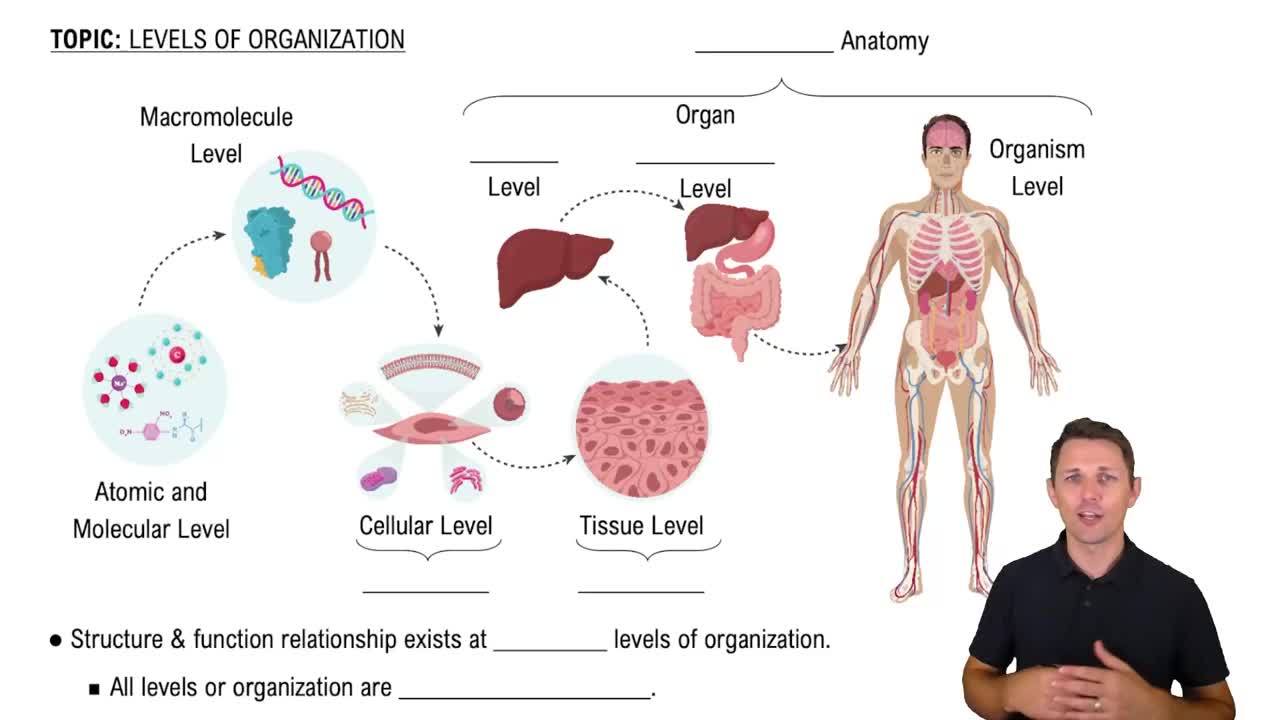
 05:04
05:04