Skip to main content
Anatomy & Physiology
나의 코스
배우기
시험 준비
AI 튜터
학습 가이드
교과서적 해결책
플래시카드
탐험해 보세요
앱을 사용해 보세요
나의 코스
배우기
시험 준비
AI 튜터
학습 가이드
교과서적 해결책
플래시카드
탐험해 보세요
앱을 사용해 보세요
뒤로
Anatomy & Physiology: Cell and Skin Structure Basics
카드를 뒤집기 위해 탭할 수 있습니다.
What are the three main layers of the skin?
카드를 뒤집기 위해 탭할 수 있습니다.
👆
What are the three main layers of the skin?
Epidermis
,
dermis
, and
hypodermis
.
진행 상황 추적
컨트롤 버튼이 '내비게이션' 모드로 변경되었습니다.
1/24
추천 영상
VideoThumbView.guidedCourse
03:17
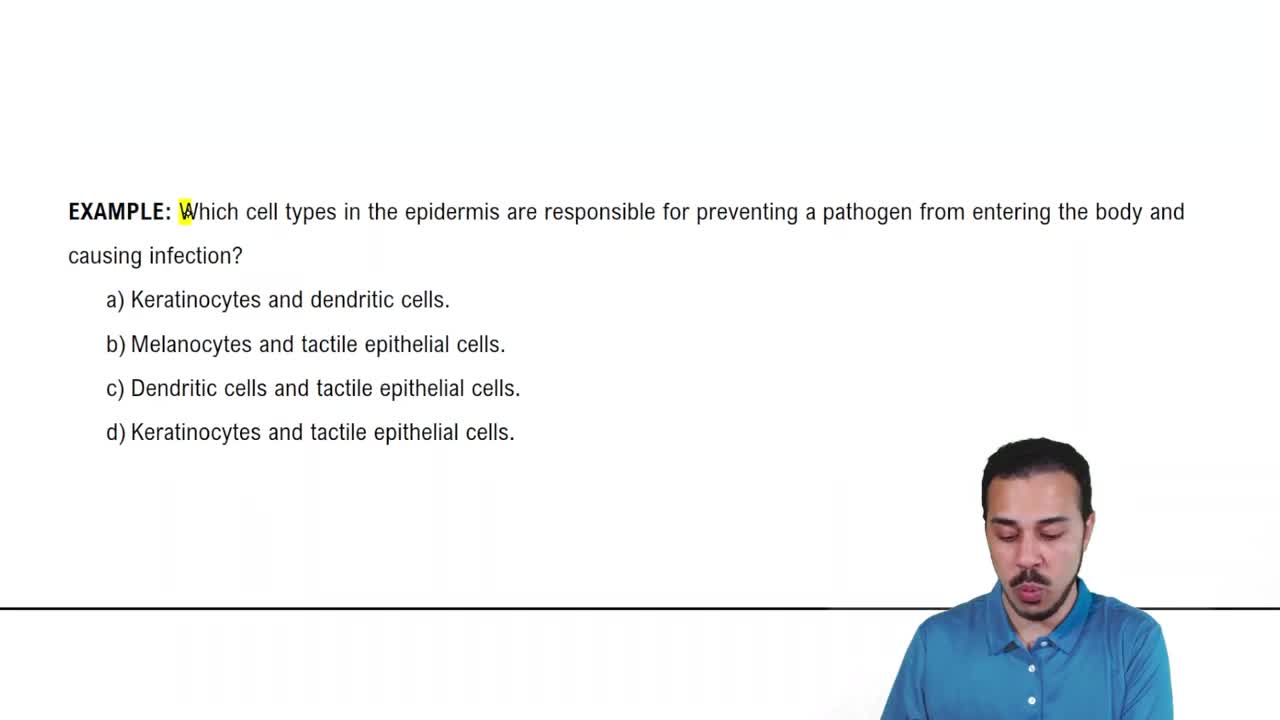
The Epidermis: Cells Example 1
8484
views
143
rank
VideoThumbView.guidedCourse
04:22
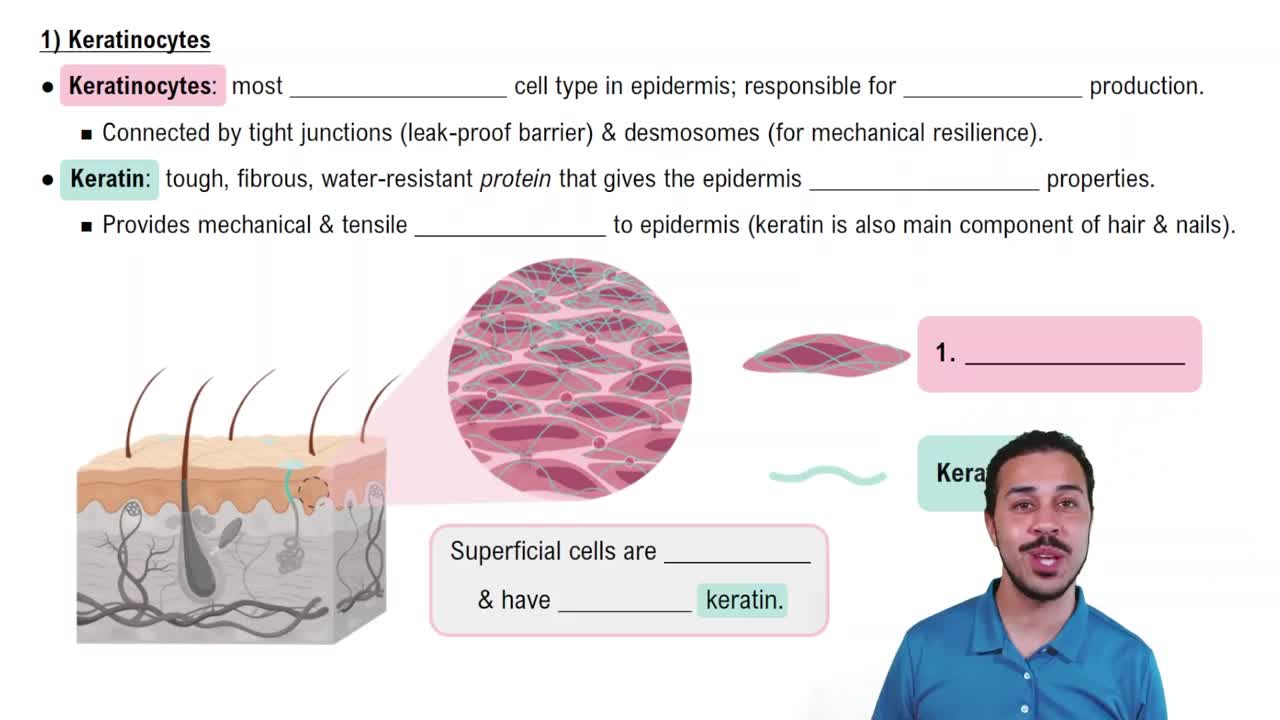
Keratinocytes
10322
views
199
rank
VideoThumbView.guidedCourse
02:10
The Epidermis: Cells Example 2
7446
views
147
rank
이 집합의 용어 (24)
하이드의 정의
What are the three main layers of the skin?
Epidermis
,
dermis
, and
hypodermis
.
What is the primary function of the epidermis?
Acts as a protective barrier made mostly of
keratin
and has 5 strata layers.
Name the five strata of the epidermis.
Basale
,
spinosum
,
granulosum
,
thick skin
, and
corneum
.
What is the main role of the dermis?
Provides a strong bond that ties the body together, regulates body temperature, and controls blood flow.
What is the hypodermis and its function?
Anchors the skin to adipose tissue, insulates against temperature changes, and is soft and squishy.
What is the nucleus and its main function?
The largest organelle in the cell; acts as the
control center
containing DNA.
What is the function of the nucleolus?
Dense structure inside the nucleus that makes and programs
ribosomes
.
What is chromatin?
A combination of
protein
and
DNA
located inside the nucleus.
What is the plasma membrane?
The cell boundary that protects the cell and controls transport of substances in and out.
What does it mean that the plasma membrane is selectively permeable?
It allows some substances like oxygen to pass but blocks others, especially large organisms.
What are the main components of the plasma membrane?
A bilayer of
phospholipids
,
proteins
,
cholesterol
, and
carbohydrates
.
What is cytoplasm?
The jelly-like space between the nucleus and plasma membrane, mostly water with dissolved substances.
What are the contents of the cytoplasm?
Cytosol
(liquid part),
inclusions
(storage), and
organelles
(cell metabolism).
What is the function of the smooth endoplasmic reticulum (SER)?
No ribosomes; provides materials to repair the cell.
What is the function of the rough endoplasmic reticulum (RER)?
Has ribosomes; responsible for intracellular transportation and protein synthesis.
Why is the rough endoplasmic reticulum called 'rough'?
Because it contains
ribosomes
on its surface.
What are ribosomes and their function?
Structures made of rRNA and proteins; they synthesize proteins.
Where are ribosomes found?
Free in the cytoplasm or attached to the rough endoplasmic reticulum.
What is the mitochondrion and its main function?
Oval organelle with folded inner membrane (cristae); produces energy (ATP) for the cell.
What is ATP?
Adenosine triphosphate
, the energy currency of the cell.
What is the Golgi apparatus and its functions?
Flat sacs between plasma membrane and RER; quality control, packaging, and extracellular transport of proteins.
Which structure controls transportation of substances into or out of the cell?
The
plasma membrane
.
Which structure is responsible for intracellular transportation of substances?
The
rough endoplasmic reticulum (RER)
.
Which structure is responsible for extracellular transportation of substances?
The
Golgi apparatus
.
 뒤로뒤로
뒤로뒤로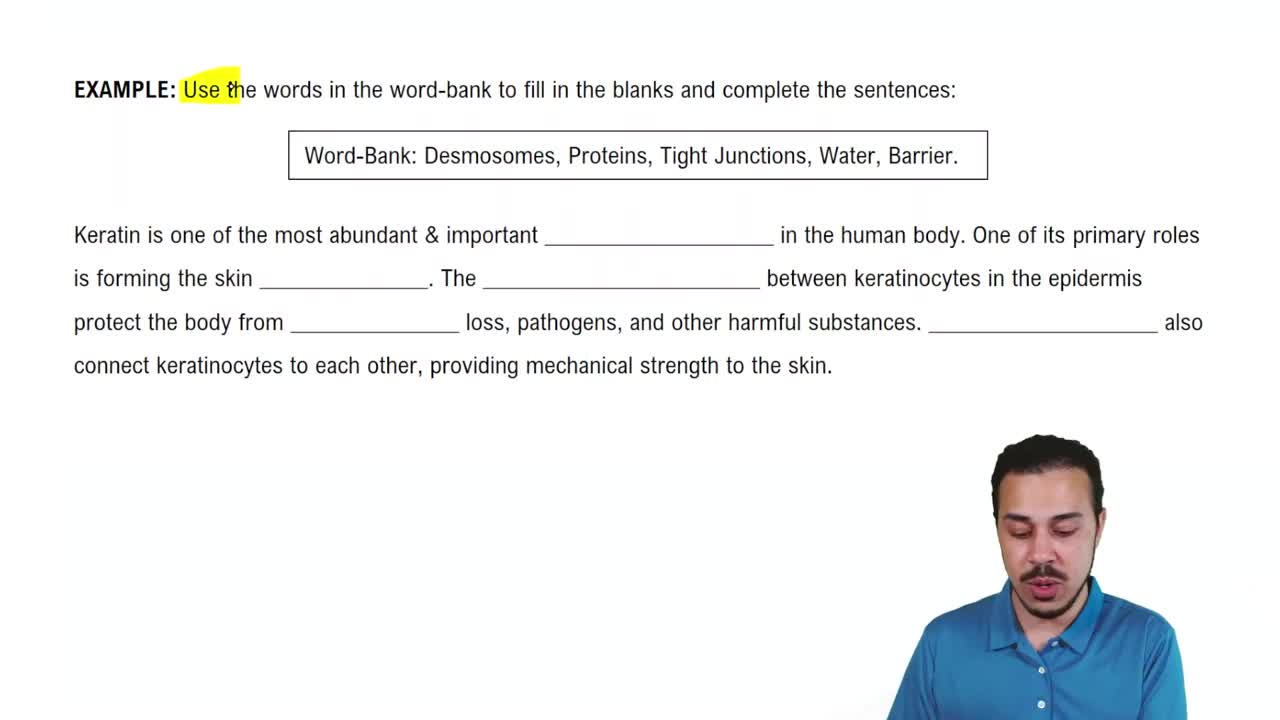
 03:17
03:17