 뒤로
뒤로Anatomy & Physiology: Chemistry of Life
 02:13
02:13
이 집합의 용어 (64)
anything that has mass and occupies space.
Solid, liquid, and gas.
the smallest unit of matter that retains the properties of an element.
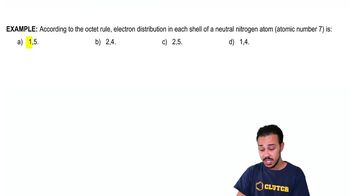
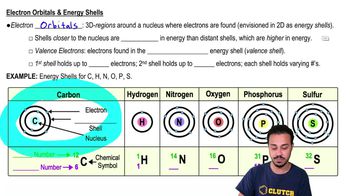
First shell holds 2 electrons, second shell holds 8 electrons, third shell can hold more but is satisfied with 8 electrons.
The number of protons in an atom's nucleus, called the atomic number. Cannot be broken down into a simpler substance by chemical means.
Oxygen, carbon, hydrogen, and nitrogen.
an atom with the same atomic number and number of protons but different mass number due to varying neutrons.
a physical combination of two or more substances where each retains its own properties.
Define compound
a molecule with atoms of different elements. Mixed together by chemical bonds
Atoms tend to form bonds to have eight electrons in their valence (2nd) shell for stability.
duet rule
Atoms tend to form bonds to have 2 electrons in their first outer shell for stability.
Gives and takes electrons. Electrons are transferred from a metal (giver) to a nonmetal (taker), forming cations and anions attracted by opposite charges.
anion
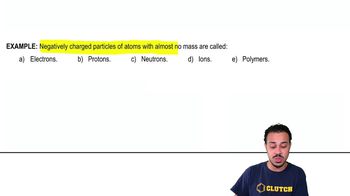
negatively charged ion.
A bond formed when two or more nonmetals share electrons.
Nonpolar bonds share electrons equally; polar bonds share electrons unequally due to different electronegativities.
A weak attraction between the partially positive end of one dipole and the partially negative end of another.
Acid: releases H+ ions in solution (hydrogen donor) ; Base: accepts H+ ions or releases OH– ions.
Ranges from 0 to 14; pH 7 is neutral, below 7 is acidic, above 7 is basic (alkaline).
A substance that stabilizes pH by absorbing or releasing hydrogen ions.
Dehydration synthesis joins monomers by removing water; hydrolysis breaks polymers by adding water.
Glucose, fructose, galactose, ribose, and deoxyribose.
Saturated fatty acids have no double bonds and are solid at room temperature; unsaturated have one or more double bonds and are liquid.
Composed of glycerol, two fatty acid tails (nonpolar), and a phosphate head (polar); amphiphilic nature vital for cell membranes.
Primary: amino acid sequence; Secondary: alpha helix or beta sheet; Tertiary: 3D folding; Quaternary: multiple polypeptide chains.
Loss of protein's shape and function due to heat, pH changes, or chemicals.
A phosphate group, a pentose sugar, and a nitrogenous base.
Purines: adenine (A) and guanine (G); Pyrimidines: cytosine (C), thymine (T), and uracil (U).
A pairs with T (2 hydrogen bonds), and C pairs with G (3 hydrogen bonds).
RNA is single-stranded, contains ribose sugar, and uses uracil instead of thymine.
ATP stores chemical energy in high-energy phosphate bonds used to power cellular work.
describe the purposes of the other trace elements in ur body
at some point
define molecule
two or more atoms chemically bonded
Define suspensions
mix liquid with solid, can join and separate individual components (blood that settles and show the red blood cells).
define colloids
Substances are in different phases but the particles will not settle.
Liquid mixed with solid, solid particles are not visible (milk and proteins)
define solutions
liquid mixed with a solid. Solute (salt) dissolves in a solvent (water).
Explain how the number of electrons in an atom’s valence shell determines its stability and ability to form chemical bonds
Atoms are hangry and go search for other atoms to connect to the vacant shells.
Cation
positively charged ion
Ion
charged particle that has lost or gained one or more electrons
What is polar
unequal
How do hydrogen bonds give water the property of surface tension
Where air and water meet, the polar water molecules are more strongly attracted to one another that they are nonpolar to the air molecules.
atomic number
number of protons in an atoms nucleus.
mass number
same number of neutrons and protons
energy
the capacity to do work. energy can put matter into motion
potential energy
is stored energy, but can release at some point
kinetic energy
is potential energy that has been released or et in motion to perform work.
what do all atoms have
kinetic energy because they are in constant motion.
chemical energy
stored in the chemical bonds of all molecules and compounds
electrical energy
generated by the movement of charged particles
mechanical energy
energy that has been directly transferred from one object to another.
endergonic reactions
the reactants have less energy than the product. they require outside energy (chemical, mechanical, electrical) from another source to proceed.
exergonic reaction
the reactants have more energy than the product. excess energy is stored in the reactants during the reaction.
what reaction processes occur in the body to maintain homeostasis?
catabolic, exchange (redox), and anabolic reactions
catabolic reactions
Large substances broken down into smaller ones (polymer --> monomers). Usually exergonic because chemical bonds are broken.
Exchange reactions
break apart to build back differently (AB+CD ---> AD+CB).
Oxidation-reduction reactions (redox reactions)
type of exchange reaction that occurs when electrons and energy are echanged instead of atoms.
lose- oxi
gain- reduce
anabolic reactions
when chemical bonds form (A+B --> AB). These are endergonic, fueled by chemical energy.
What is necessary for a chemical reaction to occur ?
the atoms must collide with enough activation energy to overcome the repulsion of their electrons
what factors increase the reaction rate?
Concentration, temperature, particle size and phase, and catalysts. These either reduce the activation energy or increase the likelihood of strong collisions between reactants
define enzymes
a biological catalyst, usually a protein, that speeds up a reaction without changing the products or reactants.
what is the difference between inorganic and organic compounds?
Inorganic compounds generally do not contain carbon bonded to hydrogen, and include water, acids, bases, and salts.
Organic compounds do include carbon bonded to hydrogen.
properties of water
absorbs heat, carries heat when turning liquid to gas, it cushions and protects body structures, and acts as lubricant.
water is what type of molecule
a polar covalent molecule
pH of blood
7.35 - 7.45
lipids are what kind of molecules
nonpolar hydrophobic molecules mainly composed of hydrogen and carbon