Skip to main content
Anatomy & Physiology
나의 코스
배우기
시험 준비
AI 튜터
학습 가이드
교과서적 해결책
플래시카드
탐험해 보세요
앱을 사용해 보세요
나의 코스
배우기
시험 준비
AI 튜터
학습 가이드
교과서적 해결책
플래시카드
탐험해 보세요
앱을 사용해 보세요
뒤로
Anatomy & Physiology - Chemistry of Life
카드를 뒤집기 위해 탭할 수 있습니다.
What are the three main subatomic particles of an atom?
카드를 뒤집기 위해 탭할 수 있습니다.
👆
What are the three main subatomic particles of an atom?
Protons
(positive charge),
Neutrons
(neutral), and
Electrons
(negative charge). Protons and neutrons are in the nucleus; electrons orbit in shells.
진행 상황 추적
컨트롤 버튼이 '내비게이션' 모드로 변경되었습니다.
1/23
추천 영상
VideoThumbView.guidedCourse
02:13
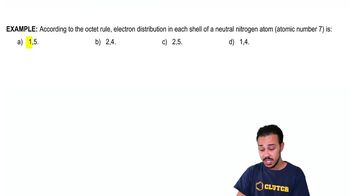
Atoms- Smallest Unit of Matter Example 1
27021
views
709
rank
VideoThumbView.guidedCourse
03:51
Atoms- Smallest Unit of Matter Example 3
17396
views
373
rank
VideoThumbView.guidedCourse
09:44
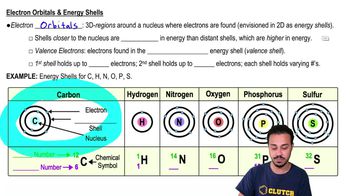
Electron Orbitals & Energy Shells
24396
views
505
rank
3
comments
이 집합의 용어 (23)
하이드의 정의
What are the three main subatomic particles of an atom?
Protons
(positive charge),
Neutrons
(neutral), and
Electrons
(negative charge). Protons and neutrons are in the nucleus; electrons orbit in shells.
What defines an element?
An element is a substance composed of atoms with the same number of protons (atomic number) and cannot be broken down chemically.
What are the four major elements that make up 96% of the human body mass?
Oxygen (65%)
,
Carbon (18%)
,
Hydrogen (10%)
, and
Nitrogen (3%)
.
What is an isotope?
Atoms of the same element with the same number of protons but different numbers of neutrons, resulting in different mass numbers.
What is an ionic bond?
A chemical bond formed by the transfer of electrons from a metal to a nonmetal, creating oppositely charged ions (cations and anions) that attract.
How do covalent bonds differ from ionic bonds?
Covalent bonds involve sharing electrons between nonmetal atoms, while ionic bonds involve electron transfer between metal and nonmetal atoms.
What is the difference between nonpolar and polar covalent bonds?
Nonpolar covalent bonds share electrons equally; polar covalent bonds share electrons unequally, creating partial charges (dipoles).
What are hydrogen bonds?
Weak attractions between partially positive hydrogen atoms and partially negative atoms in polar molecules, important for water's properties.
Why is water considered a polar molecule?
Because oxygen has higher electronegativity, it pulls electrons more strongly, creating partial negative and positive poles in the molecule.
What is the role of enzymes in chemical reactions?
Enzymes act as biological catalysts that lower activation energy and speed up reactions without being consumed.
What is the 'induced fit' mechanism of enzyme action?
The enzyme changes shape slightly to fit the substrate more snugly when the substrate binds to the active site.
What is the pH scale and what does it measure?
The pH scale measures hydrogen ion concentration; values below 7 are acidic, 7 is neutral, and above 7 are basic (alkaline).
What are acids and bases in terms of hydrogen ions?
Acids donate hydrogen ions (H+), increasing their concentration; bases accept hydrogen ions, decreasing their concentration.
What is a buffer and why is it important in the body?
A buffer resists changes in pH by neutralizing added acids or bases, maintaining homeostasis, e.g., the carbonic acid-bicarbonate system in blood.
What are the four main classes of organic compounds in the body?
Carbohydrates, Lipids, Proteins, and Nucleic Acids.
What is the primary function of carbohydrates?
To provide fuel (energy) and some structural roles; they are polar and hydrophilic molecules.
What are triglycerides and their function?
Triglycerides are fats made of three fatty acids and glycerol; they store energy and can be solid or liquid.
What is the structure and function of phospholipids?
Phospholipids have a hydrophilic phosphate head and two hydrophobic fatty acid tails; they form the main structure of cell membranes.
What are steroids and their biological importance?
Steroids have a 4-ring hydrocarbon structure; cholesterol is a base steroid and precursors for hormones like estrogen and testosterone.
What are proteins made of and their general functions?
Proteins are made of amino acids and function in structure, enzymes, defense, communication, muscle contraction, and more.
What causes protein denaturation?
Heat, pH changes, and chemicals disrupt hydrogen and ionic bonds, causing proteins to lose their shape and function.
What are nucleotides and their role in nucleic acids?
Nucleotides are monomers composed of a nitrogenous base, sugar, and phosphate group; they form DNA and RNA.
What is ATP and why is it important?
Adenosine triphosphate (ATP) is the main energy currency of the cell, providing energy for cellular processes through hydrolysis.
 뒤로뒤로
뒤로뒤로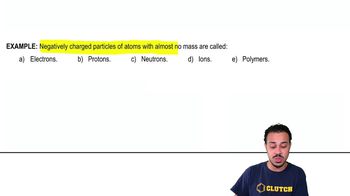
 02:13
02:13