 뒤로
뒤로Anatomy & Physiology: Chemistry of Life
 02:13
02:13
이 집합의 용어 (29)
An atom is the smallest unit of matter that retains the properties of an element.
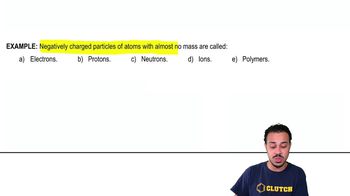
Protons (positively charged), neutrons (neutral), and electrons (negatively charged).
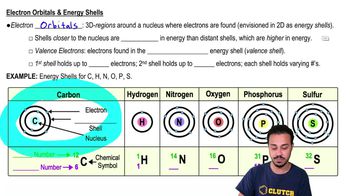
Protons and neutrons are in the nucleus; electrons orbit in electron shells around the nucleus.
An element is defined by the number of protons in its atomic nucleus, called the atomic number.
Oxygen (65%), Carbon (18%), Hydrogen (10%), and Nitrogen (3%).
An isotope is an atom with the same number of protons but a different number of neutrons.
A radioisotope is an unstable isotope that emits radiation; used in nuclear medicine for diagnosis and treatment.
A chemical bond is an energy relationship or attractive force between atoms.
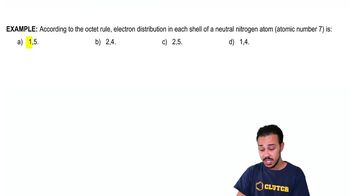
Atoms are most stable when they have 8 electrons in their valence shell.
An ionic bond forms when electrons are transferred between a metal and a nonmetal, creating charged ions that attract each other.
A covalent bond is formed when two or more nonmetal atoms share electrons; it is the strongest type of chemical bond.
Nonpolar bonds share electrons equally; polar bonds share electrons unequally, creating partial charges.
Weak attractions between partially positive hydrogen atoms and partially negative atoms in polar molecules.
Water dissolves hydrophilic (polar) substances but not hydrophobic (nonpolar) substances, making it the body's primary solvent.
Acids donate hydrogen ions (H+); bases accept hydrogen ions, reducing H+ concentration.
The pH scale measures hydrogen ion concentration; 7 is neutral, below 7 acidic, above 7 basic.
Buffers resist changes in pH by neutralizing added acids or bases; the major buffer in blood is the carbonic acid-bicarbonate system.
Monomers are single subunits; polymers are large molecules made of many monomers linked together.
Carbohydrates, lipids, proteins, and nucleic acids.
Carbohydrates primarily provide fuel and some structural roles; they are polar and hydrophilic.
Lipids are nonpolar, hydrophobic molecules including fats, oils, phospholipids, and steroids; they function as fuel, membrane components, and hormones.
A triglyceride is a fat molecule made of three fatty acids linked to glycerol; it is the storage form of fatty acids.
Phospholipids have a hydrophilic phosphate head and two hydrophobic fatty acid tails; they form the main structure of cell membranes.
Steroids share a 4-ring hydrocarbon nucleus; cholesterol is the base for other steroids like sex hormones and bile acids.
Proteins are made of amino acids and perform structural roles, act as enzymes, support immunity, enable communication, and more.
Denaturation is the loss of protein shape due to heat, pH changes, or chemicals, causing loss of function.
Nucleic acids are made of nucleotides, each containing a nitrogenous base, a five-carbon sugar, and a phosphate group.
Adenosine triphosphate (ATP) is the main energy currency of the cell, produced by adding a phosphate to ADP and used to power cellular processes.
Enzymes lower activation energy, increase reaction rates, are specific to substrates, and are not consumed in reactions.