 뒤로
뒤로Anatomy & Physiology Core Concepts Flashcards
 02:29
02:29
이 집합의 용어 (28)
The integumentary system protects internal organs, produces vitamin D with UV exposure, retains water, and regulates body temperature via vasodilation and vasoconstriction.
The skeletal system supports the body, protects organs, provides leverage for movement, produces blood cells, and stores calcium salts for bone hardness.
The muscular system produces movement, controls body openings, and generates body heat.
The nervous system regulates body functions, provides sensations, controls movement, automatic functions, and higher mental functions via nerve impulses.
The endocrine system regulates body functions, muscle and gland activity, digestive processes, and hormone release.
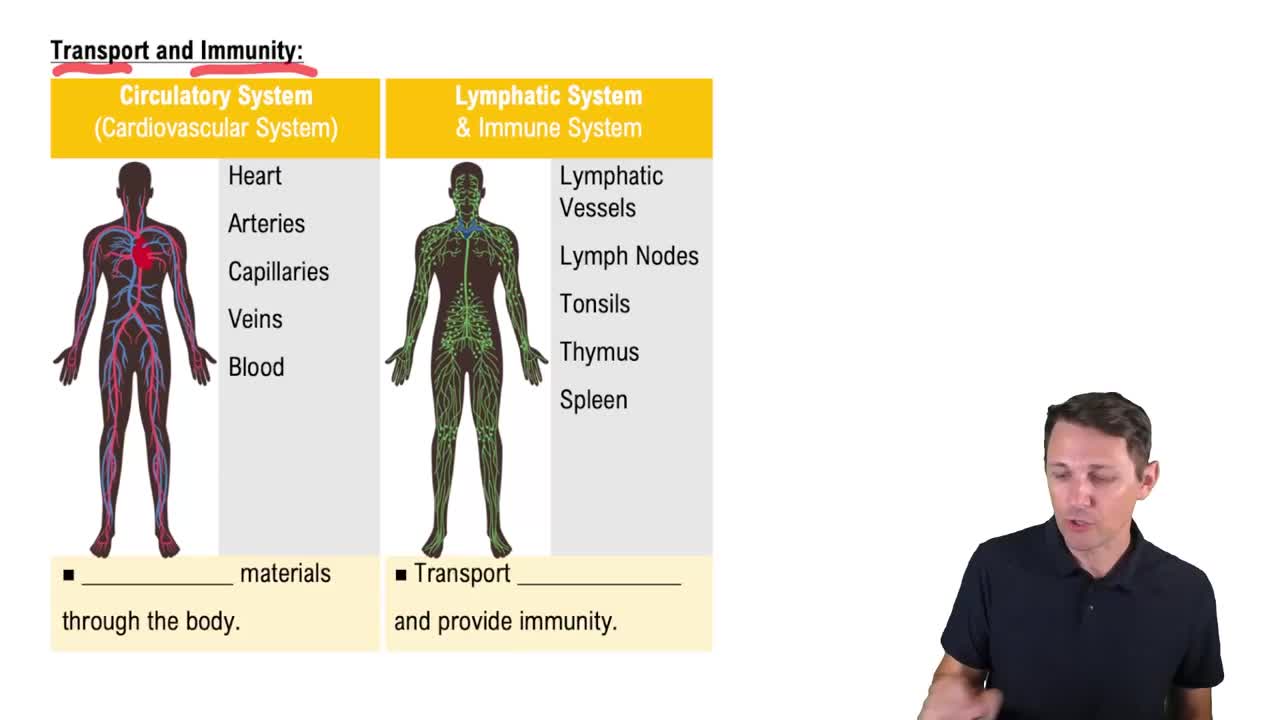
The cardiovascular system pumps and delivers oxygen-poor blood to lungs and oxygen-rich blood to tissues, transporting cells, nutrients, wastes, and electrolytes.
The lymphatic system returns excess tissue fluid to the cardiovascular system and provides immunity against disease.
The respiratory system delivers oxygen to blood, removes carbon dioxide, and maintains blood acid-base balance (pH 7.34-7.45).
Homeostasis is the body's ability to maintain a stable internal environment despite external and internal changes.
Homeostasis involves a receptor (detects stimulus), control center (processes info), and effector (carries out response).
A negative feedback loop opposes the initial stimulus to return a variable to normal, e.g., sweating to cool the body in hot weather.
A positive feedback loop amplifies the initial stimulus, such as platelet activation during blood clotting.
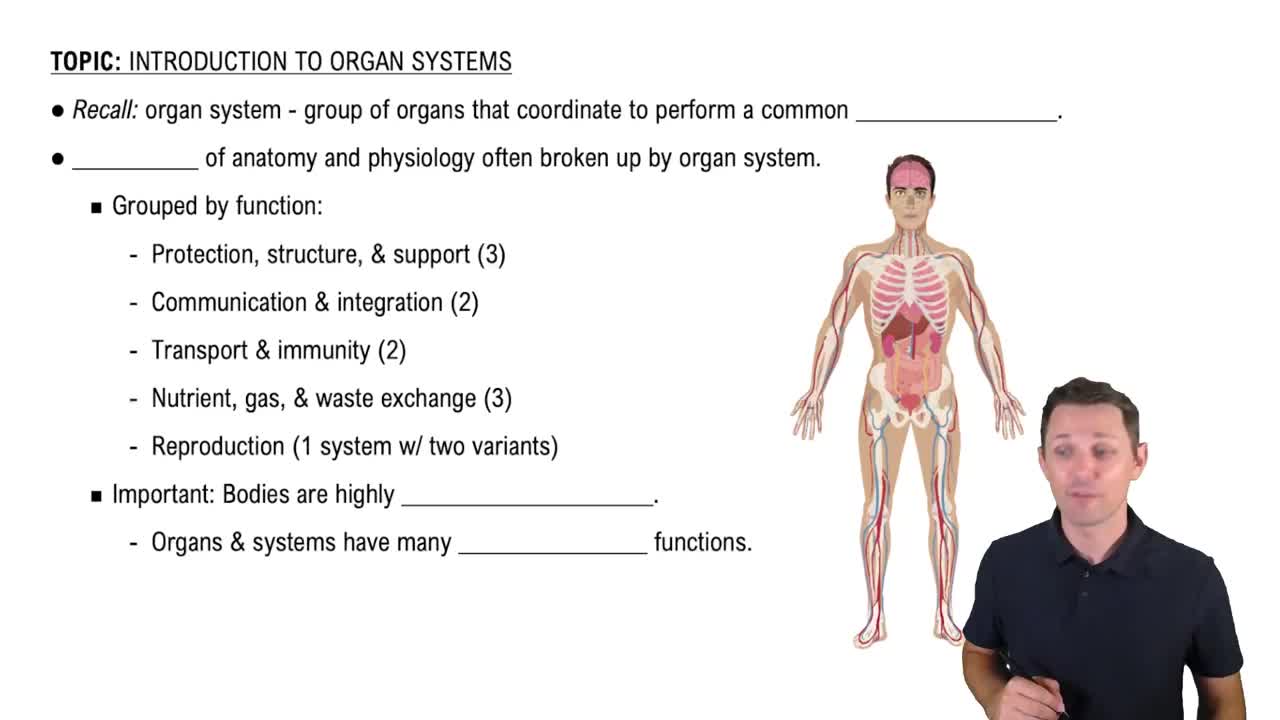
Human body organization: chemical, cellular, tissue, organ, organ system, organism.
Body standing upright, feet shoulder-width apart, arms at sides, palms and face forward.
Anterior means front; posterior means back.
Sagittal divides body into right and left; frontal divides into anterior and posterior; transverse divides into superior and inferior parts.
Posterior cavity: cranial and vertebral; anterior cavity: thoracic and abdominopelvic cavities.
Serous membranes are thin tissue layers that enclose cavities and produce lubricating serous fluid to reduce friction.
Right upper quadrant (RUQ), left upper quadrant (LUQ), right lower quadrant (RLQ), left lower quadrant (LLQ).
Right and left hypochondriac, epigastric, right and left lumbar, umbilical, right and left iliac, hypogastric regions.
Ionic bonds form between metals and nonmetals by electron transfer; covalent bonds form by sharing electrons between nonmetals.
Enzymes are biological catalysts that speed up reactions by lowering activation energy without being consumed.
pH measures hydrogen ion concentration; scale 0-14, below 7 acidic, 7 neutral, above 7 basic; blood pH ~7.35-7.45.
Buffers resist pH changes by neutralizing added acids or bases, maintaining stable blood pH.
ATP (adenosine triphosphate) is the main source of chemical energy for cellular processes.
Primary: amino acid sequence; secondary: folding (alpha helix, beta sheet); tertiary: 3D shape; quaternary: multiple polypeptide chains.
DNA is a double helix of nucleotides with sugar deoxyribose, bases A, T, C, G, and stores genetic information.
RNA is single-stranded with sugar ribose and uracil replacing thymine.