Skip to main content
Anatomy & Physiology
나의 코스
배우기
시험 준비
AI 튜터
학습 가이드
교과서적 해결책
플래시카드
탐험해 보세요
앱을 사용해 보세요
나의 코스
배우기
시험 준비
AI 튜터
학습 가이드
교과서적 해결책
플래시카드
탐험해 보세요
앱을 사용해 보세요
뒤로
Anatomy & Physiology: Essential Bones and Muscles
카드를 뒤집기 위해 탭할 수 있습니다.
Axial skeleton
카드를 뒤집기 위해 탭할 수 있습니다.
👆
Axial skeleton
Consists of 80 bones including the skull, vertebrae, sternum, ribs, and hyoid bone.
진행 상황 추적
컨트롤 버튼이 '내비게이션' 모드로 변경되었습니다.
1/26
추천 영상
3:56
What is Bone?
24250
views
738
rank
2
comments
3:00
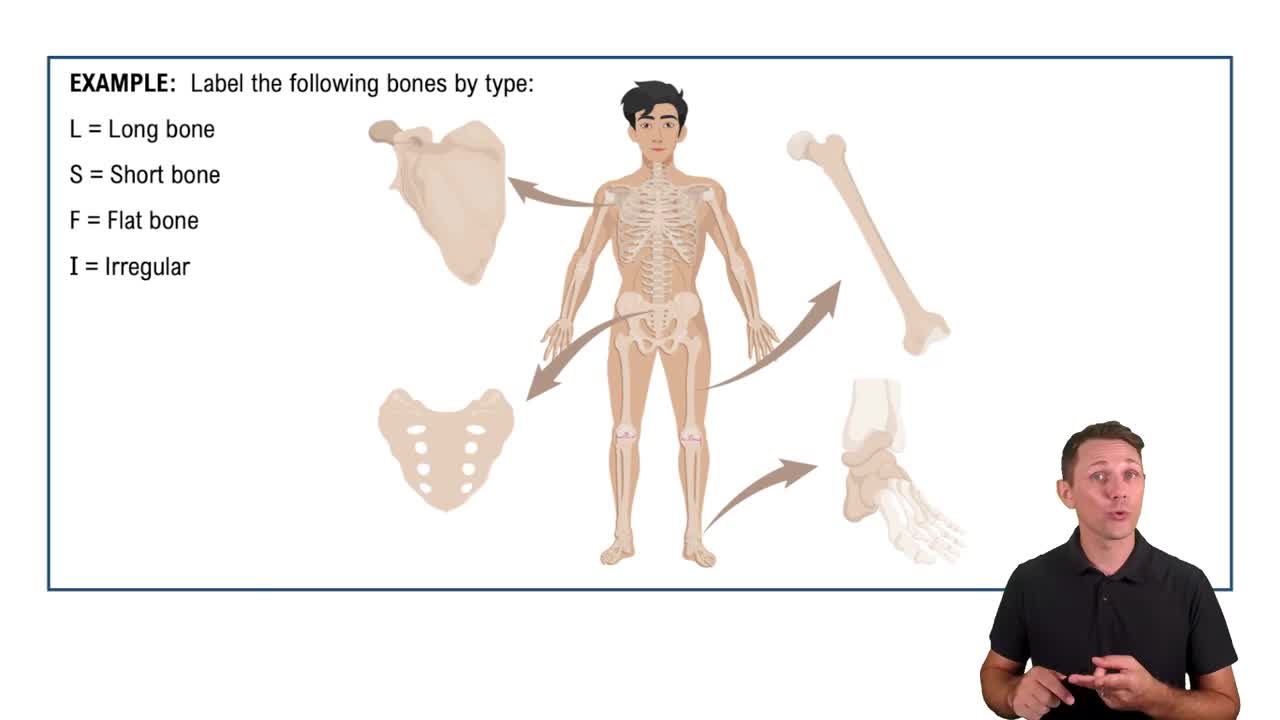
An Introduction to Bone and Skeletal Tissue Example 2
13398
views
279
rank
1
comments
4:14
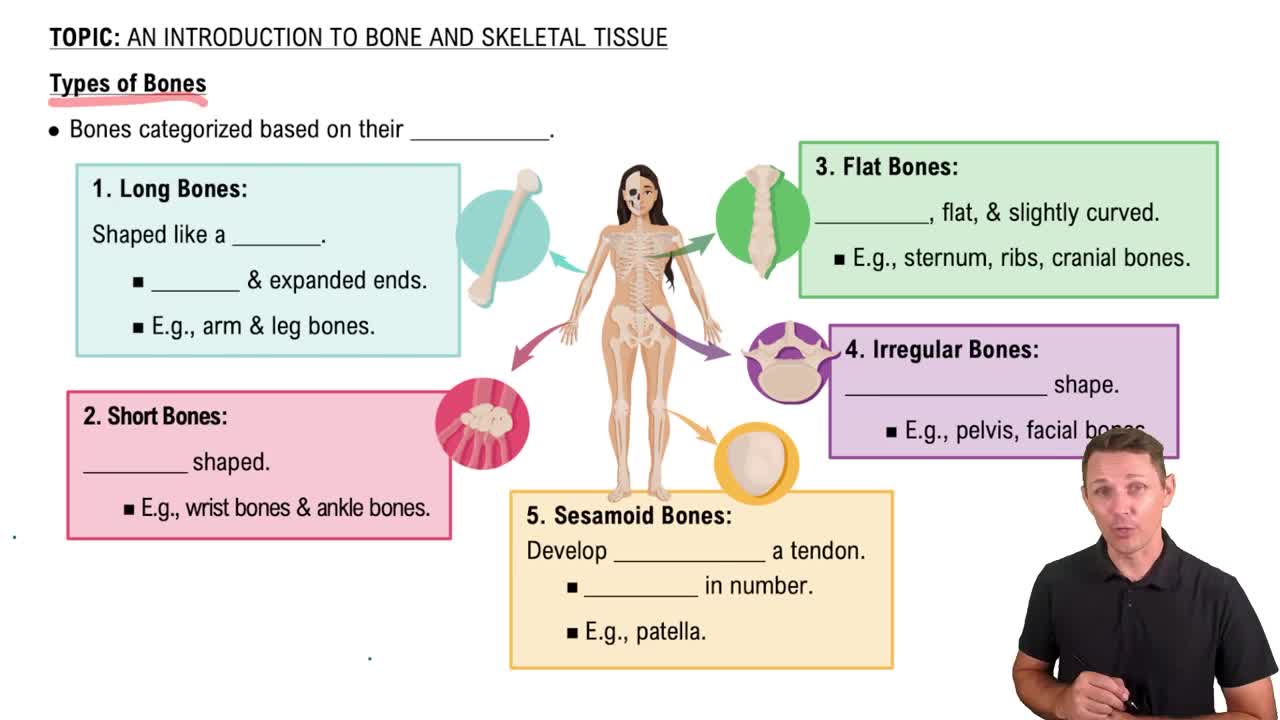
Types of Bones
15982
views
399
rank
1
comments
이 집합의 용어 (26)
하이드의 정의
Axial skeleton
Consists of 80 bones including the skull, vertebrae, sternum, ribs, and hyoid bone.
Appendicular skeleton
Comprises 126 bones of the upper and lower extremities and their girdles.
Pectoral girdle bones
Includes the clavicle and scapula, connecting the upper limbs to the axial skeleton.
Pelvic girdle bones
Formed by the os coxae (hip bones), sacrum, and coccyx.
Number of cranial bones
There are 8 cranial bones: frontal (1), parietal (2), temporal (2), occipital (1), sphenoid (1), and ethmoid (1).
Number of facial bones
There are 14 facial bones including nasal, maxillae, zygomatic, mandible, lacrimal, palatine, inferior nasal conchae, and vomer.
Suture
An immovable joint found only between skull bones.
Coronal suture
Suture between the frontal bone and the two parietal bones.
Sagittal suture
Suture between the two parietal bones along the midline.
Lambdoid suture
Suture between the parietal bones and the occipital bone.
Squamous sutures
Sutures between the parietal bones and the temporal bones.
Vertebral column regions and counts
Cervical (7), Thoracic (12), Lumbar (5), Sacral (1-5 fused), Coccyx (1-5 fused).
Unique features of cervical vertebrae
Includes atlas (C1), axis (C2) with dens, and transverse foramina.
Sternum parts
Manubrium, body, and xiphoid process.
Rib types
True ribs (first 7 pairs), false ribs (last 5 pairs), floating ribs (last 2 pairs of false ribs).
Carpal bones
Eight wrist bones: scaphoid, lunate, triquetrum, pisiform, trapezium, trapezoid, capitate, hamate.
Pelvic girdle components
Ilium, pubis, and ischium form the hip bone (os coxae).
Major muscles of the head and neck
Frontalis, occipitalis, orbicularis oculi, orbicularis oris, zygomaticus, temporalis, masseter, buccinator, sternocleidomastoid, trapezius.
Major trunk muscles
Pectoralis major, rectus abdominis, external oblique, trapezius, latissimus dorsi, erector spinae, quadratus lumborum.
Muscles that move the arm and shoulder
Biceps brachii, brachialis, triceps brachii, deltoid.
Muscles that move the hand
Flexor carpi radialis, flexor carpi ulnaris, palmaris longus, flexor digitorum superficialis, extensor carpi radialis, extensor digitorum.
Major muscles of the hip, thigh, and leg
Gluteus maximus, sartorius, quadriceps femoris group, hamstrings group, tibialis anterior, gastrocnemius, soleus.
Quadriceps femoris muscles
Rectus femoris, vastus lateralis, vastus medialis, vastus intermedius.
Hamstring muscles
Semimembranosus, semitendinosus, biceps femoris.
Pelvic inlet vs. pelvic outlet
Pelvic inlet is the upper opening of the pelvis; pelvic outlet is the lower opening.
Typical rib structure
Consists of a head, neck, tubercle, and body (shaft).
 뒤로뒤로
뒤로뒤로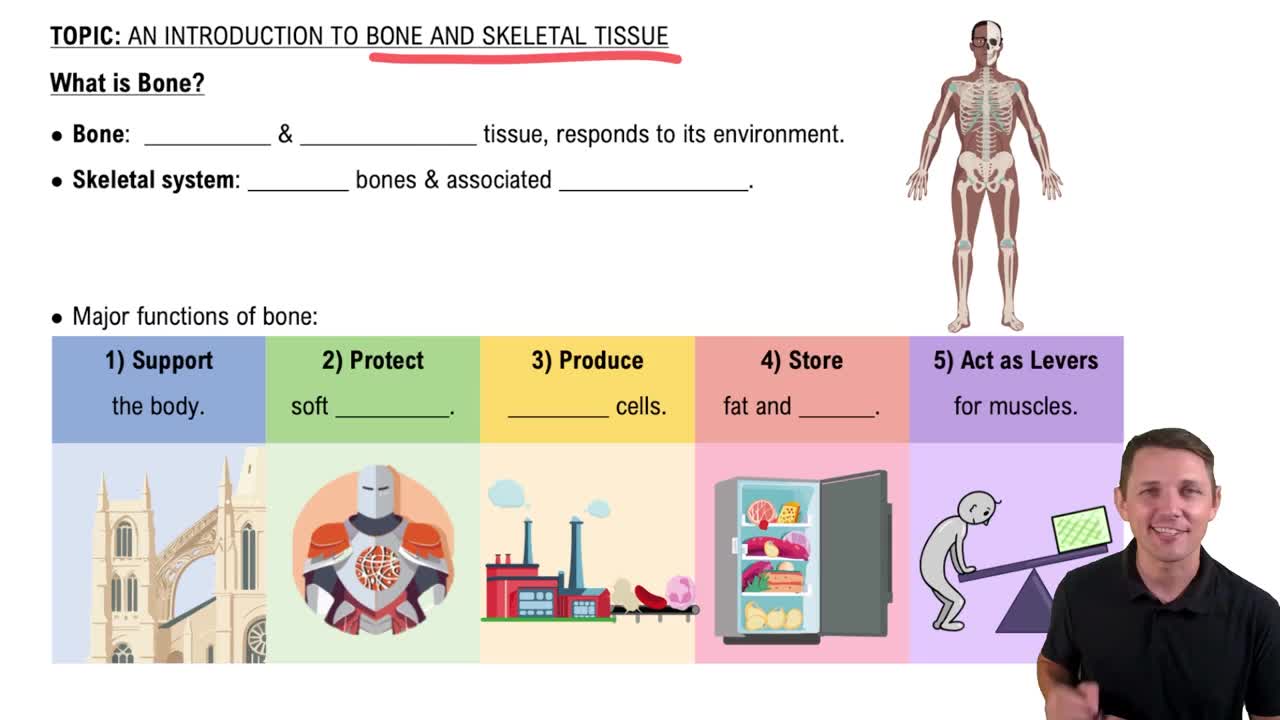
 3:56
3:56