 뒤로
뒤로Anatomy & Physiology Exam 1 Study Guide
 3:06
3:06
이 집합의 용어 (24)
Anatomical position is the body standing upright, facing forward, arms at sides with palms facing forward. It is used as a standard reference to describe locations and directions in the body.
Proximal (closer to the trunk) and distal (farther from the trunk) are used for limbs instead of superior and inferior.
The quadrants are Right Upper, Left Upper, Right Lower, and Left Lower. They help localize organs and diagnose pain or disease.
Homeostasis is maintaining a stable internal environment. Homeostatic imbalance occurs when this regulation fails, leading to disease or death.
Components include stimulus, receptor, control center, and effector. They detect change, process information, and produce a response.
Negative feedback opposes change to maintain stability; positive feedback amplifies change to complete a process. Negative feedback is more common.
Because it promotes stability by reversing deviations from set points, keeping variables within normal ranges.
The effector carries out the response to adjust the variable back toward normal in negative feedback or amplify the change in positive feedback.
Stimulus: temperature falls below normal. Receptor: thermoreceptors detect change. Control center: brain processes info. Effector: muscles shiver to generate heat.
Stimulus: temperature rises above normal. Receptor: thermoreceptors detect change. Control center: brain processes info. Effector: sweat glands activate to cool body.
Stimulus: uterine contractions. Receptor: stretch receptors in cervix. Control center: brain releases oxytocin. Effector: uterus contracts more forcefully (positive feedback).
A gradient is a difference in concentration, pressure, or temperature between two areas. Examples: concentration gradient, pressure gradient, temperature gradient.
Carbohydrates, lipids, proteins, and nucleic acids are the four primary macromolecule classes.
Atoms have protons, neutrons, and electrons. Bonds include ionic (transfer of electrons), covalent (sharing electrons), and hydrogen bonds (weak attraction).
Nonpolar bonds share electrons equally; polar bonds share electrons unequally, creating partial charges.
Water dissolves hydrophilic (water-loving) substances but repels hydrophobic (water-fearing) substances.
ATP stores and transfers energy for cellular processes.
The plasma membrane is a fluid bilayer of phospholipids with embedded proteins that move laterally, allowing selective permeability.
Integral proteins span the membrane; peripheral proteins attach to the membrane surface.
Diffusion is movement of solutes from high to low concentration; osmosis is diffusion of water across a semipermeable membrane.
Hypertonic: cells shrink; isotonic: cells stay the same; hypotonic: cells swell or burst.
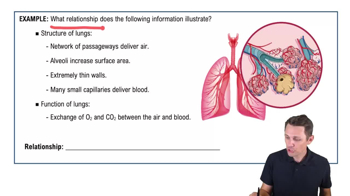
The form of a structure is designed to best suit its function at all levels of organization.
Examples include integumentary, skeletal, muscular, nervous, endocrine, cardiovascular, lymphatic, respiratory, digestive, urinary, and reproductive systems.
Cells communicate via electrical signals and chemical messengers to coordinate functions and maintain homeostasis.