Skip to main content
Anatomy & Physiology
나의 코스
배우기
시험 준비
AI 튜터
학습 가이드
교과서적 해결책
플래시카드
탐험해 보세요
앱을 사용해 보세요
나의 코스
배우기
시험 준비
AI 튜터
학습 가이드
교과서적 해결책
플래시카드
탐험해 보세요
앱을 사용해 보세요
뒤로
Anatomy & Physiology Final Exam Study Guide
카드를 뒤집기 위해 탭할 수 있습니다.
Cardiovascular system
카드를 뒤집기 위해 탭할 수 있습니다.
👆
Cardiovascular system
Transports blood, nutrients, gases, and wastes throughout the body.
진행 상황 추적
컨트롤 버튼이 '내비게이션' 모드로 변경되었습니다.
1/45
추천 영상
3:06
What is Anatomy & Physiology? Example 3
31283
views
731
rank
8
comments
01:58
What is Anatomy & Physiology? Example 2
42091
views
2339
rank
03:04
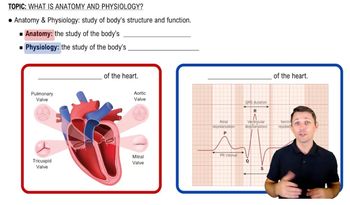
The Difference Between Anatomy and Physiology
82681
views
3980
rank
11
comments
이 집합의 용어 (45)
하이드의 정의
Cardiovascular system
Transports blood, nutrients, gases, and wastes throughout the body.
Endocrine system
Produces hormones that regulate body functions such as growth and metabolism.
Nervous system
Controls body activities with electrical signals and processes sensory information.
Muscular system
Allows movement of the body and maintains posture through muscle contraction.
Integumentary system
Protects the body, regulates temperature, and prevents water loss; includes skin.
Anatomical position
Body standing upright, facing forward, arms at sides with palms facing forward.
Medial
Toward the midline of the body.
Lateral
Away from the midline of the body.
Distal
Farther from the point of attachment or origin.
Anatomical planes
Divisions of the body: sagittal (left/right), frontal (front/back), transverse (top/bottom).
pH scale
Measures acidity or alkalinity; acidic <7, neutral =7, basic >7.
Electron charge
Negative charge.
Proton charge
Positive charge.
Neutron charge
No charge (neutral).
Ionic bond
Chemical bond formed by the transfer of electrons between atoms.
Covalent bond
Chemical bond formed by sharing electrons between atoms.
Polar covalent bond
Unequal sharing of electrons causing partial charges.
Nonpolar covalent bond
Equal sharing of electrons with no charge separation.
Hydrogen bond
Weak attraction between a hydrogen atom and an electronegative atom.
Glucose
A simple sugar and primary energy source for cells.
Amino acid
Building block of proteins.
Enzyme
Protein that speeds up chemical reactions.
DNA function
Stores genetic information for protein synthesis.
Base pairing in DNA
A pairs with T, C pairs with G.
Base pairing in RNA
A pairs with U, C pairs with G.
Passive transport
Movement of substances across a membrane without energy input.
Active transport
Movement of substances across a membrane requiring energy.
Epithelial tissue
Tissue that covers body surfaces and lines cavities.
Simple cuboidal epithelium
One layer of cube-shaped cells.
Flexion
Decreasing the angle between two body parts.
Extension
Increasing the angle between two body parts.
Osteoblast
Bone cell that builds new bone.
Osteoclast
Bone cell that breaks down bone tissue.
Osteocyte
Mature bone cell that maintains bone tissue.
Coronal suture
Suture between frontal and parietal bones of the skull.
Atlas (C1)
First cervical vertebra allowing 'yes' head movement.
Axis (C2)
Second cervical vertebra allowing 'no' head movement.
Types of muscle tissue
Skeletal (voluntary), cardiac (heart), smooth (involuntary).
Neuromuscular junction
Synapse where a motor neuron stimulates a muscle fiber.
Slow oxidative fibers
Muscle fibers resistant to fatigue, used for endurance.
Sympathetic division
Part of autonomic nervous system that prepares body for 'fight or flight'.
Negative feedback
Homeostatic mechanism that reverses a change to maintain balance.
Taste buds location
Located on the tongue and contain gustatory cells.
Rods function
Photoreceptors in the eye that detect light and dark.
Auditory (Eustachian) tube
Connects middle ear to throat to equalize pressure.
 뒤로뒤로
뒤로뒤로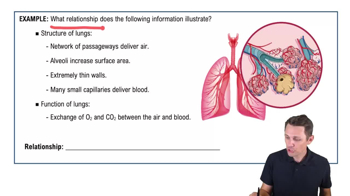
 3:06
3:06