 뒤로
뒤로Anatomy & Physiology: Homeostasis and Control Systems
 05:04
05:04
이 집합의 용어 (12)
Physiology is the study of the functions and processes of living organisms and their parts.
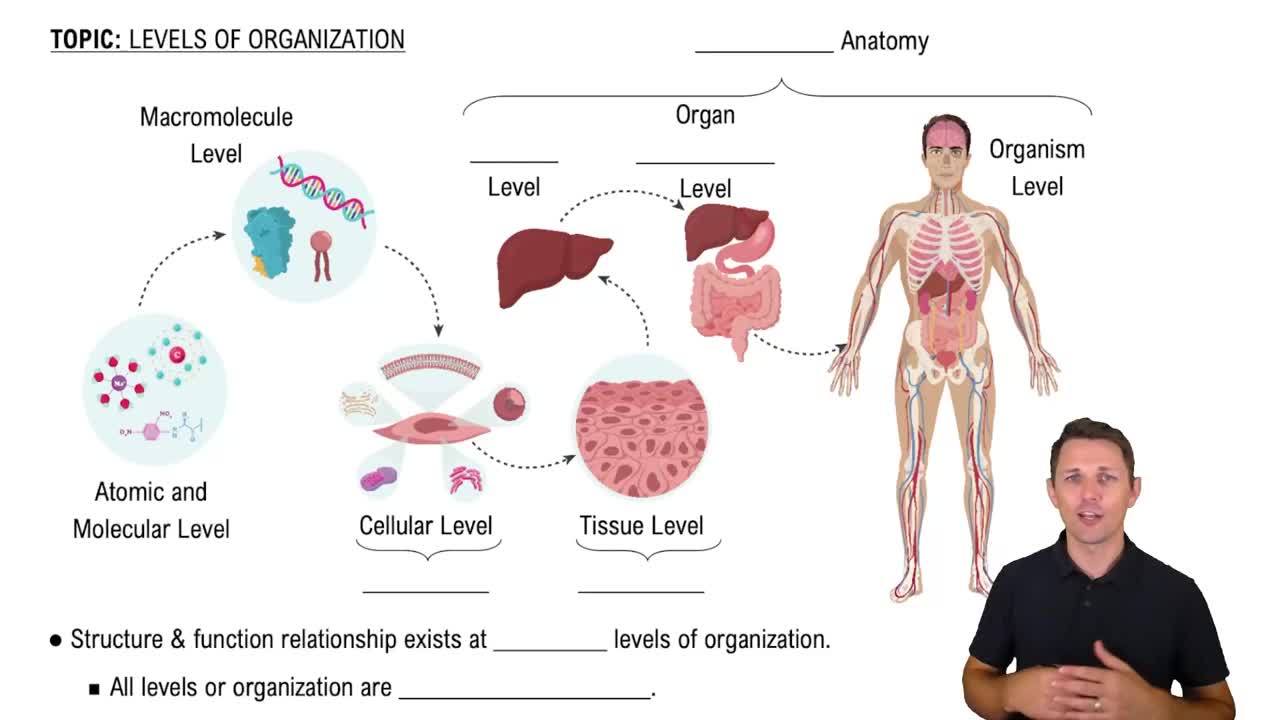
Levels: chemical (atoms/molecules), cellular, tissue, organ, organ system, and organism.
Examples: circulatory (transports blood), respiratory (gas exchange), digestive (nutrient breakdown), nervous (control), muscular (movement), skeleton (support), endocrine (hormone regulation), urinary (waste removal), immune (defense), reproductive (offspring production).
Homeostasis is the maintenance of a stable internal environment despite external changes.
Failure leads to disease, disorder, or death due to loss of internal balance.
Negative feedback reverses a change (e.g., body temperature regulation). Positive feedback amplifies a change (e.g., blood clotting). Feedforward control anticipates change (e.g., salivation before eating).
Equilibrium means no net change and no energy use. Steady state means constant conditions with energy input to maintain balance.
Components: receptor (detects change), control center (processes info), effector (carries out response). Example: Thermoregulation.
The regulated variable is the factor controlled (e.g., temperature). The setpoint is the desired value the system maintains.
Local control acts near the stimulus. Long-distance control uses nervous/endocrine systems. Reflex control is an automatic long-distance response.
A response loop is the sequence from stimulus to response. A feedback loop modifies the response based on its effect on the regulated variable.
Setpoints can change cyclically in biological rhythms, e.g., body temperature varies with circadian rhythm.