 뒤로
뒤로Anatomy & Physiology: Homeostasis, Atomic Structure, and Chemical Bonds
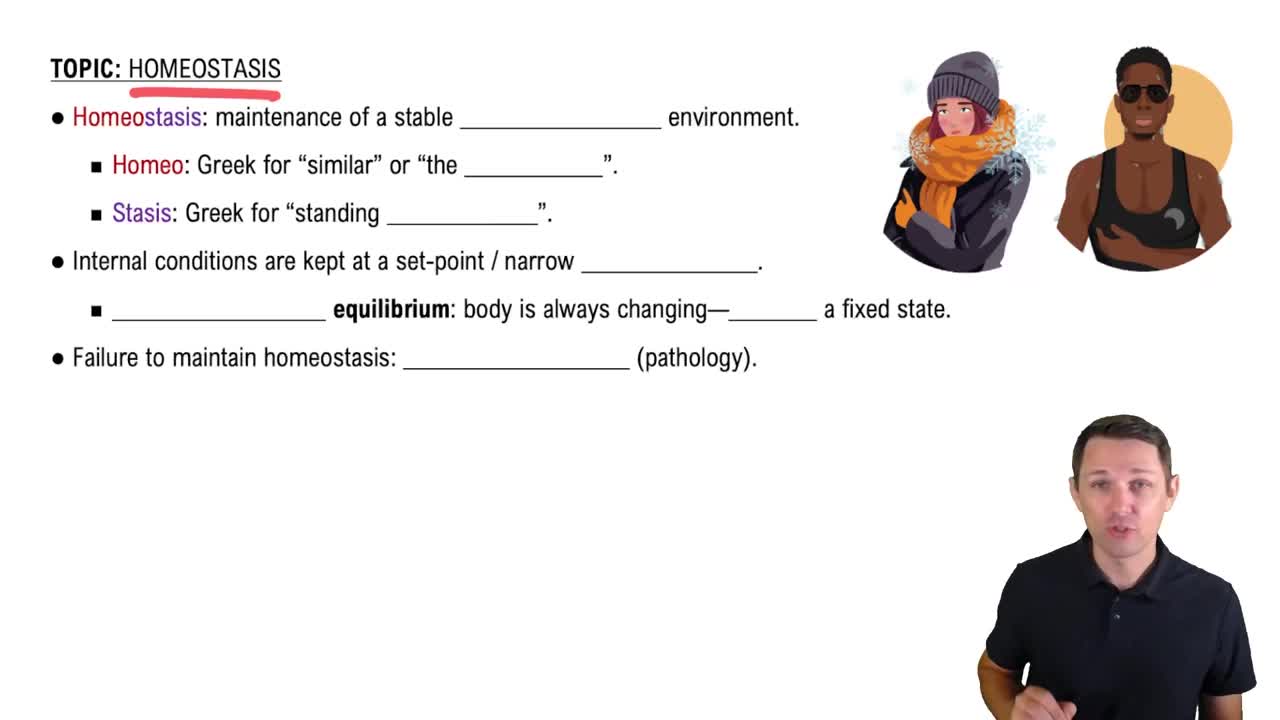
 01:59
01:59
이 집합의 용어 (10)
Receptor detects change, control center processes information, and effector responds to restore balance.
A response that reverses a change to maintain stability, such as body temperature regulation.
A response that amplifies a change, like blood clotting or childbirth contractions.
Protons (positive charge), neutrons (neutral), and electrons (negative charge).
Electron shells hold electrons at different energy levels around the nucleus.
An atom or molecule with a net electric charge due to loss or gain of electrons.
Atoms of the same element with different numbers of neutrons.
A chemical bond where atoms share one or more pairs of electrons.
A chemical bond formed by the transfer of electrons from one atom to another, creating charged ions.
A weak attraction between a hydrogen atom in one molecule and an electronegative atom in another.