 뒤로
뒤로Anatomy & Physiology: Human Body Orientation and Structural Organization
 02:40
02:40
이 집합의 용어 (22)
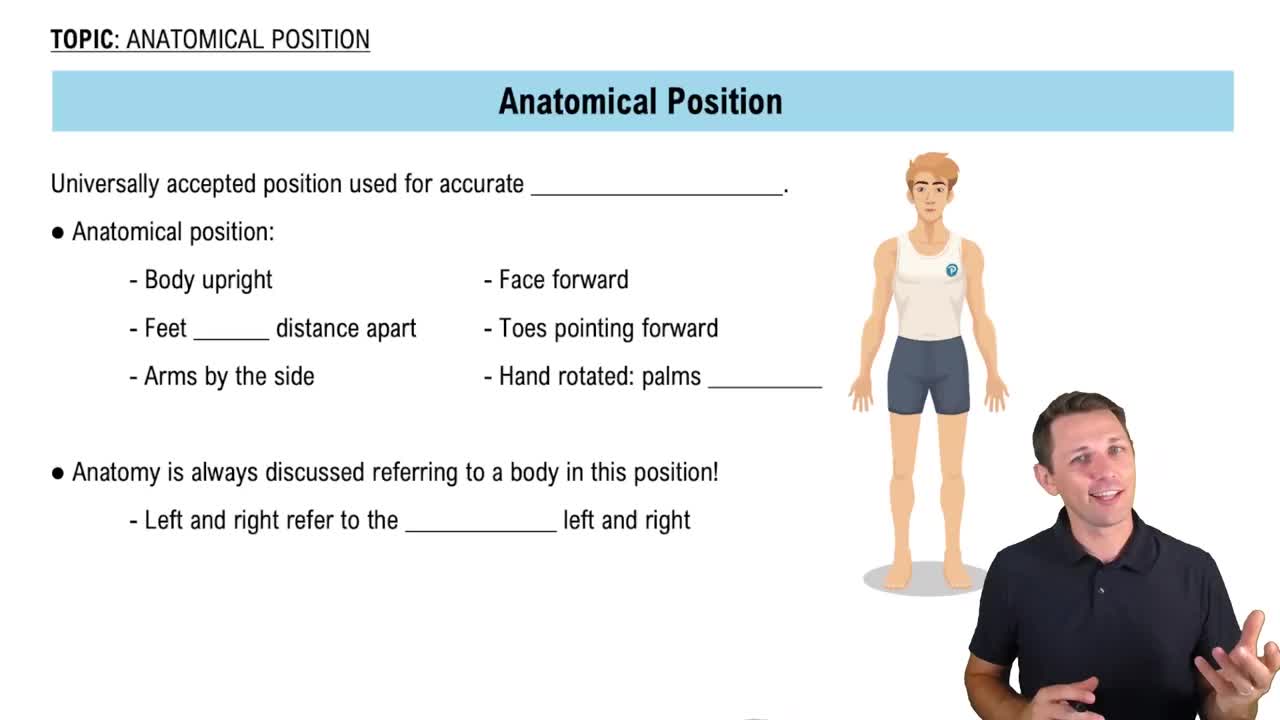
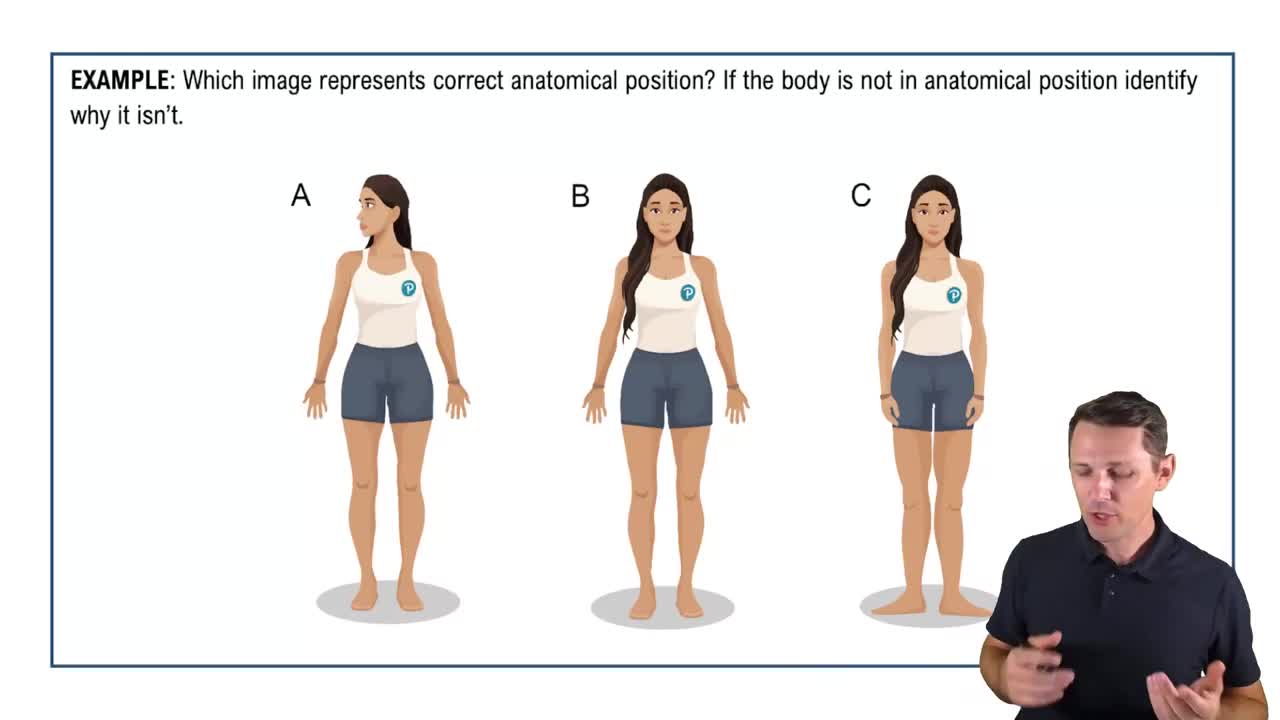
The anatomical position is standing erect, feet hip-width apart, toes forward, head forward, and palms facing forward. It provides a consistent frame of reference for anatomical descriptions.
Supination turns the palms forward/upward (e.g., holding a bowl). Pronation turns the palms downward (e.g., typing).
Superior means toward the head; inferior means toward the feet.
Medial means toward the midline; lateral means away from the midline.
Proximal means closer to the point of attachment; distal means farther from the point of attachment.
Superficial means near the surface; deep means farther from the surface.
Sagittal divides left/right; frontal divides anterior/posterior; transverse divides superior/inferior.
Midsagittal divides the body into equal left/right halves; parasagittal divides into unequal left/right halves.
Regional names correspond to underlying structures, e.g., the brachial region contains the humerus, brachial artery, and muscles.
Dorsal cavity: cranial and vertebral. Ventral cavity: thoracic (pleural, mediastinum, pericardial) and abdominopelvic (abdominal and pelvic).
Serous membranes are thin double-layered membranes with parietal (outer) and visceral (inner) layers. Serous fluid reduces friction between organs.
RUQ: liver/gallbladder; LUQ: stomach; RLQ: appendix; LLQ: descending/sigmoid colon.
Hypochondriac: under cartilage; lumbar: lower back; epigastric: above stomach; hypogastric: below stomach.
Cell → Tissue → Organ → Organ System. Each level increases complexity and specialization.
Includes the heart and blood vessels. Function: transport of gases, nutrients, and wastes.
X-rays visualize bone structures and are used for detecting fractures and bone abnormalities.
CT provides detailed cross-sectional images and is preferred for acute trauma evaluation.
MRI visualizes soft tissues and is preferred for soft-tissue and degenerative disease evaluation.
Pleura are serous membranes that produce serous fluid to reduce friction between lung and chest wall during breathing.
The RLQ contains the appendix; inflammation causes localized sharp pain indicating appendicitis.
The epigastric region contains the stomach and liver; pain may indicate gastritis or liver issues.
Bone densitometry measures calcium/mineral content in bones to detect osteoporosis.