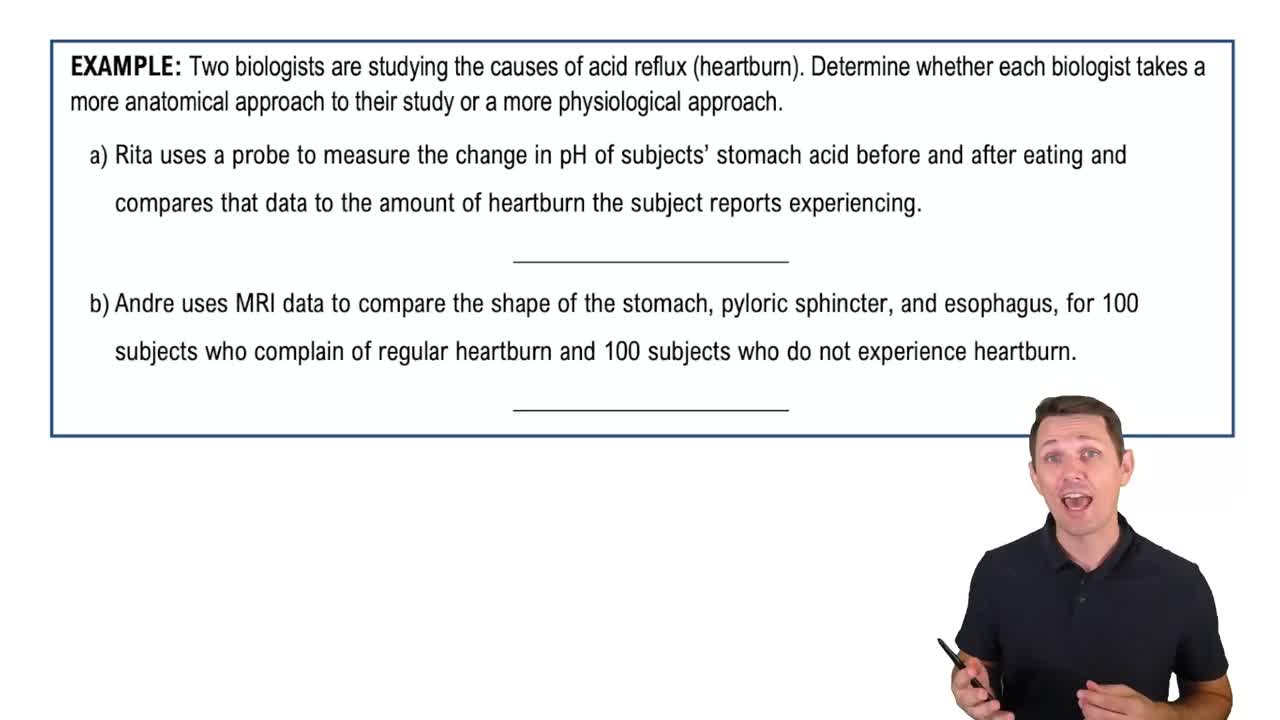
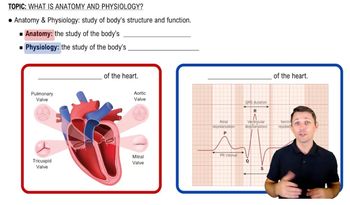
What is the difference between anatomy and physiology?
Anatomy is the study of the body’s structure. Physiology is the study of the body’s function.
What is the principle of complementarity of structure and function?
Structure exists to perform a function. To understand why an organ is shaped a certain way, you must understand what it does. Function is determined by structure.
List the levels of organization in the human body from smallest to largest.
Molecular, Cellular, Tissue, Organ, Organ System, Organism.
What is the anatomical reference body?
A standard healthy adult body used for learning anatomy, typically female 5'4" (164 cm), 125 lbs (57 kg) or male 5'9" (175 cm), 155 lbs (70 kg).
Name the three organ systems responsible for protection, structure, and support.
Which two organ systems are primarily responsible for communication and integration?
Nervous system (electrical signals) and Endocrine system (chemical messengers/hormones).
What are the main functions of the circulatory and lymphatic systems?
Transport materials through the body and provide immunity.
What is homeostasis?
Maintenance of a stable internal environment within a narrow range or set-point.
What are the two types of feedback loops that control homeostasis?
Negative feedback moves the system toward the set point and maintains homeostasis. Positive feedback moves the system away from the set point and is less common.
Give an example of a negative feedback loop.
Body temperature regulation: sweating to cool down when hot, shivering to warm up when cold.
Give an example of a positive feedback loop.
Labor contractions: oxytocin release increases contractions until delivery.
What is the anatomical position?
Body upright, face forward, feet shoulder-width apart, toes forward, arms at sides, palms facing forward. Left and right refer to the body's left and right.
Define the directional terms superior and inferior.
Superior means toward the head; inferior means toward the feet.
Define the directional terms anterior and posterior.
Anterior means toward the front of the body; posterior means toward the back.
What do the terms medial and lateral mean?
Medial means toward the midline of the body; lateral means away from the midline.
What do proximal and distal mean in relation to limbs?
Proximal means closer to the limb's attachment point; distal means farther from the attachment.
What are the three main anatomical planes?
Frontal (divides front and back), Sagittal (divides left and right), Transverse (divides top and bottom).
What are the two main body cavities and what do they contain?
Anterior (ventral) cavity contains most organs; Posterior (dorsal) cavity contains the brain and spinal cord.
What are serous membranes and their function?
Double-layer membranes that surround organs, producing serous fluid to reduce friction during organ movement.
Name the four serous membranes and the organs they surround.
 뒤로
뒤로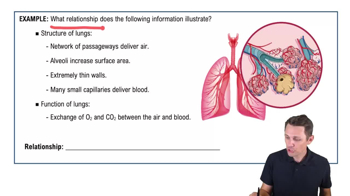
 3:06
3:06