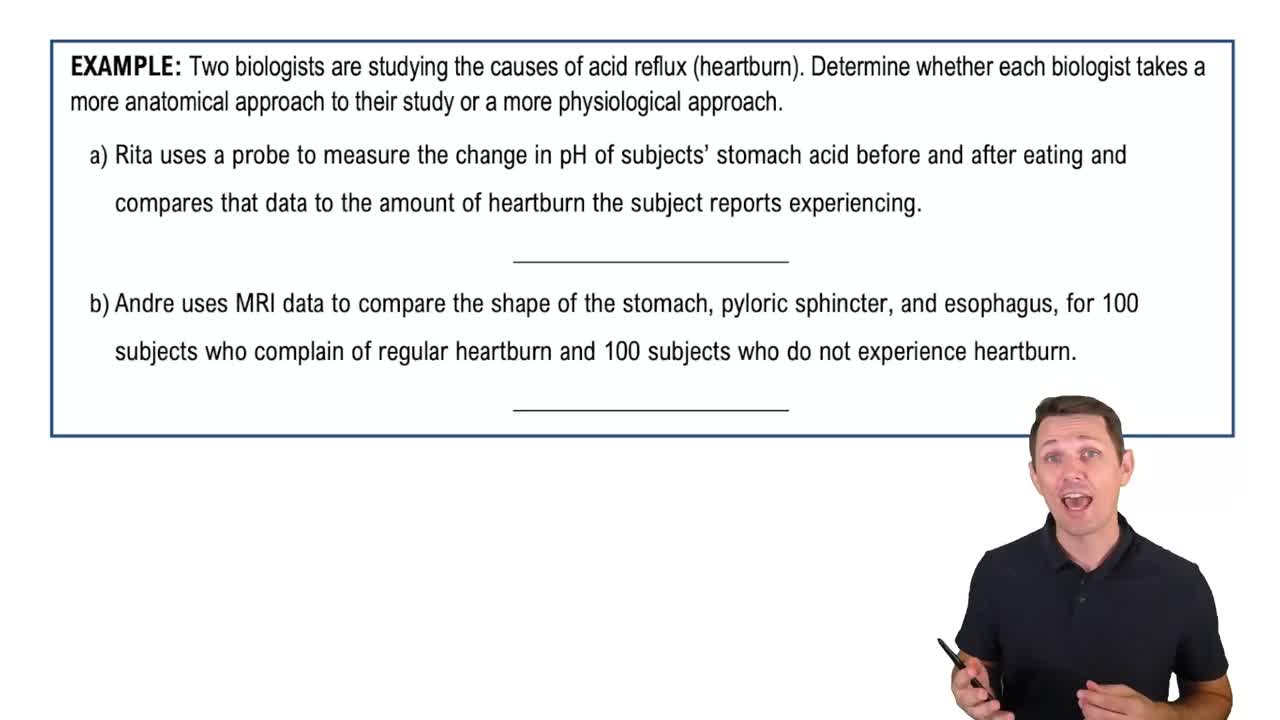
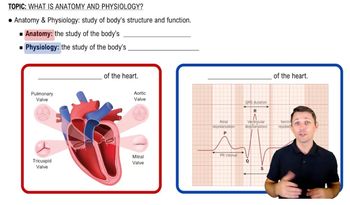
Anatomy is the study of structure; Physiology is the study of function.
Gross anatomy vs. microscopic anatomy
Gross anatomy studies structures visible to the naked eye; Microscopic anatomy studies structures seen with a microscope.
Definition of cytology and histology
Cytology is the study of cells; Histology is the study of tissues.
Examples of specialty studies of anatomy
Developmental anatomy: study from conception to old age; Radiographic anatomy: structures visualized by specialized scanning like CT and PET.
Definition of pathological anatomy
Study of structural changes caused by disease.
Essential tools for studying anatomy
Anatomical terminology, Observation, Palpation, and Auscultation.
Examples of system physiology
Cardiovascular physiology and Renal physiology study the function of whole organ systems.
Principle of complementarity of structure and function
The structure of an organism determines its function.
Organizational hierarchy from atoms to organism
Chemical (atoms/molecules) → Cellular (cells) → Tissue (similar cells) → Organ (2+ tissues) → Organ system (organs working together) → Organismal (all systems combined).
Functions necessary for life
Maintaining boundaries, movement, responsiveness, digestion, metabolism, excretion, reproduction, and growth.
Maintaining boundaries function
Separates internal and external environments; examples include skin and plasma membranes.
Movement in the body
External movement: moving the body; Internal movement: movement of substances within cells like sodium and potassium ions.
Responsiveness
Ability to sense and respond to stimuli, such as blood flow changes or withdrawal reflex.
Digestion
Breakdown of food physically and chemically; absorption of simple molecules into the blood.
Metabolism and its types
Metabolism includes all chemical reactions; Catabolism breaks down molecules; Anabolism builds molecules.
Excretion
Removal of metabolic and digestive waste like urea, CO2, and feces.
Reproduction at cellular and organism levels
Cellular: cell division for growth/repair; Organismal: production of offspring.
Growth
Increase in size of a body part or the whole organism.
Main functions of the integumentary system
Protects body, synthesizes vitamin D, houses receptors, and contains sweat and oil glands.
Functions of the skeletal system
Protects organs, supports body, forms blood cells, and stores minerals.
Functions of the muscular system
Enables locomotion, facial expression, speech, breathing, digestion, and produces heat.
Functions of the nervous system
Fast-acting control system responding to stimuli and acting on muscles, glands, and nerves.
Functions of the endocrine system
Secretes hormones regulating growth, reproduction, and metabolism.
Functions of the cardiovascular system
Pumps blood to transport oxygen, carbon dioxide, nutrients, and waste.
Functions of the lymphatic system
Supports immunity and returns fluids to the bloodstream.
Functions of the respiratory system
Exchanges oxygen and carbon dioxide between air and blood.
Functions of the digestive system
Breaks down food, absorbs nutrients, and eliminates indigestible waste as feces.
Functions of the urinary (renal) system
Eliminates nitrogenous waste and regulates water, electrolytes, and acid-base balance.
Five survival needs
Nutrients, oxygen, water, body temperature, and atmospheric pressure.
Definition of homeostasis
Dynamic equilibrium maintaining stable internal conditions necessary for life.
Components of a control mechanism
Receptors detect stimuli, control center sets set point and processes info, effectors produce response.
Negative feedback
Response reduces original stimulus to maintain homeostasis; example: body temperature regulation.
Positive feedback
Response enhances original stimulus; example: childbirth contractions.
Which feedback controls homeostasis more?
Negative feedback is the primary mechanism controlling homeostasis.
 뒤로
뒤로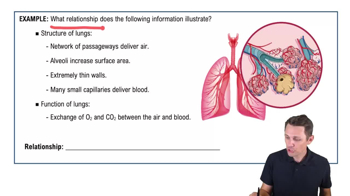
 3:06
3:06