 뒤로
뒤로Anatomy & Physiology: Immunity and Inflammation Key Concepts
 1:38
1:38
이 집합의 용어 (11)
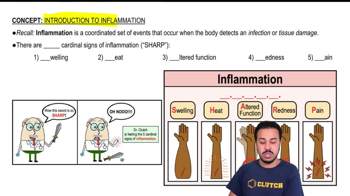
Inflammation causes hyperemia (increased blood flow), exudate (fluid leakage), and pain.
What happens to white blood cell count during the inflammatory process?
Leukocytosis occurs (an increase in white blood cells)
Humoral mediated immunity is antibody-mediated immunity involving antibodies produced by B cells.
Interferon inhibits viral replication to help protect cells from viral infection.
Glomerulonephritis affects the kidney capillaries in the glomerulus.
Exophthalmos is protrusion of the eyeballs and is a symptom of Graves’s disease.
Immediate hypersensitivities occur within seconds or minutes and are the most dangerous type of allergic reactions.
Activated B cells secrete antibodies, which are proteins that target antigens.
Neutralization stops the antigen from affecting the target cell by blocking its active sites.
Precipitation is when antigen-antibody complexes settle out of solution.
The thymus stroma contains epithelial cells that support T cell development.