 뒤로
뒤로Anatomy & Physiology: Introduction and Basic Concepts
 3:06
3:06
이 집합의 용어 (25)
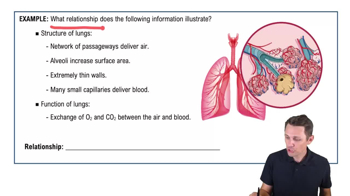
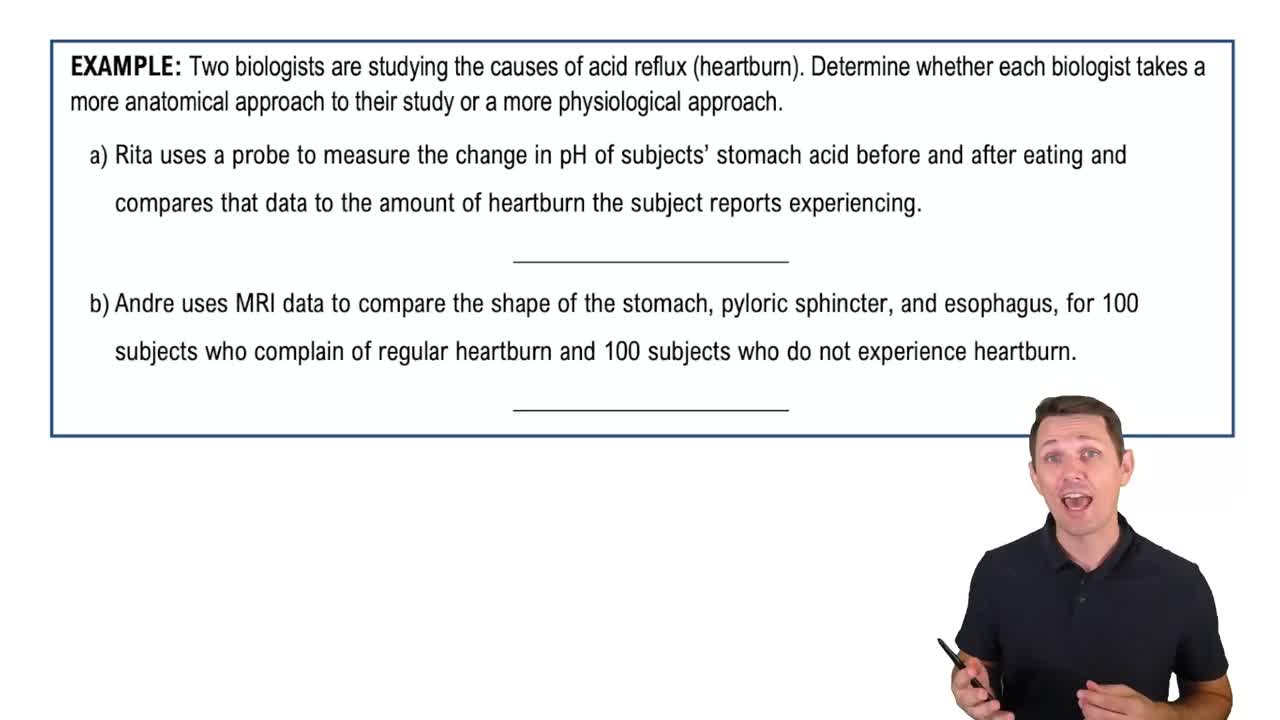
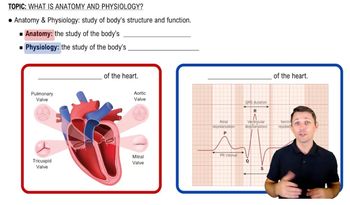
Anatomy is the study of the structure of the body and its parts.
Physiology is the study of the function of the body and its parts.
1) Chemical level, 2) Cellular level, 3) Tissue level, 4) Organ level, 5) Organ system level, 6) Organismal level.
Homeostasis is the body's ability to maintain a stable internal environment despite external changes.
1) Receptor (sensor), 2) Control center, 3) Effector.
The receptor detects changes or stimuli in the environment.
The control center processes information from the receptor, determines the set point, and sends commands to effectors.
The effector responds to commands from the control center to oppose or enhance the stimulus and restore balance.
Negative feedback opposes a change to return to set point; positive feedback enhances a change to amplify a process.
Examples include regulation of blood glucose, body temperature, and blood calcium levels.
Examples include uterine contractions during childbirth, blood clotting, and breastfeeding.
The SAP is a common reference position where the body stands upright, facing forward, arms at sides, palms facing forward.
Superior means toward the head or upper part of a structure; above.
Inferior means away from the head or toward the lower part of a structure; below.
Anterior means toward or at the front of the body; in front of.
Posterior means toward or at the back of the body; behind.
Proximal is closer to the origin of a body part; distal is farther from the origin.
Transverse plane divides top and bottom; frontal (coronal) divides front and back; sagittal divides right and left parts.
The ventral body cavity and the dorsal body cavity.
Serous membranes line body cavities; parietal layer lines body wall, visceral layer covers organs; separated by serous fluid.
Right upper quadrant (RUQ), left upper quadrant (LUQ), right lower quadrant (RLQ), left lower quadrant (LLQ).
Provides protection, support, and hemopoiesis (blood cell production).
The nervous system, including brain, spinal cord, and nerves.
Automatic response by cells, tissues, or organs to a change without nervous or endocrine input.
Regulation initiated by the nervous or endocrine system to control multiple organs or systems.