뒤로

Anatomy & Physiology: Key Concepts and Systems

컨트롤 버튼이 '내비게이션' 모드로 변경되었습니다.
1/20
  • What is the principle of complementarity in anatomy and physiology?

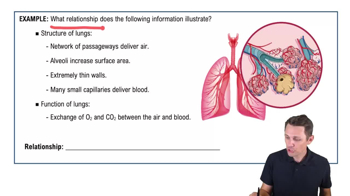
    The principle of complementarity states that structure and function are inseparable; what a structure can do depends on its specific form.
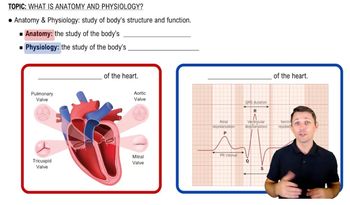
  • Define anatomy and physiology.

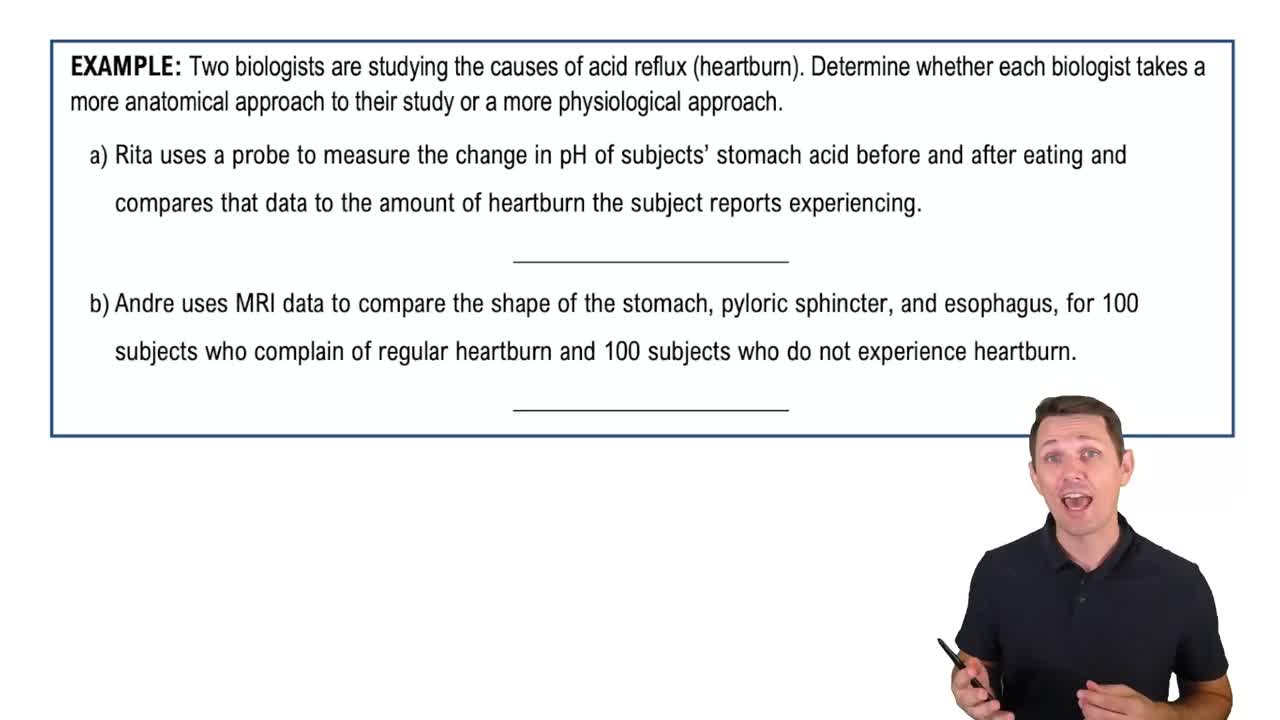
    Anatomy is the study of the structure of body parts and their relationships. Physiology is the study of the function of body parts and how they carry out life-sustaining activities.
  • What are the main levels of structural organization in the human body?

    Chemical, Cellular, Tissue, Organ, Organ System, and Organismal levels.
  • Name the 11 major organ systems of the human body.

    Integumentary, Skeletal, Muscular, Nervous, Endocrine, Cardiovascular, Lymphatic, Respiratory, Digestive, Urinary, and Reproductive systems.
  • What are the necessary life functions of the human body?

    Maintaining boundaries, movement, responsiveness, digestion, metabolism, excretion, reproduction, and growth.
  • What are the survival needs of the human body?

    Nutrients, oxygen, water, normal body temperature, and appropriate atmospheric pressure.
  • Define homeostasis.

    Homeostasis is the maintenance of relatively stable internal conditions despite continuous environmental changes.
  • What are the three components of homeostatic control?

    Receptor (monitors environment), Control Center (determines set point), and Effector (carries out response).
  • Explain negative feedback in homeostasis.

    A response that reduces or shuts off the original stimulus to maintain balance, e.g., regulation of body temperature.
  • Explain positive feedback and give an example.

    A response that enhances or exaggerates the original stimulus, usually for infrequent events, e.g., labor contractions.
  • What is anatomical position?

    Body erect, feet slightly apart, palms facing forward, thumbs pointing away from the body.
  • Define the directional terms: superior and inferior.

    Superior means toward the head or upper part; Inferior means away from the head or toward the lower part.
  • What do the terms anterior and posterior mean?

    Anterior means toward or at the front of the body; Posterior means toward or at the back of the body.
  • Define medial and lateral.

    Medial means toward the midline of the body; Lateral means away from the midline.
  • What do proximal and distal refer to?

    Proximal means closer to the origin of a body part; Distal means farther from the origin.
  • What are the main body planes?

    Sagittal (divides right and left), Frontal (divides anterior and posterior), Transverse (divides superior and inferior).
  • What is the difference between midsagittal and parasagittal planes?

    Midsagittal divides the body exactly at the midline; parasagittal is offset from the midline.
  • Name the major body cavities.

    Dorsal (cranial and vertebral) and Ventral (thoracic and abdominopelvic) cavities.
  • What is the function of serous membranes?

    They are thin, double-layered membranes that reduce friction by secreting lubricating serous fluid around organs.
  • What are the four abdominal quadrants used in medicine?

    Right Upper Quadrant (RUQ), Left Upper Quadrant (LUQ), Right Lower Quadrant (RLQ), Left Lower Quadrant (LLQ).