Skip to main content
Anatomy & Physiology
나의 코스
배우기
시험 준비
AI 튜터
학습 가이드
교과서적 해결책
플래시카드
탐험해 보세요
앱을 사용해 보세요
나의 코스
배우기
시험 준비
AI 튜터
학습 가이드
교과서적 해결책
플래시카드
탐험해 보세요
앱을 사용해 보세요
뒤로
Anatomy & Physiology: Organization of the Human Body
카드를 뒤집기 위해 탭할 수 있습니다.
What is the basic structural and functional unit of living things?
카드를 뒤집기 위해 탭할 수 있습니다.
👆
What is the basic structural and functional unit of living things?
Cell
is the basic structural and functional unit of living things.
진행 상황 추적
컨트롤 버튼이 '내비게이션' 모드로 변경되었습니다.
1/25
추천 영상
05:04
The Levels of Organization
44876
views
1296
rank
4
comments
02:22
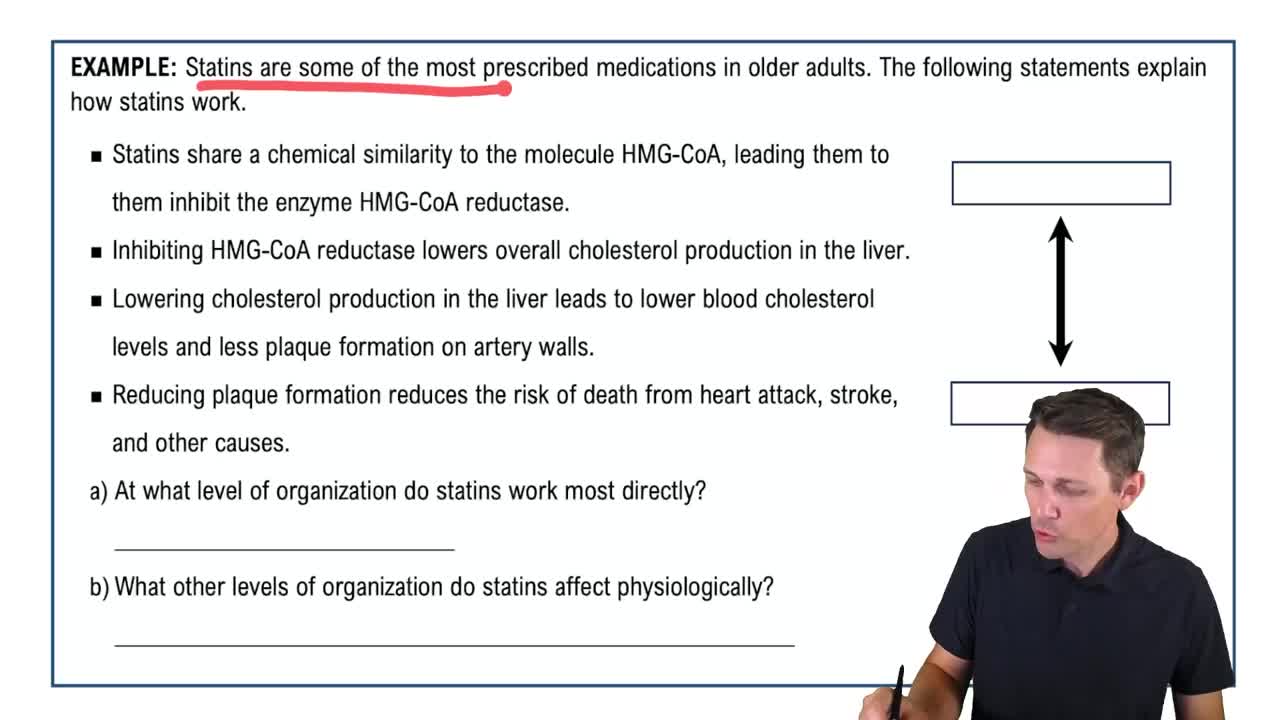
Levels of Organization Example 1
24798
views
515
rank
2
comments
이 집합의 용어 (25)
하이드의 정의
What is the basic structural and functional unit of living things?
Cell
is the basic structural and functional unit of living things.
List the 7 levels of organization of the human body from smallest to largest.
Atoms → Molecules → Organelles → Cells → Tissues → Organs → Organ Systems → Organism
Name the four tissue types in the human body.
Epithelial
,
Connective
,
Muscle
, and
Nerve
tissues.
What are the 11 organ systems of the human body?
Integumentary, Skeletal, Muscular, Nervous, Endocrine, Cardiovascular, Lymphatic, Respiratory, Digestive, Urinary, Reproductive.
Define the Principle of Emergent Properties.
As you ascend the organizational hierarchy, new properties appear at each level that were not present at lower levels.
What does the 1st Law of Thermodynamics state regarding living systems?
Energy can neither be created nor destroyed but can be transformed from one form to another.
Why do living things need energy according to the 2nd Law of Thermodynamics?
Living things use energy to maintain order and organization because all systems tend toward disorder (entropy).
What is homeostasis?
The ability of an organism to maintain a relatively constant internal environment despite external changes.
Differentiate between negative and positive feedback mechanisms.
Negative feedback
resists deviations from normal (e.g., blood pressure).
Positive feedback
amplifies deviations (e.g., childbirth, blood clotting).
What is irritability or responsiveness in living organisms?
The immediate response to a stimulus.
What is the role of DNA in reproduction and development?
DNA contains genes that transfer hereditary information, serving as the blueprint for living systems.
What causes genetic variation between generations?
Mutations—variations in gene structure that can be detrimental, harmless, or beneficial.
Define evolution in the context of anatomy and physiology.
Descent with modification; the process by which diversity arises from a common ancestor over time.
Describe the anatomical position.
Person standing with feet forward, arms at sides, palms facing forward, and thumbs pointing outward.
What do the directional terms superior and inferior mean?
Superior
means toward the head;
Inferior
means toward the feet.
What is the difference between proximal and distal?
Proximal
means toward the point of attachment;
Distal
means away from the point of attachment.
Name the three main body planes and their divisions.
Sagittal
divides left and right;
Transverse
divides superior and inferior;
Frontal
divides anterior and posterior.
What are the axial and appendicular regions of the body?
Axial
: head and trunk;
Appendicular
: limbs and associated girdles.
What are the four quadrants of the abdomen?
Upper left, upper right, lower left, and lower right quadrants.
What is the difference between the dorsal and ventral body cavities?
Dorsal cavity
contains brain and spinal cord;
Ventral cavity
contains thoracic and abdominopelvic cavities.
What are serous membranes and their function?
Membranes lining body cavities and organs that secrete fluid to lubricate and protect internal organs.
What is the difference between visceral and parietal serous membranes?
Visceral
membranes cover organs;
Parietal
membranes line cavity walls.
Name the three serous membrane-lined cavities in the thoracic cavity.
Two pleural cavities (lungs) and one pericardial cavity (heart).
What is the peritoneum and its role?
Serous membrane lining the abdominopelvic cavity and covering abdominal organs; helps anchor organs and provides a pathway for vessels and nerves.
What are retroperitoneal organs?
Organs located behind the parietal peritoneum, closely associated with the body wall (e.g., kidneys, pancreas).
 뒤로뒤로
뒤로뒤로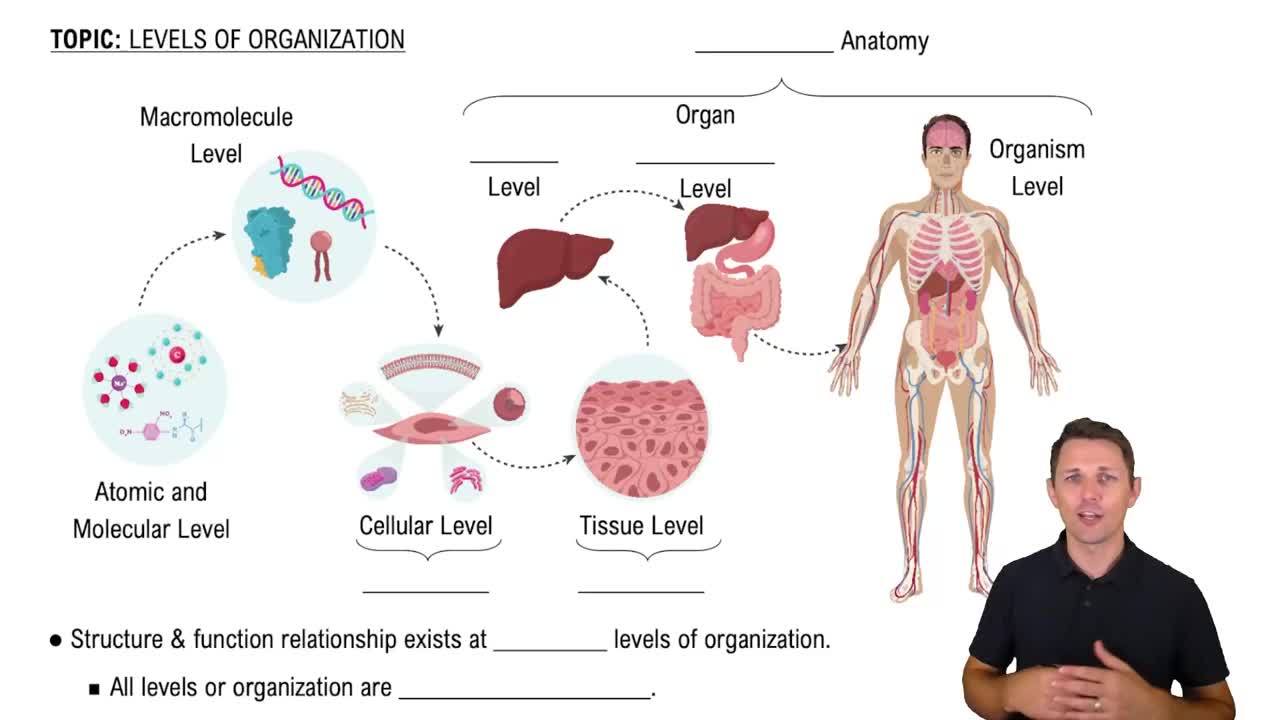
 05:04
05:04