뒤로

Anatomy & Physiology: Osseous Tissue and Bone Structure

컨트롤 버튼이 '내비게이션' 모드로 변경되었습니다.
1/30
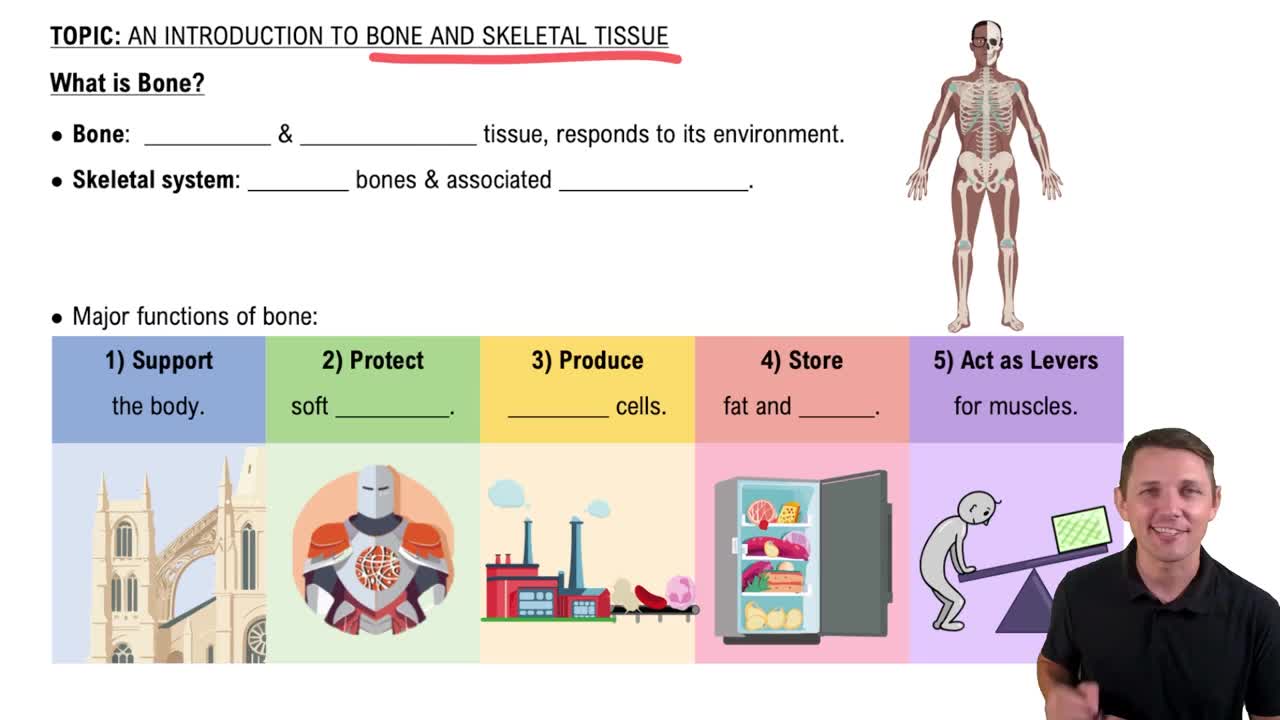
  • Five Primary Functions of the Skeletal System

    • Support
    • Storage of minerals (calcium) and lipids (yellow bone marrow)
    • Blood cell production (red marrow)
    • Protection
    • Leverage for movement by acting as levers for muscles
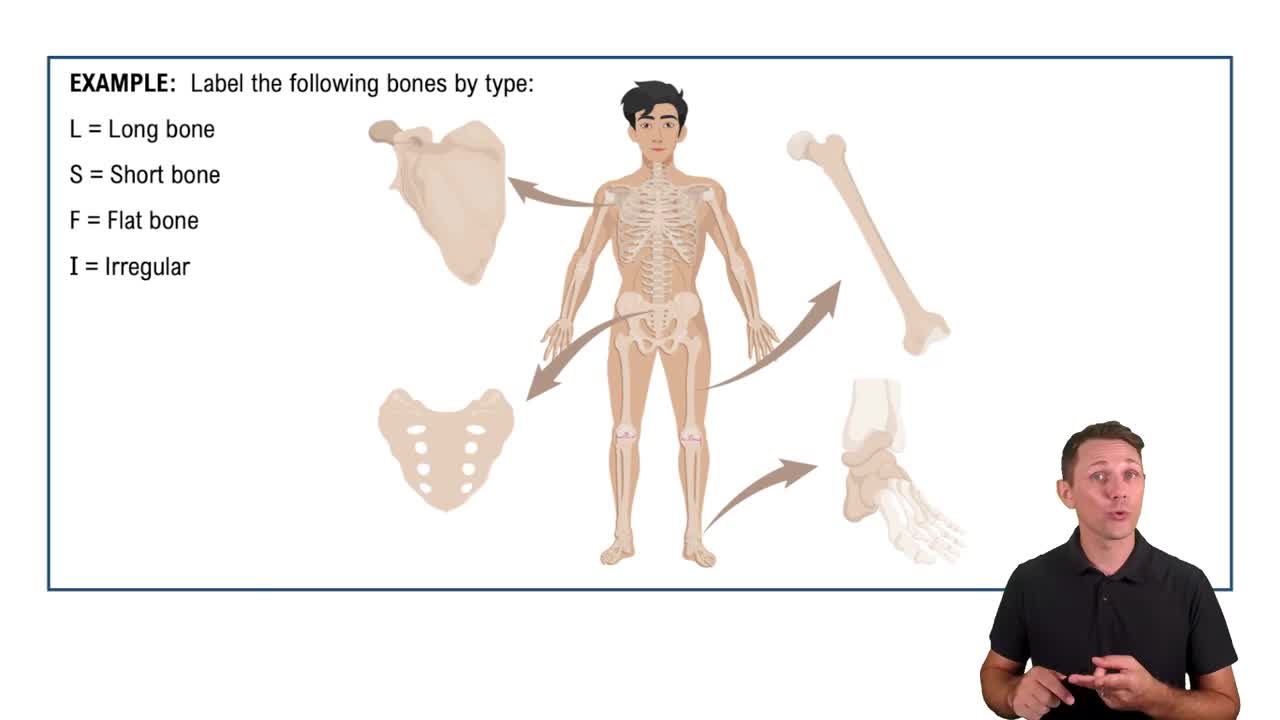
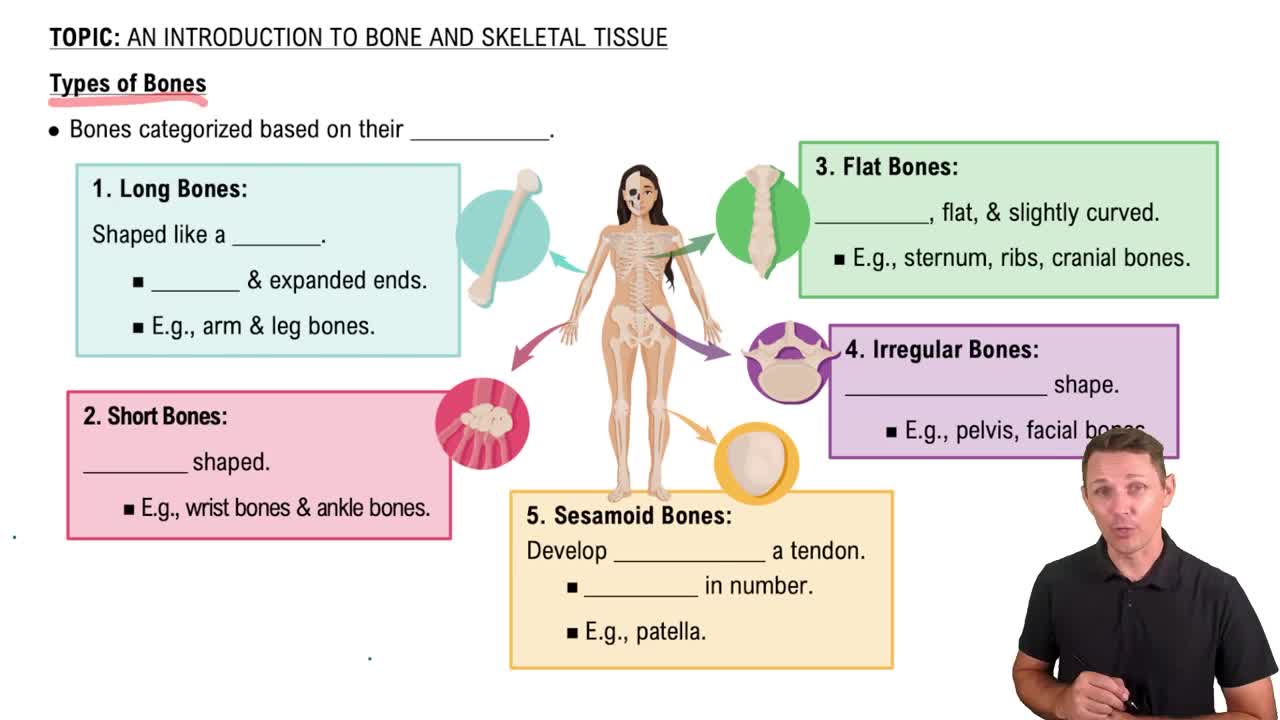
  • Six Bone Shapes

    Sutural, irregular, short, flat, long, and sesamoid bones.
  • Sutural Bones

    Small, irregular bones found between the flat bones of the skull.
  • Irregular Bones

    Bones with complex shapes, such as spinal vertebrae and pelvic bones.
  • Short Bones

    Small and thick bones, examples include ankle and wrist bones.
  • Flat Bones

    Thin bones with parallel surfaces, found in the skull, sternum, ribs, and scapulae.
  • Long Bones

    Long and thin bones found in arms, legs, hands, feet, fingers, and toes.
  • Sesamoid Bones

    Small, flat bones that develop inside tendons near joints, such as the patella.
  • Bone Markings: Processes

    Elevations or projections where tendons and ligaments attach or where bones articulate.
  • Bone Markings: Depressions and Openings

    Depressions and grooves indicate sites for blood vessels or nerves; openings allow passage of blood vessels and nerves.
  • Structure of a Long Bone

    Diaphysis: shaft with compact bone and medullary cavity; Epiphysis: wide ends with spongy bone; Metaphysis: region where diaphysis and epiphysis meet.
  • Structure of a Flat Bone

    Consists of spongy bone (diploë) sandwiched between two layers of compact bone.
  • Bone Matrix Composition

    Two-thirds calcium phosphate forming hydroxyapatite crystals, plus collagen fibers and other minerals.
  • Four Types of Bone Cells

    Osteocytes (mature cells), osteoblasts (bone-forming), osteoprogenitor cells (stem cells), osteoclasts (bone-resorbing).
  • Osteocytes

    Mature bone cells in lacunae that maintain bone matrix and help repair damaged bone.
  • Osteoblasts

    Immature bone cells that produce new bone matrix (osteoid) and initiate calcification.
  • Osteoprogenitor Cells

    Mesenchymal stem cells that divide to produce osteoblasts, located in endosteum and periosteum.
  • Osteoclasts

    Large multinucleate cells that resorb bone by secreting acids and enzymes, regulating calcium levels.
  • Compact Bone Structure

    Composed of osteons with concentric lamellae surrounding a central canal containing blood vessels.
  • Spongy Bone Structure

    Consists of trabeculae forming an open network; contains red bone marrow in spaces for blood cell production.
  • Periosteum

    Membrane covering outer bone surfaces except joints; has fibrous outer and cellular inner layers; supports growth and repair.
  • Endosteum

    Incomplete cellular layer lining medullary cavity and trabeculae; contains osteoprogenitor cells; active in growth and repair.
  • Ossification Types

    Endochondral ossification replaces cartilage with bone; intramembranous ossification forms bone directly from mesenchyme.
  • Endochondral Ossification

    Process where hyaline cartilage is replaced by bone; involves primary and secondary ossification centers.
  • Epiphyseal Plate and Closure

    Cartilage plate where bone growth occurs; closes after puberty forming epiphyseal line, ending longitudinal growth.
  • Intramembranous Ossification

    Bone develops directly from mesenchymal tissue, forming dermal bones like mandible and clavicle.
  • Bone Remodeling

    Continuous process balancing bone formation by osteoblasts and resorption by osteoclasts to maintain strength.
  • Calcium Homeostasis Hormones

    Parathyroid hormone increases blood calcium by stimulating osteoclasts; calcitonin lowers calcium by inhibiting osteoclasts.
  • Fracture Repair Steps

    Bleeding and clot formation, callus formation, replacement of cartilage with bone, and remodeling by osteoblasts and osteocytes.
  • Effects of Aging on Bone

    Bone mass decreases with age; osteopenia and osteoporosis increase fracture risk; hormone changes accelerate loss.