Skip to main content
Anatomy & Physiology
나의 코스
배우기
시험 준비
AI 튜터
학습 가이드
교과서적 해결책
플래시카드
탐험해 보세요
앱을 사용해 보세요
나의 코스
배우기
시험 준비
AI 튜터
학습 가이드
교과서적 해결책
플래시카드
탐험해 보세요
앱을 사용해 보세요
뒤로
Anatomy & Physiology: The Cell - Structure and Function
카드를 뒤집기 위해 탭할 수 있습니다.
What are the two main categories of cells in the human body?
카드를 뒤집기 위해 탭할 수 있습니다.
👆
What are the two main categories of cells in the human body?
Sex cells
(germ cells: sperm and oocytes) and
somatic cells
(all other body cells).
진행 상황 추적
컨트롤 버튼이 '내비게이션' 모드로 변경되었습니다.
1/25
추천 영상
VideoThumbView.guidedCourse
03:45
Introduction to Eukaryotic Organelles
25772
views
436
rank
VideoThumbView.guidedCourse
05:32
Ribosomes
21548
views
338
rank
VideoThumbView.guidedCourse
02:04
Map of the Lesson on Eukaryotic Organelles
18859
views
237
rank
이 집합의 용어 (25)
하이드의 정의
What are the two main categories of cells in the human body?
Sex cells
(germ cells: sperm and oocytes) and
somatic cells
(all other body cells).
What are the four major functions of the plasmalemma (cell membrane)?
Physical isolation, regulation of exchange with the environment, sensitivity, and structural support.
Define diffusion in the context of membrane permeability.
Movement of molecules from an area of higher concentration to lower concentration without energy use.
What is osmosis?
The diffusion of water molecules across a selectively permeable membrane.
What distinguishes facilitated diffusion from simple diffusion?
Facilitated diffusion uses carrier proteins to transport molecules across the membrane without energy.
What is active transport and how does it differ from passive transport?
Active transport uses energy (ATP) and carrier proteins to move substances against their concentration gradient.
Name four ions commonly moved by active transport in cells.
Na+, Ca2+, Mg2+, and K+.
What is an exchange pump in cellular transport?
A carrier protein that moves two ions simultaneously in opposite directions across the membrane.
Describe pinocytosis and phagocytosis.
Pinocytosis is the ingestion of fluids and small molecules; phagocytosis is the engulfing of large particles or cells.
What is receptor-mediated endocytosis?
A selective process where ligands bind to receptors triggering vesicle formation to bring substances into the cell.
What is the cytosol?
The intracellular fluid of the cytoplasm, high in potassium ions and proteins, with an overall negative charge.
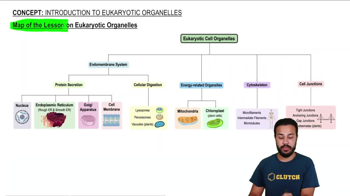
List the nonmembranous organelles found in the cytoplasm.
Cytoskeleton, microvilli, centrioles, cilia, flagella, and ribosomes.
What are the main components of the cytoskeleton?
Microfilaments, intermediate filaments, thick filaments, and microtubules.
What is the function of mitochondria?
Produce ATP through cellular respiration; have double membranes with cristae and matrix.
What are the main functions of the nucleus?
Control center of the cell; stores DNA; site of RNA synthesis and ribosome assembly.
What is chromatin?
DNA wrapped around histone proteins forming nucleosomes; the uncondensed form of chromosomes.
What are the four major functions of the endoplasmic reticulum (ER)?
Synthesis of macromolecules, storage, transport within the cell, and detoxification.
What are the three main functions of the Golgi apparatus?
Synthesis and packaging of secretions, packaging enzymes for cytosol, and renewal/modification of the plasmalemma.
What roles do lysosomes play in the cell?
Digest solid materials, recycle damaged organelles, and can cause autolysis if ruptured.
What is the function of peroxisomes?
Digest fats and toxins, convert hydrogen peroxide to water, and are abundant in liver cells.
Name the three major types of cell junctions.
Tight junctions, communicating junctions (gap junctions), and anchoring junctions.
What are the four stages of mitosis?
Prophase, metaphase, anaphase, and telophase.
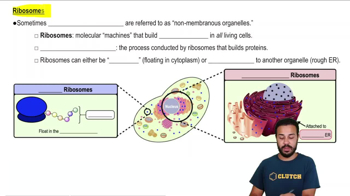
What is the function of ribosomes?
Synthesize proteins; can be free in cytoplasm or fixed on rough ER.
Describe the structure and function of cilia and flagella.
Cilia move materials over cell surfaces; flagella propel sperm cells through fluid; both have microtubule cores.
What is the role of microvilli?
Increase surface area of the cell to enhance absorption.
 뒤로뒤로
뒤로뒤로
 03:45
03:45