 뒤로
뒤로Anatomy & Physiology: The Language of Anatomy
 02:40
02:40
이 집합의 용어 (18)
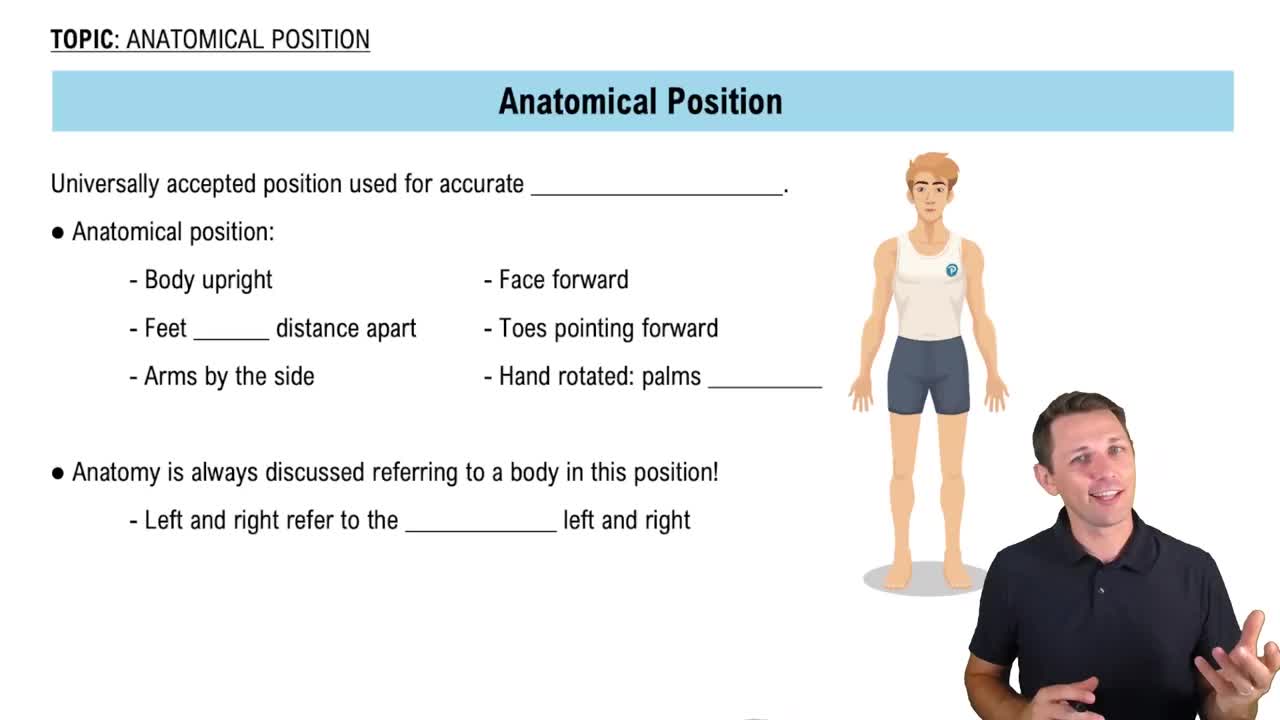
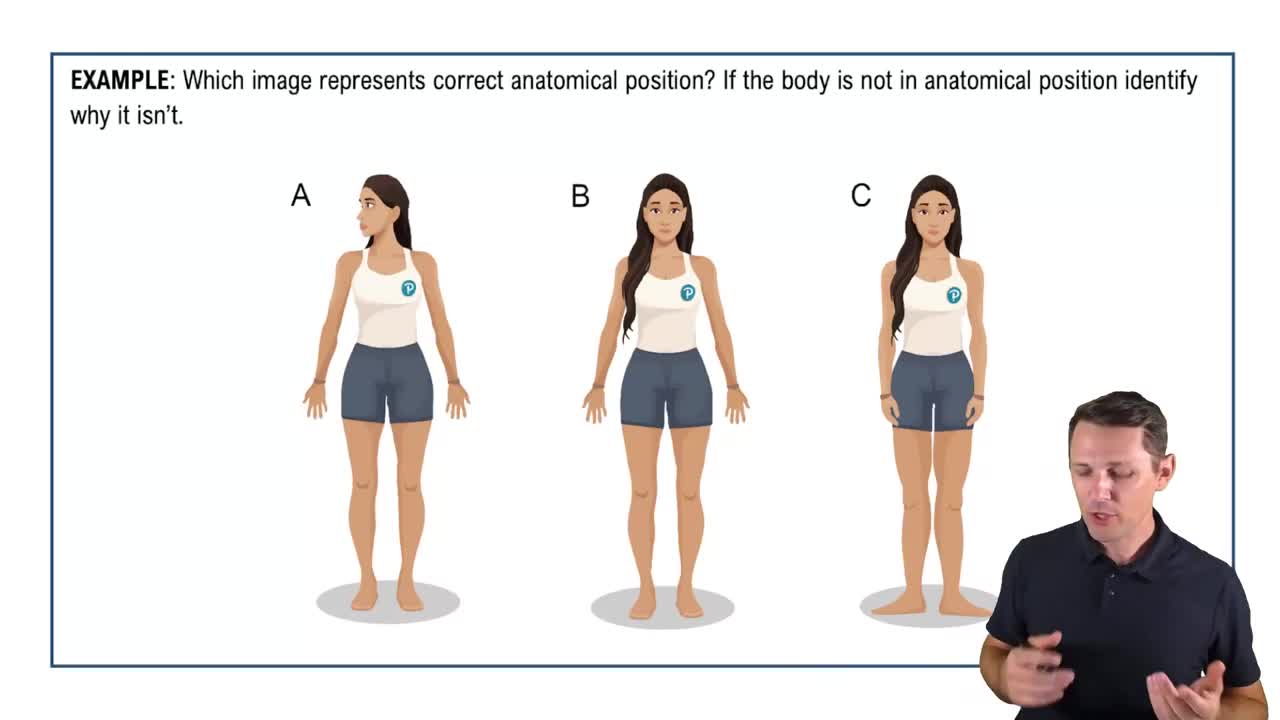
The standard body position used as a reference in anatomy: standing upright, feet parallel, arms at sides, and palms facing forward.
Superior means toward the head or upper part of a structure; inferior means away from the head or toward the lower part.
Anterior (ventral) means toward the front of the body; posterior (dorsal) means toward the back.
Medial means toward the midline of the body; lateral means away from the midline.
Proximal means closer to the origin of a body part or point of attachment; distal means farther from the origin.
Superficial means toward or at the body surface; deep means away from the body surface, more internal.
Imaginary flat surfaces used to divide the body: sagittal, frontal (coronal), and transverse (horizontal) planes.
Divides the body into left and right parts; a midsagittal plane divides it equally.
Divides the body into anterior (front) and posterior (back) parts.
Divides the body into superior (upper) and inferior (lower) parts.
Spaces within the body that protect internal organs, including dorsal and ventral cavities.
Includes the cranial cavity (brain) and vertebral cavity (spinal cord).
Includes the thoracic cavity and abdominopelvic cavity, separated by the diaphragm.
Thin membranes lining the ventral body cavities and covering organs, producing serous fluid to reduce friction.
The four divisions of the abdominopelvic area: right upper, left upper, right lower, and left lower quadrants.
Nine specific regions used to describe locations of organs, including the epigastric, umbilical, and hypogastric regions.
Medial regions lie toward the midline; lateral regions lie away from the midline.
Provides a clear, consistent way to describe body parts and positions to avoid confusion in communication.