 뒤로
뒤로Anatomy & Physiology: Tissue and Histology Basics
 03:32
03:32
이 집합의 용어 (22)
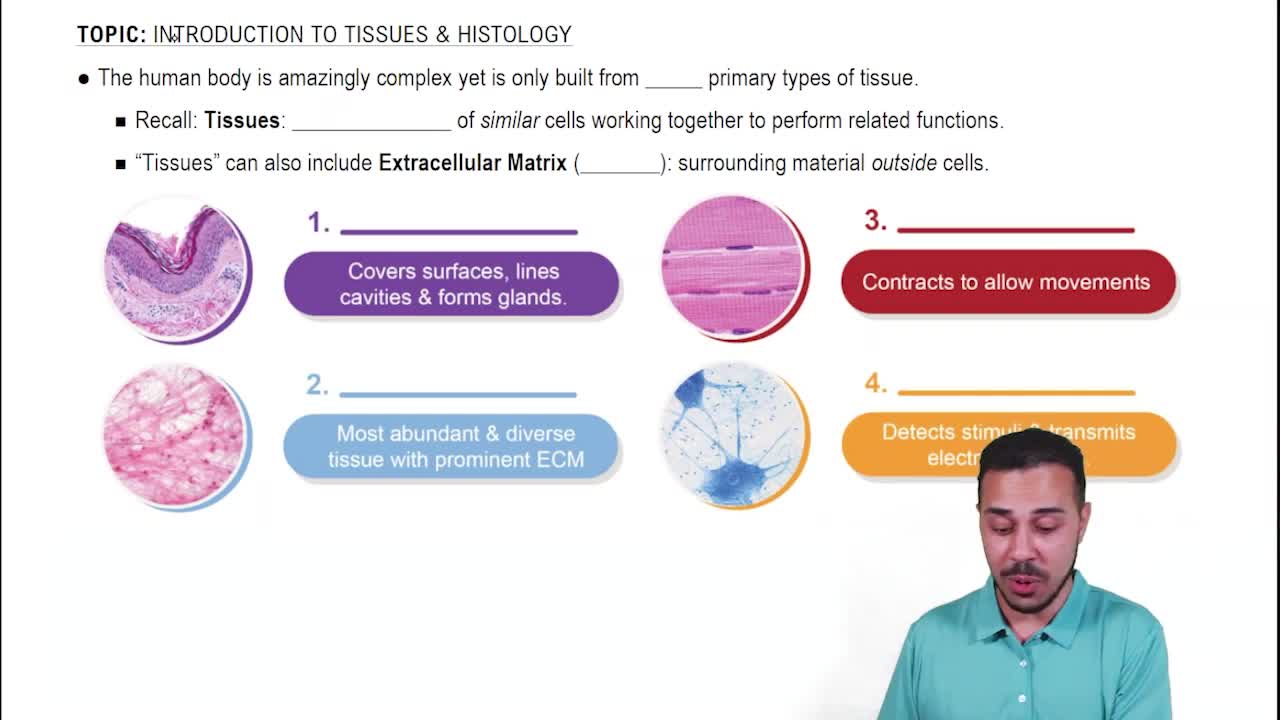
A tissue is a group of similar cells organized to perform a specific function in the body, forming organs and contributing to physiological processes.
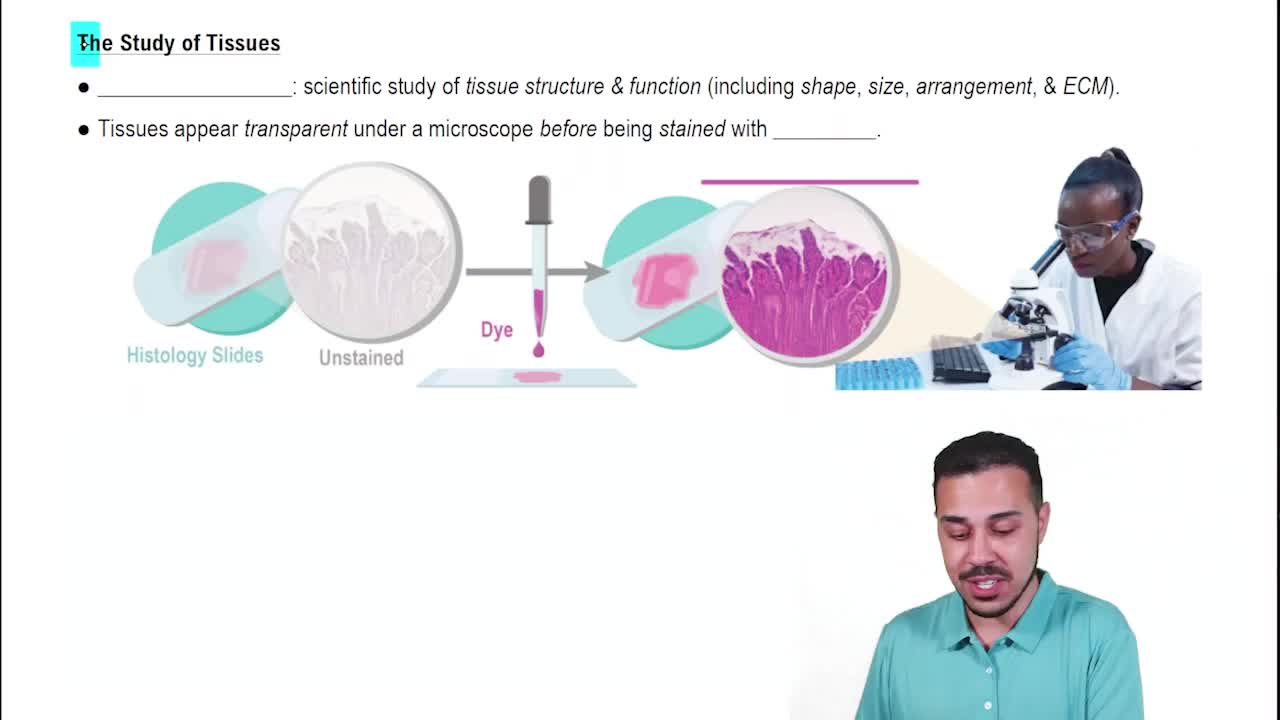
Hematoxylin stains acidic structures like nuclei purple/blue, while eosin stains basic structures like cytoplasm and extracellular matrix pink.
Hematoxylin stains the nuclei of cells, which appear purple or blue under the microscope.
Eosin stains the cytoplasm and extracellular matrix, which appear pink under the microscope.
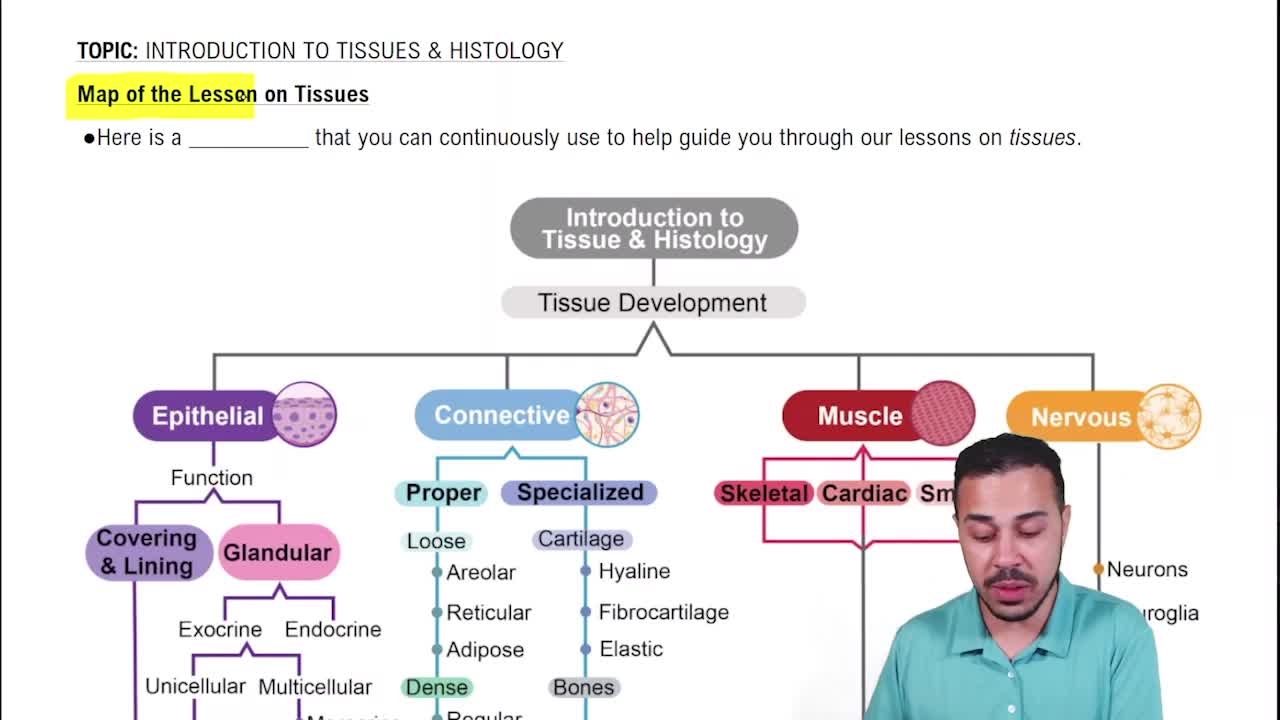
The four main tissue classes are epithelial, connective, muscular, and nervous tissue.
Epithelial tissue covers surfaces, lines cavities, and forms glands with tightly packed cells.
Connective tissue supports, binds, and protects other tissues and organs, with fewer cells and more extracellular matrix.
Muscular tissue is responsible for movement and consists of elongated cells.
Nervous tissue conducts electrical impulses and processes information using specialized cells called neurons.
Epithelial tissue has tightly packed cells and a high regenerative capability.
Connective tissue has fewer cells with abundant extracellular matrix and variable regenerative capability.
Muscular tissue has elongated cells and moderate regenerative capability.
Nervous tissue has highly specialized cells and low regenerative capability.
Subcategories of epithelial tissue include squamous, cuboidal, and columnar types.
Subcategories of connective tissue include bone, blood, and cartilage.
Subcategories of muscular tissue include skeletal, cardiac, and smooth muscle.
Epithelial tissue is found covering skin and lining organs and cavities.
Connective tissue is found throughout the body supporting and connecting other tissues.
Muscular tissue is found in muscles responsible for body movement.
Nervous tissue is found in the brain, spinal cord, and nerves.
Label A usually represents the nucleus, stained purple/blue by hematoxylin.
Label B usually represents the cytoplasm, stained pink by eosin.