What are the functions of simple squamous epithelium?
Absorption, diffusion, reducing friction, and controlling vessel permeability.
Where is stratified squamous epithelium found and what is its function?
Found on skin surface and lining of mouth, throat, esophagus, rectum, anus, and vagina; provides protection against abrasion, pathogens, and chemical attack.
What distinguishes transitional epithelium?
It tolerates repeated stretching cycles without damage and changes appearance when stretched; found in urinary bladder.
What are the two main types of glands formed by epithelial tissue?
Endocrine glands (release hormones into bloodstream, no ducts) and exocrine glands (secrete fluids through ducts onto epithelial surfaces).
What are the three methods of exocrine gland secretion?
Merocrine (exocytosis), apocrine (shedding cytoplasm), and holocrine (cell bursting).
What are the three main components of connective tissue?
Specialized cells, extracellular protein fibers, and fluid ground substance.
List the three categories of connective tissue.
Connective tissue proper (connect and protect), fluid connective tissues (transport), and supporting connective tissues (structural strength).
What are the two types of connective tissue proper?
Loose connective tissue (more ground substance, fewer fibers) and dense connective tissue (more fibers, less ground substance).
Name the three types of connective tissue fibers.
Collagen fibers (strong, resist force in one direction), reticular fibers (form flexible networks), and elastic fibers (branched, return to original length after stretching).
What are the three layers of fasciae in connective tissue?
Superficial fascia (separates skin from underlying tissues), deep fascia (dense regular connective tissue sheets), and subserous fascia (between deep fascia and serous membranes).
What are the main components of blood as a fluid connective tissue?
Plasma (watery matrix), red blood cells (erythrocytes), white blood cells (leukocytes), and platelets.
What are the three types of cartilage?
Hyaline cartilage (most common, reduces friction), elastic cartilage (supportive and flexible), and fibrocartilage (durable, limits movement).
How does cartilage grow?
By interstitial growth (enlarging from within) and appositional growth (growth at the outer surface).
What are the key features of bone tissue?
Calcified matrix with collagen fibers, osteocytes in lacunae, arranged around central canals, and covered by periosteum with fibrous and cellular layers.
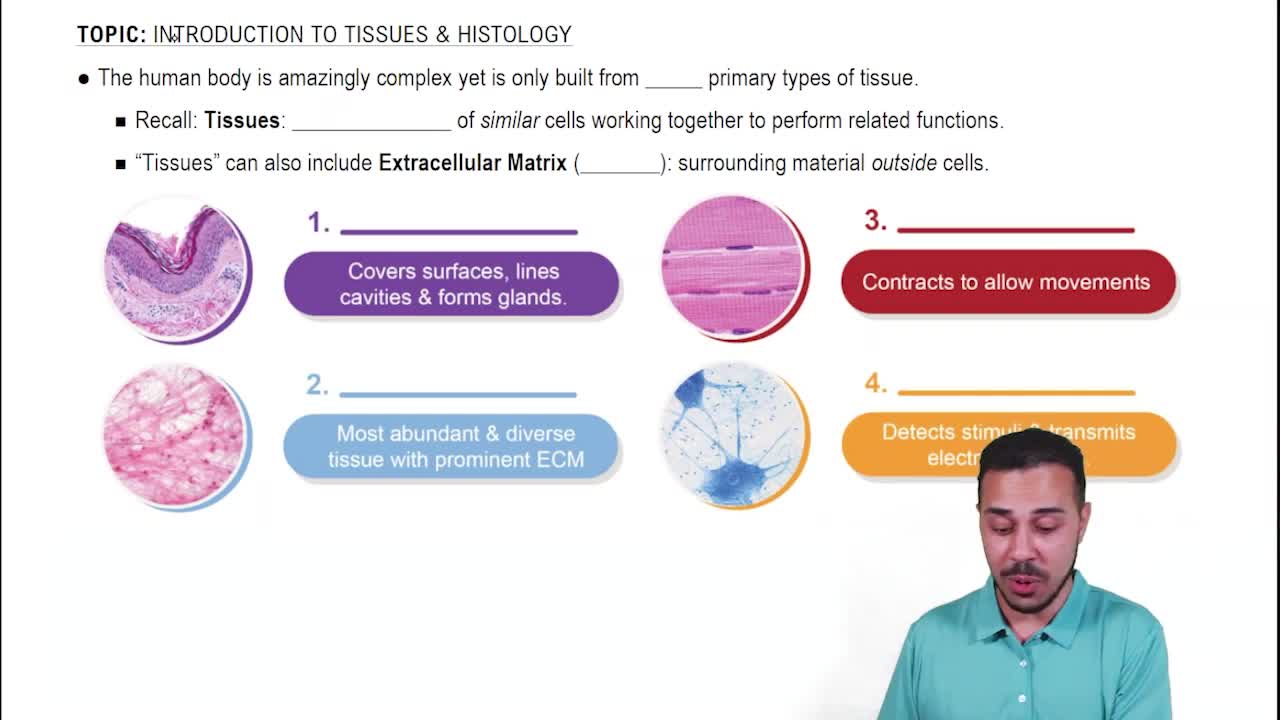
What are the two main cell types in nervous tissue?
Neurons (conduct electrical impulses) and neuroglia (supporting cells).
What are the two stages of tissue response to injury?
Inflammation (inflammatory response) and regeneration (restoration of normal function).
How does aging affect tissue structure and regeneration?
Decreased speed and effectiveness of tissue regeneration, thinner epithelia, fragile connective tissues, brittle bones, and increased incidence of diseases including cancer.
 뒤로
뒤로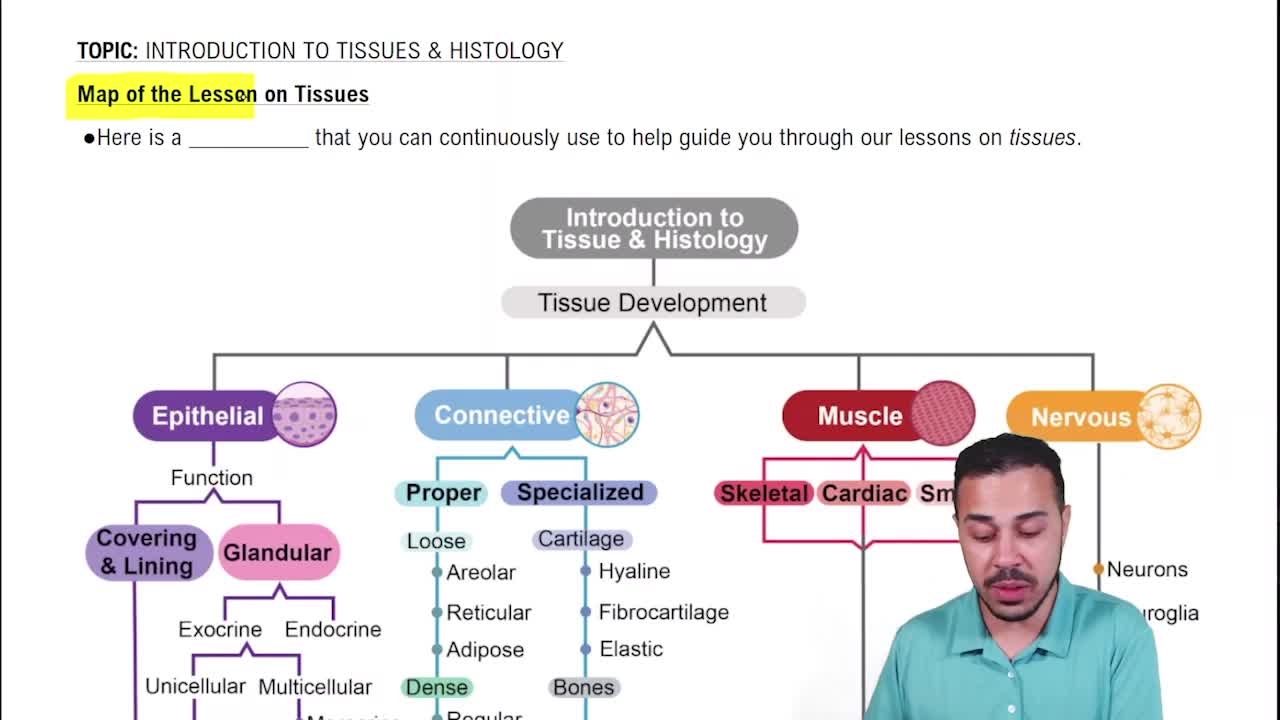
 03:32
03:32