 뒤로
뒤로Anatomy & Physiology: Tissue Structure and Function
 03:32
03:32
이 집합의 용어 (29)
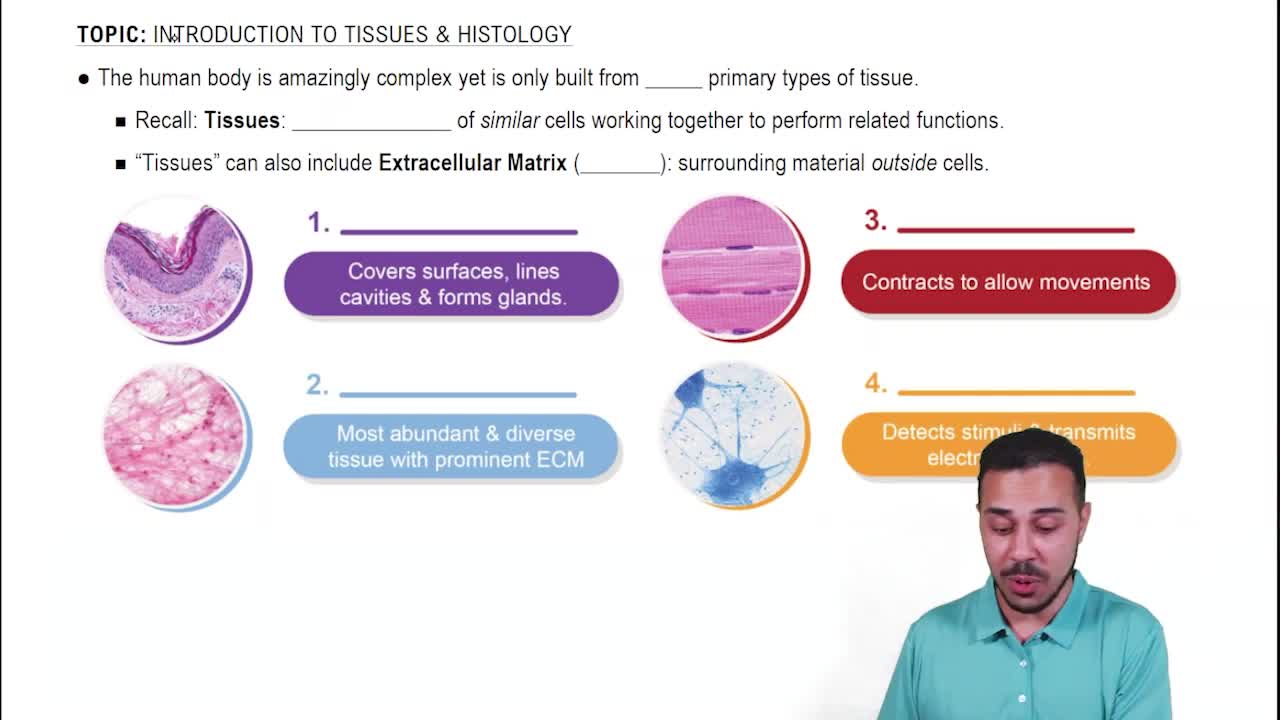
A group of similar cells and their extracellular matrix that perform a common or related function.
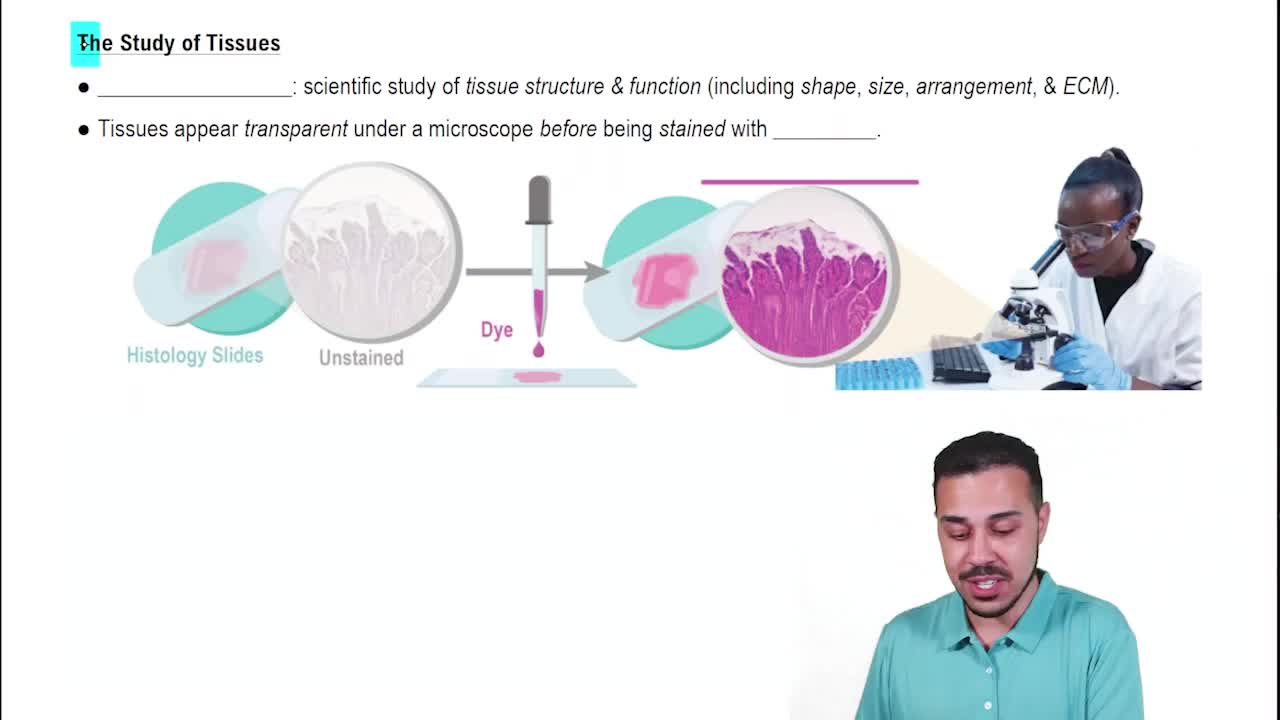
The microscopic study of tissues.
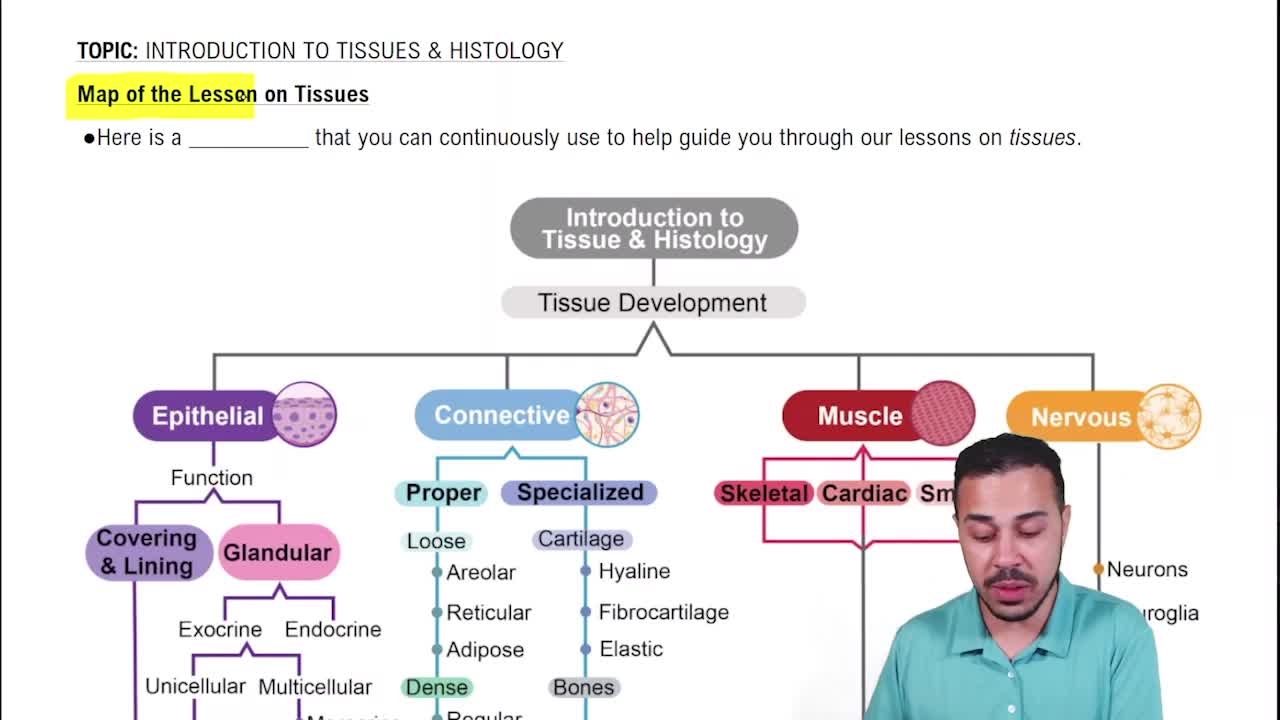
Epithelial (covers/lines), Connective (supports/protects), Muscle (produces movement), and Nervous (controls/communicates).
Impermeable cell junctions formed by interlocking proteins that prevent molecules from passing between adjacent cells.
Anchoring junctions formed by cadherin proteins and intermediate filaments that bind adjacent cells to prevent tearing under mechanical stress.
Communicating junctions formed by connexons allowing ions and small molecules to pass directly between cells.
A sheet of cells that covers body surfaces or lines body cavities.
The upper, unattached surface exposed to the body exterior or organ cavity; often has microvilli or cilia.
Two layers: the basal lamina (glycoproteins secreted by epithelia) and the reticular lamina (collagen fibers from connective tissue).
Polarity (apical vs. basal), specialized contacts (junctions), supported by connective tissue, avascular but innervated, high regenerative capacity.
Simple epithelium has one cell layer for absorption, secretion, filtration; stratified epithelium has multiple layers for protection.
Allows rapid diffusion and filtration; found lining blood vessels (endothelium) and serous membranes (mesothelium).
A single layer of cells of varying heights where all touch the basement membrane but not all reach the surface; ciliated form lines the upper respiratory tract.
Stratified epithelium with dome-shaped apical cells that flatten when stretched; lines ureters, bladder, and part of urethra.
Endocrine glands secrete hormones into blood; exocrine glands secrete products onto body surfaces or cavities via ducts.
Products secreted by exocytosis without altering the cell (e.g., sweat glands, pancreas).
Most abundant tissue; functions in binding/support, protection, insulation, transportation, and energy storage.
Non-living material between cells, composed of ground substance and fibers.
Collagen fibers (tough, tensile strength), elastic fibers (stretch and recoil), reticular fibers (fine, branched networks).
-blast cells are immature, mitotic cells that secrete matrix; -cyte cells are mature cells maintaining the matrix.
Loose connective tissue that supports and binds other tissues, holds fluids, defends against infection, and stores nutrients in fat cells.
Closely packed parallel collagen fibers forming tendons and ligaments; withstands tensile stress in one direction.
Most abundant cartilage with firm matrix and fine collagen fibers; supports and reinforces; found on bone ends, nose, trachea.
Long, cylindrical, multinucleate cells with striations; voluntary control; attached to bones or skin.
Specialized junctions between cardiac muscle cells that allow coordinated contraction.
Main component of the nervous system; regulates and controls body functions.
Highly specialized nerve cells that generate and conduct electrical impulses.
The skin; keratinized stratified squamous epithelium attached to dense irregular connective tissue; a dry membrane.
Regeneration replaces destroyed tissue with the same kind; fibrosis replaces it with scar tissue.