 뒤로
뒤로Anatomy & Physiology: Tissue Types and Characteristics
 03:32
03:32
이 집합의 용어 (16)
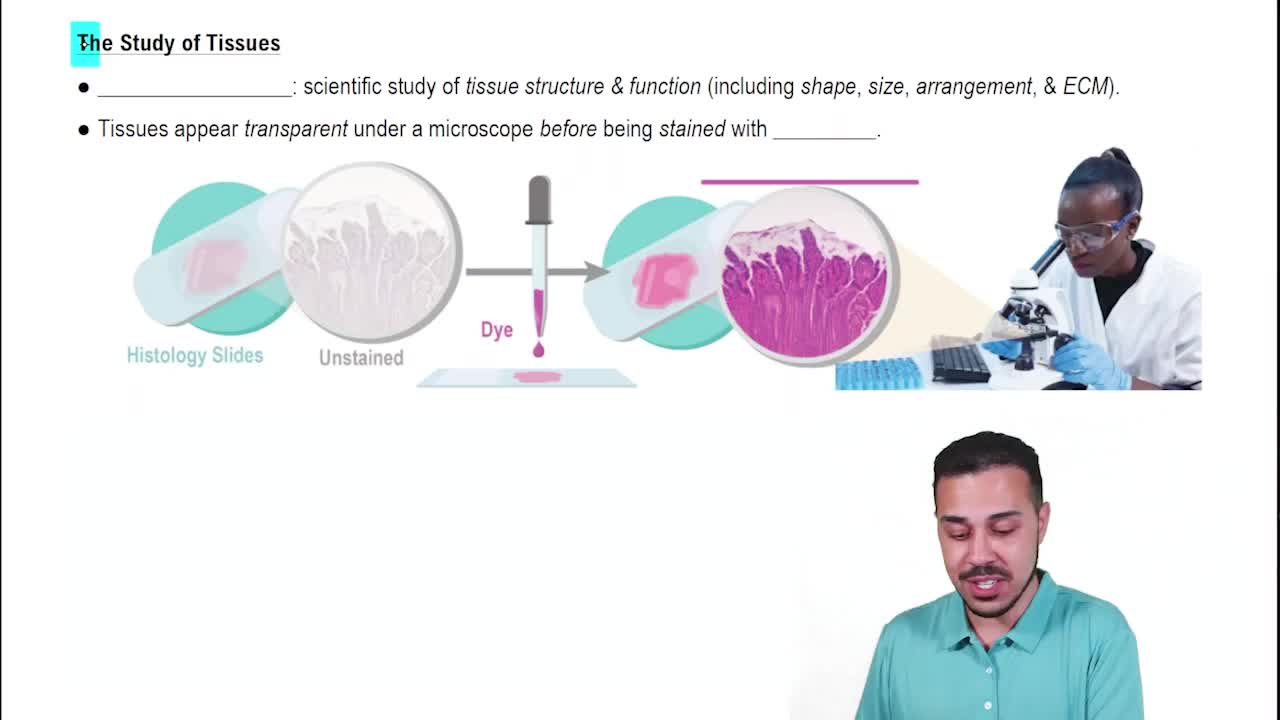
Histology is the study of tissues.
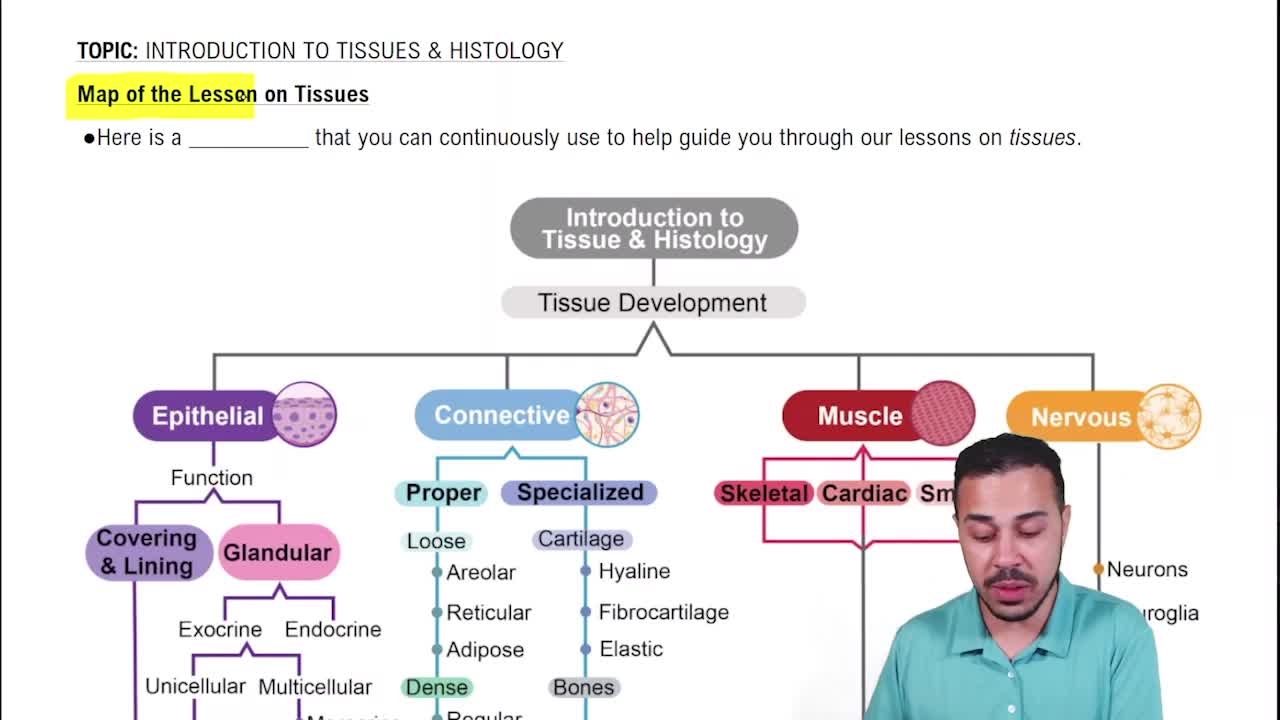
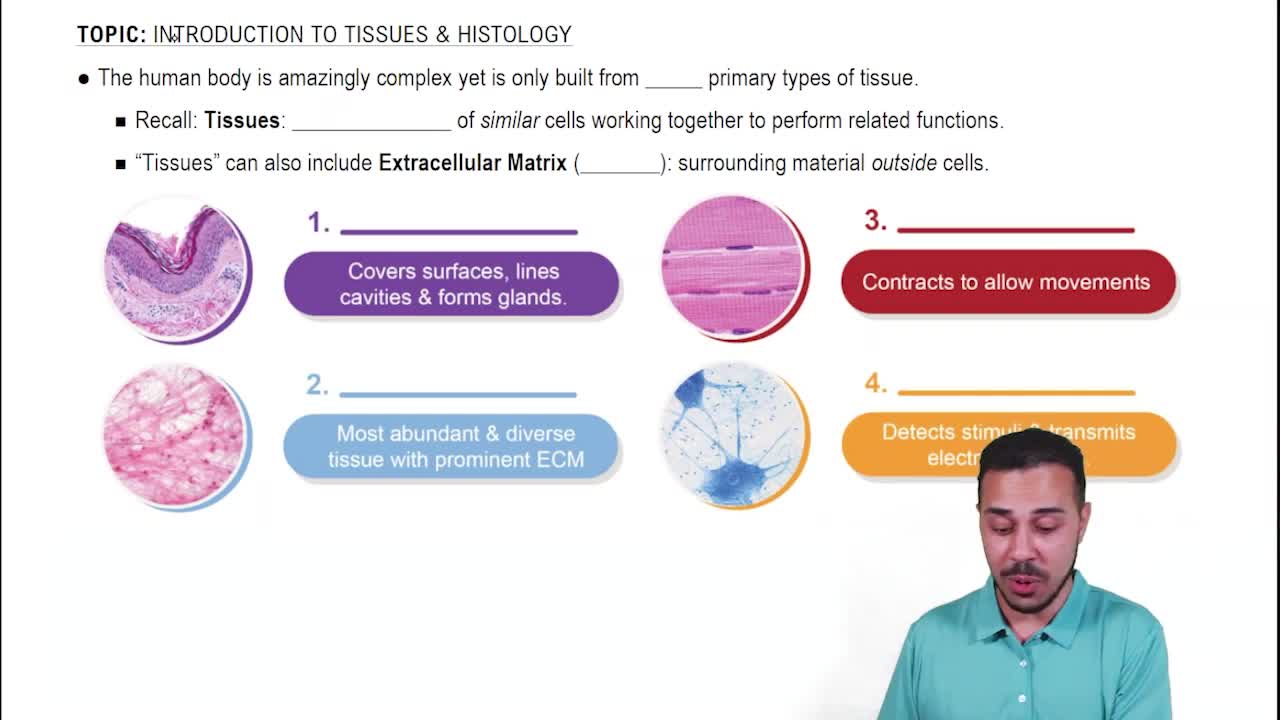
Epithelial, Connective, Muscle, and Nervous tissue.
Covering/lining epithelium and glandular epithelium.
Protection, absorption, filtration, excretion, secretion, and sensory reception.
Polarity, specialized contacts (tight junctions, desmosomes), supported by connective tissue, avascular but innervated, and high regeneration capacity.
Simple (single layer) or stratified (multiple layers).
Squamous (flat), cuboidal (cube-like), and columnar (tall).
Single layer of flattened cells; allows rapid diffusion and filtration.
Kidney glomeruli, air sacs of lungs, lining of heart, blood vessels, and lymphatic vessels.
Secretion and absorption.
Kidney tubules, ducts, and secretory portions of small glands.
Single layer of tall cells, often with microvilli or cilia; absorption and secretion of mucus, enzymes, and other substances.
Digestive tract, gallbladder, ducts of glands, bronchi, and uterine tubes.
Appears multi-layered but is a single layer; often ciliated and contains goblet cells.
Secretion of mucus and movement of mucus by ciliary action.
Upper respiratory tract, ducts of large glands, and tubules in testes.