 뒤로
뒤로Anatomy & Physiology Ultimate Study Guide
 3:06
3:06
이 집합의 용어 (28)
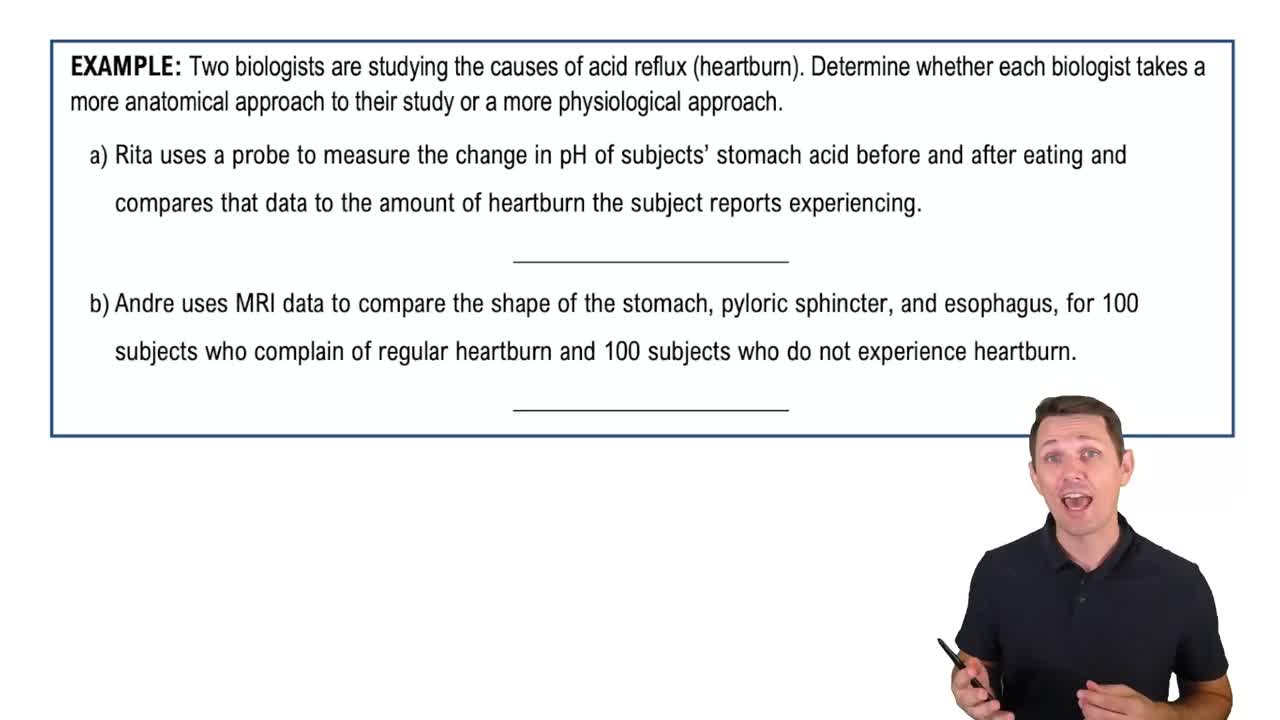
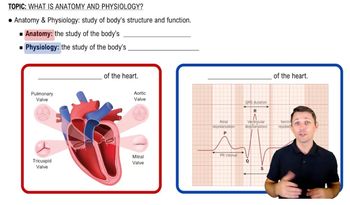
Anatomy is the study of body structure; physiology is the study of body function.
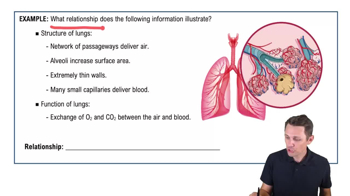
Structure determines function; the shape of a body part relates to its job.
Gross, regional, system, surface, microscopic (cytology, histology), and developmental (embryology).
Organ systems, cellular, and molecular physiology.
Chemical → Cellular → Tissue → Organ → Organ System → Organismal.
Chemical: atoms/molecules; Cellular: cells; Tissue: muscle tissue; Organ: heart; Organ System: cardiovascular system; Organismal: human body.
Maintaining boundaries, movement, responsiveness, digestion, metabolism, excretion, reproduction, growth.
Nutrients, oxygen, water, normal body temperature, atmospheric pressure.
Maintenance of stable internal conditions; a dynamic equilibrium.
Receptor (detects change), control center (processes info), effector (responds to restore balance).
Negative feedback reverses a change (e.g., temperature regulation, glucose levels). Positive feedback enhances a change (e.g., blood clotting).
Body erect, facing forward, feet flat, arms at sides, palms facing forward.
Superior: toward the head; inferior: away from the head, toward the feet.
Anterior: front of the body; posterior: back of the body.
Sagittal, midsagittal, parasagittal, frontal (coronal), transverse, oblique planes.
Dorsal cavity: cranial and vertebral; ventral cavity: thoracic and abdominopelvic.
Membranes lining cavities and organs: parietal (cavity wall), visceral (organ surface), with serous fluid between.
Pericardium (heart), pleurae (lungs), peritoneum (abdomen).
Right upper quadrant (RUQ), left upper quadrant (LUQ), right lower quadrant (RLQ), left lower quadrant (LLQ).
Right/left hypochondriac, epigastric, right/left lumbar, umbilical, right/left iliac, hypogastric.
All living things are made of cells; cells are the basic unit of structure and function; all cells come from preexisting cells.
Mitochondria (energy), ribosomes (protein synthesis), ER (transport), Golgi (packaging), lysosomes (digestion), peroxisomes (detox), cytoskeleton (structure), nucleus (DNA storage).
Carbohydrates, lipids, proteins, nucleic acids.
Anabolism: synthesis of complex molecules; catabolism: breakdown of molecules (hydrolysis).
\(\mathrm{C_6H_{12}O_6 + 6 O_2 \rightarrow 6 CO_2 + 6 H_2O + ATP}\)
\(\mathrm{C_{12}H_{22}O_{11} + H_2O \rightarrow 2 C_6H_{12}O_6}\)
Primary, secondary, tertiary, quaternary structures.
Double helix with base pairs: A pairs with T, C pairs with G.