 뒤로
뒤로Anatomy & Physiology Unit 1A Practice Exam Flashcards
 03:31
03:31
이 집합의 용어 (29)
Physiology is the study of function in living organisms.
The lungs lie in the thoracic cavity.
The anatomical position is body erect, arms at sides, thumbs pointed laterally, and palms facing anteriorly.
Homeostasis is the maintenance of a stable internal environment.
Distal means further away from the trunk of the body.
A covalent bond involves sharing electrons between two atoms.
Polar molecules share electrons unequally, resulting in partial electrical charges.
Proteins are made from amino acids.
The alpha-helix is an example of secondary protein structure.
Hemoglobin is an example of quaternary protein structure.
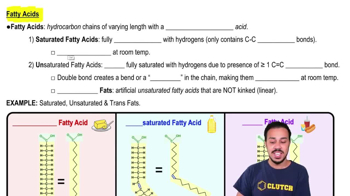
A fatty acid with one double bond between carbon atoms is monounsaturated.
Breaking ATP phosphate bonds releases energy.
An organ is a structure made of two or more tissues working together.
It is used as a standard reference point for directional terms regardless of body position.
Atoms, molecules, cells, tissues, organ.
The stomach has a pH of about 2, which is acidic.
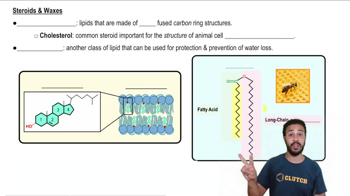
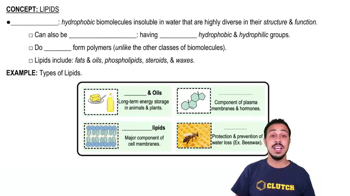
Triglycerides are the most abundant lipids in the human body.
Carbon, oxygen, hydrogen, and nitrogen make up about 96% of the body.
Enzymes increase the rate of chemical reactions.
It requires oxygen and involves proteins in the inner mitochondrial membrane.
Oxygen is the final electron acceptor during cellular respiration.
It plays a role in the synthesis of proteins.
The plasma membrane is a phospholipid bilayer surrounding the cell.
Cells lose water and shrink in a hypertonic solution.
Transfer RNA (tRNA) brings amino acids to the ribosome for protein synthesis.
Mitosis is the division of genetic material within the nucleus.
Microtubules form spindle fibers for cell division and help organize and move organelles.
Nucleoli are the sites of ribosomal RNA synthesis.
The 6 carbon atoms of glucose are converted to carbon dioxide.