 뒤로
뒤로Basic Chemistry Concepts for Anatomy & Physiology
 02:13
02:13
이 집합의 용어 (20)
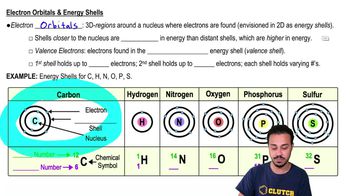
An atom is the smallest unit of matter that retains the properties of an element.
An element is a pure substance made of only one type of atom.
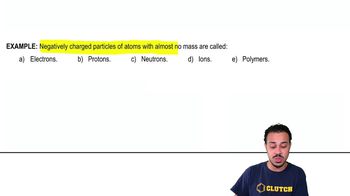
Electrons are negatively charged particles orbiting the nucleus; they determine chemical bonding and reactivity.
An ion is an atom or molecule with a net electric charge due to loss or gain of electrons.
Ionic bonds form when electrons are transferred from one atom to another, creating oppositely charged ions that attract.
Covalent bonds form when atoms share electrons to fill their outer shells.
A chemical reaction involves breaking and forming chemical bonds to create new substances.
Metabolism is the sum of all chemical reactions in the body that maintain life.
Inorganic compounds generally lack carbon and include water, salts, and acids/bases.
Organic compounds contain carbon and hydrogen, such as carbohydrates, lipids, proteins, and nucleic acids.
Macromolecules are large organic molecules essential for life, including carbohydrates, lipids, proteins, and nucleic acids.
Carbohydrates provide energy and structural support in cells.
Lipids store energy, form cell membranes, and act as signaling molecules.
Proteins are made of amino acids linked by peptide bonds.
Proteins function as enzymes, structural components, and in cell signaling.
Nucleic acids store and transmit genetic information (DNA and RNA).
Chemical reactions involve energy absorption or release, affecting reaction rates and direction.
A molecule is two or more atoms chemically bonded together.
Polar covalent bonds share electrons unequally; nonpolar share equally.
A hydrogen bond is a weak attraction between a hydrogen atom and an electronegative atom.