 뒤로
뒤로Basic Concepts of Anatomy & Physiology
 3:06
3:06
이 집합의 용어 (22)
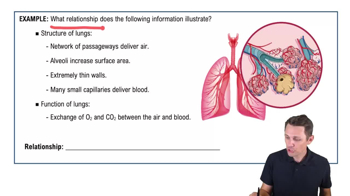
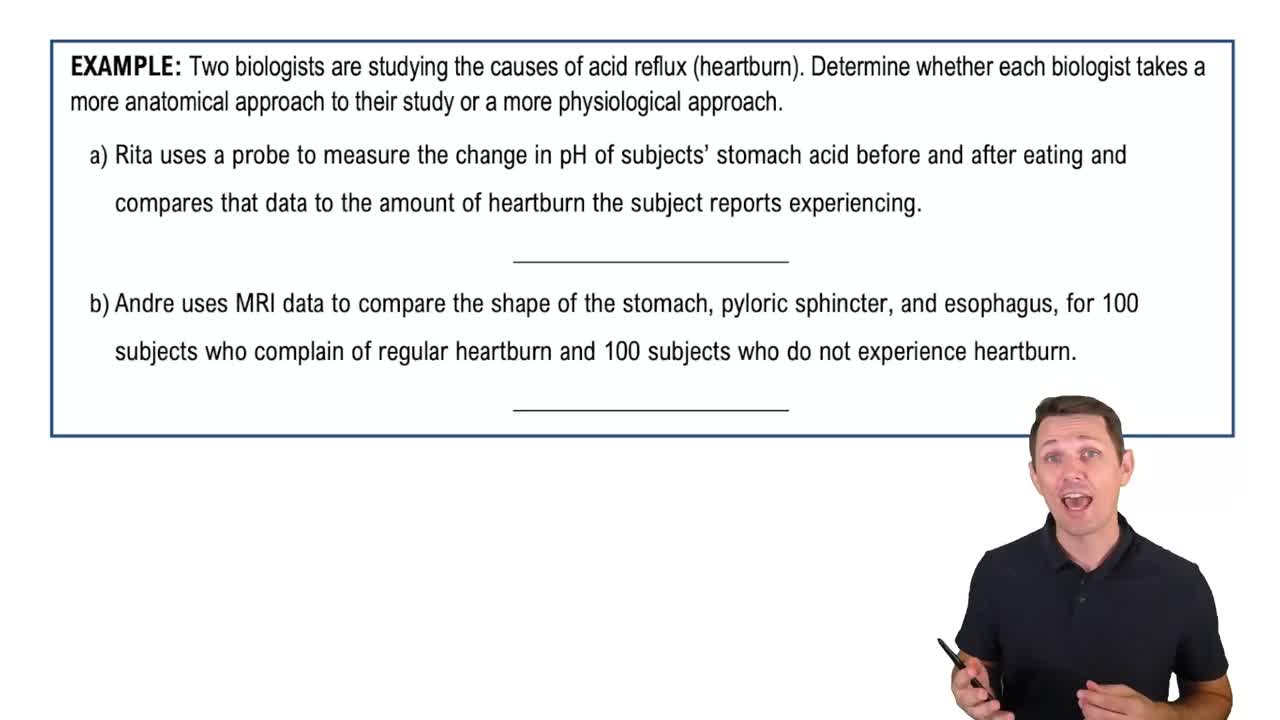
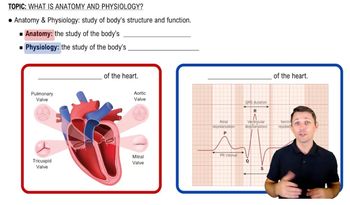
Anatomy is the study of the structure and shape of the body and its parts.
Physiology is the study of how the body and its parts function.
They are related because the structure of a body part determines its function.
Chemical, cellular, tissue, organ, organ system, and organism levels.
The basic unit of life that performs all vital functions.
A group of similar cells working together to perform a specific function.
A structure composed of at least two different tissue types that performs a specific function.
A group of organs that work together to perform complex functions.
The body's ability to maintain a stable internal environment despite external changes.
It ensures optimal conditions for cellular function and survival.
Receptor, control center, and effector.
It detects changes in the environment and sends information to the control center.
It processes information and determines the appropriate response.
It carries out the response to restore balance.
Negative feedback reverses a change to maintain homeostasis; positive feedback amplifies a change.
Regulation of body temperature by sweating or shivering.
Blood clotting and childbirth contractions.
Epithelial, connective, muscle, and nervous tissues.
To cover body surfaces and line cavities.
To support, protect, and bind other tissues.
To produce movement through contraction.
It transmits electrical signals to coordinate body functions.