 뒤로
뒤로Basic Concepts of Anatomy & Physiology with structures and functions
 05:04
05:04
이 집합의 용어 (20)
Anatomy is the study of the structure and shape of the body and its parts.
Physiology is the study of how the body and its parts function.
They are closely related because the structure of a body part often determines its function.
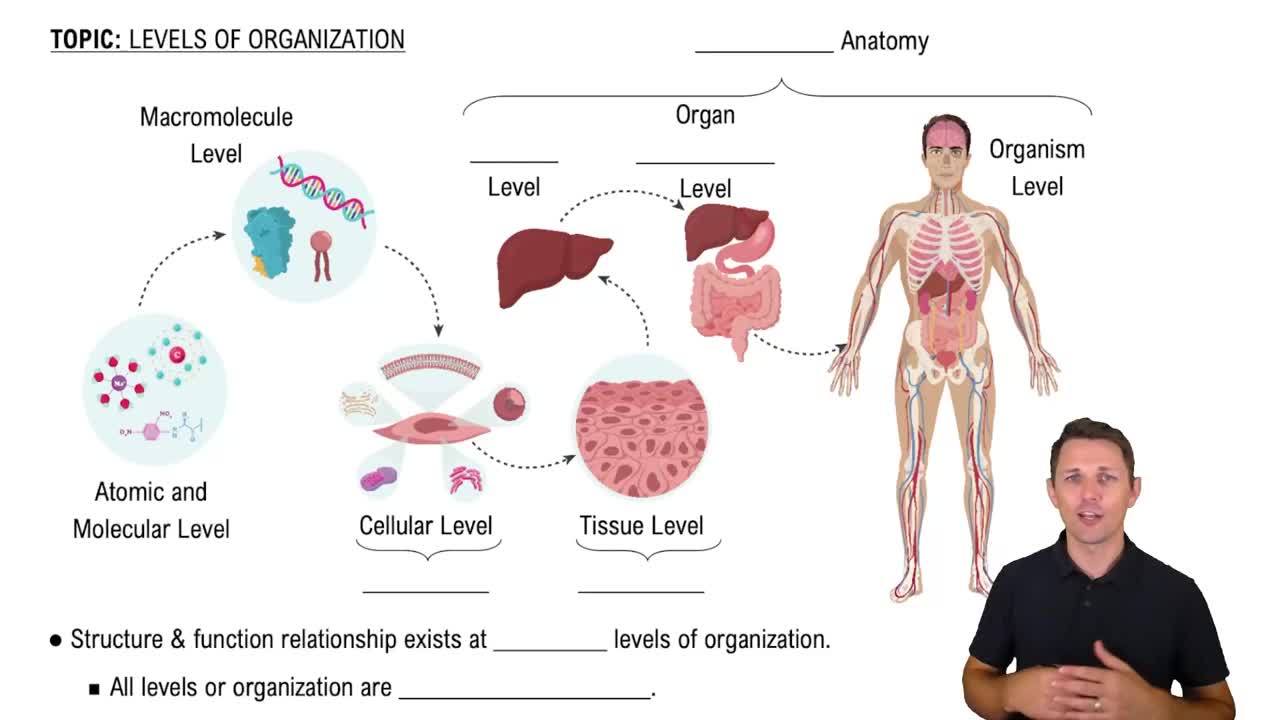
They include chemical, cellular, tissue, organ, organ system, and organism levels.
The chemical level involves atoms and molecules essential for life.
The cellular level consists of cells, the basic units of life.
Tissues are groups of similar cells performing a common function.
An organ is a structure made of two or more tissue types working together for a specific function.
An organ system is a group of organs that work together to perform complex functions.
Homeostasis is the body's ability to maintain a stable internal environment despite external changes.
It is essential for normal body function and survival.
Examples include the nervous, cardiovascular, respiratory, digestive, muscular, skeletal, and endocrine systems.
It provides support, protection, and aids in movement.
It enables movement and maintains posture.
It controls body activities through electrical signals.
It transports blood, nutrients, gases, and wastes throughout the body.
It facilitates gas exchange, bringing in oxygen and removing carbon dioxide.
It breaks down food to absorb nutrients and eliminate waste.
Understanding structure helps explain function and vice versa, aiding diagnosis and treatment.
The organism level is the highest level, representing the whole living individual.