 뒤로
뒤로Bone Tissue & Bone Structure - Anatomy & Physiology
 3:56
3:56
이 집합의 용어 (20)
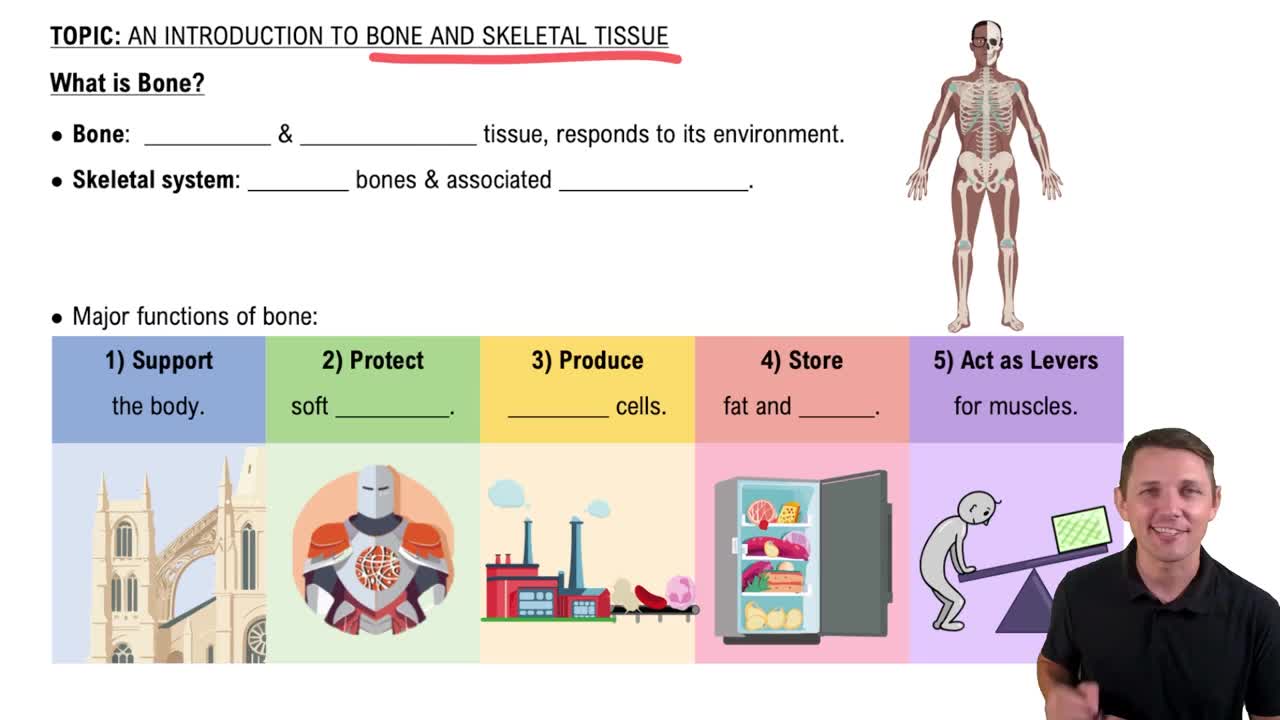
Support, storage of minerals (calcium), storage of lipids (yellow marrow), blood cell production (red marrow), protection of organs, and leverage for movement.
Diaphysis: shaft; Epiphysis: ends; Periosteum: outer covering with osteogenic and fibrous layers; Endosteum: inner marrow lining; Epiphyseal plate: hyaline cartilage for growth; Articular cartilage: joint surface cartilage.
Compact bone has osteons with concentric lamellae around central canals; Spongy bone has trabeculae without osteons and contains red marrow.
Inorganic: calcium phosphate and carbonate for compression strength; Organic: collagen fibers for flexibility and tensile strength.
Osteoblasts: form new bone matrix; Osteocytes: mature bone cells maintaining matrix; Osteoclasts: break down bone tissue.
Bone forms directly from mesenchymal tissue; produces flat bones like skull, mandible, and clavicle.
Bone replaces hyaline cartilage; most bones develop this way.
Epiphyseal plate: hyaline cartilage allowing bone growth; Epiphyseal line: ossified remnant after growth stops.
Vital for membrane function, neuron signaling, muscle contraction, especially in heart cells.
Parathyroid hormone (PTH): increases blood calcium by stimulating osteoclasts; Calcitonin: decreases blood calcium by inhibiting osteoclasts.
Open (compound): bone breaks skin; Simple (closed): bone broken but skin intact.
1. Hematoma formation; 2. Cartilage (soft) callus formation; 3. Spongy bone (hard) callus formation; 4. Bone remodeling with compact bone.
Osteopenia: bone thinning starting age 30-40; Osteoporosis: severe bone loss compromising function, common after menopause.
Central (Haversian) canal surrounded by concentric lamellae with osteocytes in lacunae connected by canaliculi.
Fibrous layer: dense irregular connective tissue for tendon attachment; Osteogenic layer: contains cells for bone growth and repair.
Contains trabeculae with no blood vessels; red marrow fills spaces supplying nutrients and producing blood cells.
Human bones grow until about age 25.
Process of depositing calcium salts to harden bone matrix.
Stem cells in periosteum and endosteum that differentiate into osteoblasts.
Provide structural support and house red marrow for blood cell production.