What is the function of the somatosensory association area?
It integrates sensory input to produce understanding of object size, texture, and relationship of parts.
What is lateralization of cortical functioning?
Lateralization refers to the specialization of each cerebral hemisphere for certain functions, like language or spatial skills.
What are the three types of cerebral white matter tracts?
Commissural tracts connect hemispheres, association tracts connect regions within a hemisphere, and projection tracts connect cortex to lower brain or spinal cord.
What are basal nuclei?
Basal nuclei are clusters of neurons involved in regulating voluntary motor control and procedural learning.
What is the thalamus and its function?
The thalamus is a relay station for sensory information; it includes the lateral and medial geniculate bodies for visual and auditory processing.
What is the hypothalamus responsible for?
The hypothalamus regulates autonomic functions, hormone release, temperature, hunger, and thirst.
What are the mammillary bodies?
Mammillary bodies are part of the limbic system involved in memory processing.
What is the function of the pineal gland?
The pineal gland secretes melatonin and regulates circadian rhythms.
Name the three parts of the brainstem.
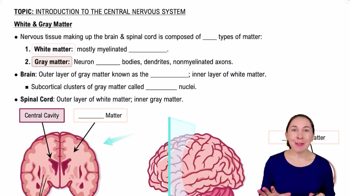
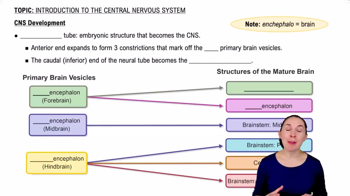
The brainstem consists of the midbrain, pons, and medulla oblongata.
What are the corpora quadrigemina?
The corpora quadrigemina are four colliculi in the midbrain: superior colliculi for visual reflexes and inferior colliculi for auditory reflexes.
What centers are located in the medulla oblongata?
The medulla contains cardiac, vasomotor, and respiratory centers controlling heart rate, blood pressure, and breathing.
What is the role of the cerebellum?
The cerebellum coordinates voluntary movements, balance, and posture.
What is the limbic system?
The limbic system controls emotions, memory, and motivation.
What is the reticular activating system (RAS)?
The RAS regulates wakefulness and attention by filtering sensory input.
What are the meninges and their layers?
Meninges are protective membranes: dura mater (with falx cerebri), arachnoid mater, and pia mater.
What is the function of the choroid plexuses?
Choroid plexuses produce cerebrospinal fluid in the brain ventricles.
What is the blood-brain barrier?
The blood-brain barrier protects the brain by restricting passage of substances from blood to brain tissue.
What protects the spinal cord?
The spinal cord is protected by bone (vertebrae), meninges, cerebrospinal fluid, and the epidural space.
What are the gray matter regions of the spinal cord?
Gray matter includes posterior horns (sensory), anterior horns (motor), and lateral horns (autonomic).
What are the spinal roots?
Ventral roots carry motor fibers, dorsal roots carry sensory fibers, and dorsal root ganglia contain sensory neuron cell bodies.
Name the major sensory tracts in the spinal cord.
Lateral and anterior spinothalamic tracts (pain, temperature, crude touch), posterior and anterior spinocerebellar tracts (proprioception).
What are the pyramidal tracts?
Pyramidal tracts are motor pathways including lateral and anterior corticospinal tracts controlling voluntary movement.
 뒤로
뒤로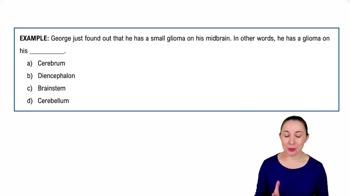
 0:50
0:50