 뒤로
뒤로Chapter 1
 3:06
3:06
이 집합의 용어 (29)
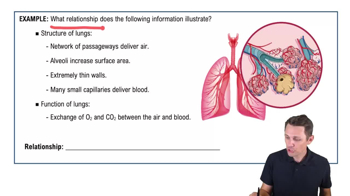
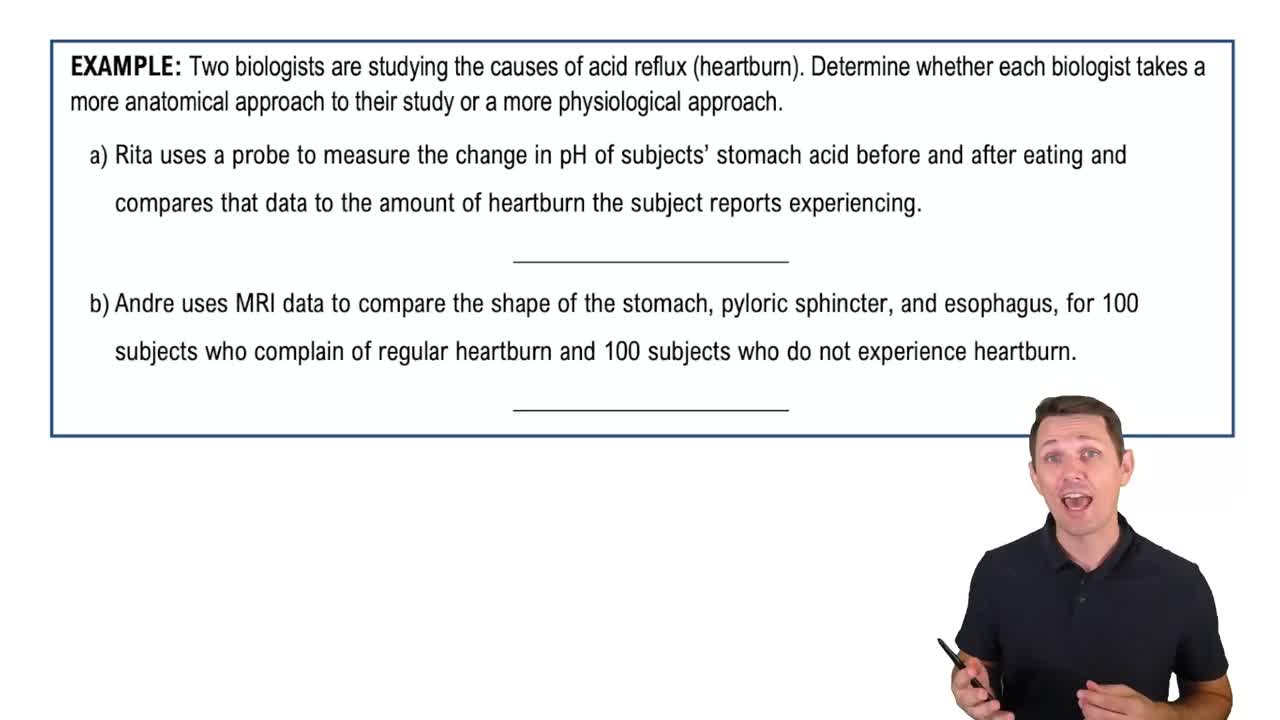
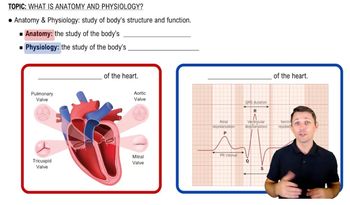
Anatomy is the study of internal and external body structures and their physical relationships among other body parts.
Physiology is the study of how living organisms perform their vital functions.
Gross anatomy studies large structures visible without a microscope, and microscopic anatomy studies structures only visible with a microscope, such as tissues (histology).
Chemical, cellular, tissue, organ, organ system, and organism levels.
Atoms are the smallest stable units of matter, and molecules consist of two or more atoms bonded together.
Cells are the smallest living units in the human body, composed of organelles in eukaryotic cells.
A tissue is a group of related cells working together to perform one or more specific functions.
An organ is a distinct body structure made of two or more tissue types that performs specific functions.
An organ system is a group of organs that interact to perform specific functions.
The organism level is an individual living life form composed of all organ systems working together.
The standard reference position for the human body: standing upright, feet together, hands at sides with palms facing forward.
Anterior (ventral) means toward the front of the body; posterior (dorsal) means toward the back.
Superior (cranial) means above or toward the head; inferior (caudal) means below or toward the feet.
Lateral means away from the midline; medial means toward the midline of the body.
Proximal means toward the point of attachment of a limb to the trunk; distal means away from that point.
Superficial means near the body surface; deep means toward the interior, farther from the surface.
Receptor detects stimuli, control center processes information, and effector responds to maintain homeostasis.
A mechanism where effectors oppose or negate changes to maintain physiological conditions within set points.
Thermoregulation: temperature receptors send signals to the hypothalamus, which activates effectors to restore normal body temperature.
A homeostatic mechanism that enhances or intensifies the original stimulus, often to complete a critical process quickly.
Blood clotting and labor/delivery, both with definitive end points.
Frontal (coronal) divides anterior and posterior, sagittal divides right and left, and transverse divides superior and inferior portions.
Midsagittal lies in the middle dividing equal right and left halves; parasagittal is offset, dividing unequal sides.
A closed, fluid-filled space lined by a serous membrane that protects organs and allows size and shape changes.
Visceral layer covers organs; parietal layer lines the body cavity walls, with serous fluid between to reduce friction.
Right and left pleural cavities (each surrounds a lung) and the pericardial cavity (surrounds the heart).
The diaphragm, a muscle involved in respiration.
Liver, stomach, spleen, small intestine, and most of the large intestine.
Organs located between the peritoneal lining and the muscular wall of the abdominal cavity, such as kidneys and pancreas.