Skip to main content
Anatomy & Physiology
나의 코스
배우기
시험 준비
AI 튜터
학습 가이드
교과서적 해결책
플래시카드
탐험해 보세요
앱을 사용해 보세요
나의 코스
배우기
시험 준비
AI 튜터
학습 가이드
교과서적 해결책
플래시카드
탐험해 보세요
앱을 사용해 보세요
뒤로
Chapter 1
카드를 뒤집기 위해 탭할 수 있습니다.
What determines the specific functions in the body?
카드를 뒤집기 위해 탭할 수 있습니다.
👆
What determines the specific functions in the body?
Specific functions are performed by specific structures; therefore,
structure determines function
.
진행 상황 추적
컨트롤 버튼이 '내비게이션' 모드로 변경되었습니다.
1/28
추천 영상
3:06
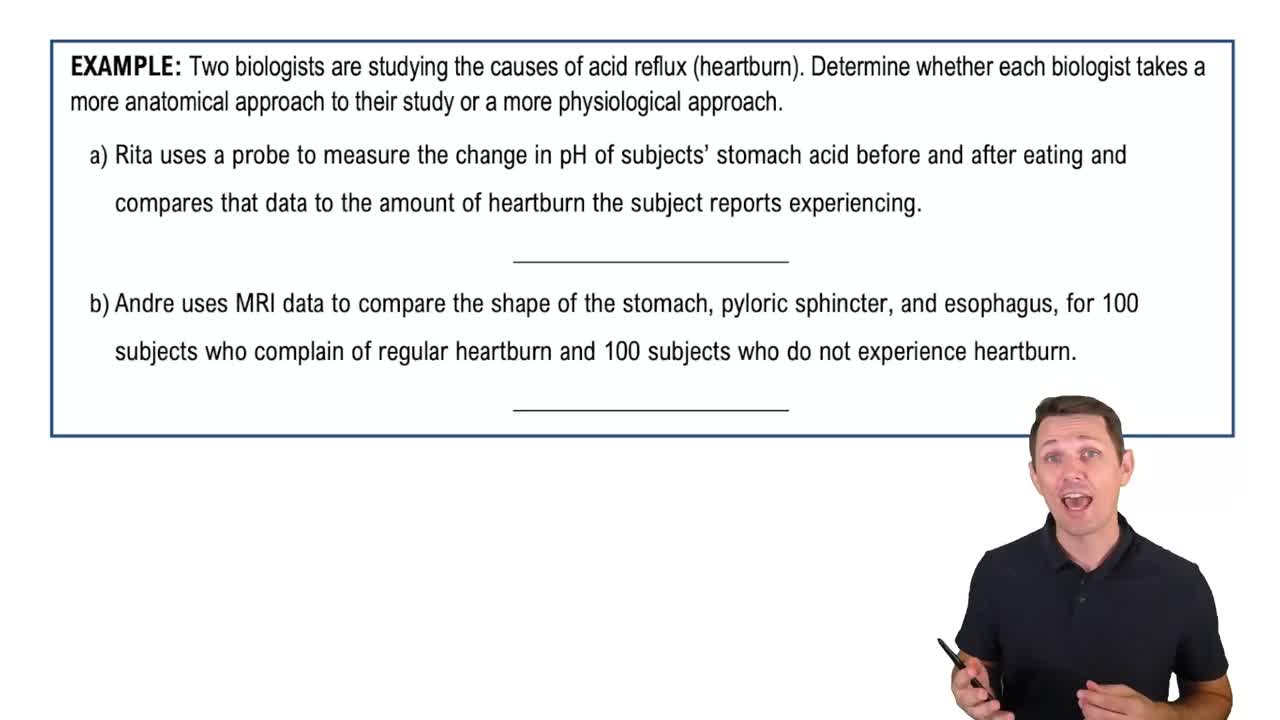
What is Anatomy & Physiology? Example 3
31471
views
738
rank
8
comments
01:58
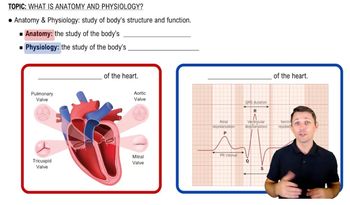
What is Anatomy & Physiology? Example 2
42317
views
2356
rank
03:04
The Difference Between Anatomy and Physiology
83046
views
4014
rank
11
comments
이 집합의 용어 (28)
하이드의 정의
What determines the specific functions in the body?
Specific functions are performed by specific structures; therefore,
structure determines function
.
What is microscopic anatomy?
Microscopic anatomy
studies structures that cannot be seen without magnification, using tools like light and electron microscopes.
What are the main types of microscopic anatomy?
Cytology
is the study of cells, and
histology
is the study of tissues.
What is gross anatomy?
Gross anatomy
studies structures visible to the unaided eye, including surface, regional, and systemic anatomy.
Name three other perspectives on anatomy.
Developmental anatomy, clinical anatomy, and surgical anatomy are examples of other perspectives.
What are the four major elements making up 99% of the human body?
Hydrogen, oxygen, carbon, and nitrogen
make up 99% of the body.
List the major classes of compounds in the human body.
Water, carbohydrates, proteins, lipids, and nucleic acids.
What are the levels of organization in the human body from smallest to largest?
Chemical/molecular, cells, tissues, organs, organ systems, and the whole organism.
What are the 11 organ systems of the human body?
Integumentary, skeletal, muscular, nervous, endocrine, cardiovascular, lymphoid, respiratory, digestive, urinary, and reproductive systems.
What is the function of the integumentary system?
Protects from environmental hazards and controls body temperature.
What is the primary role of the skeletal system?
Supports and protects soft tissues, stores minerals, and forms blood cells.
What functions does the muscular system provide?
Allows locomotion, provides support, and produces heat.
What is the nervous system responsible for?
Directs immediate responses to stimuli and coordinates activities of other organ systems.
What does the endocrine system regulate?
Directs long-term changes in the activities of other organ systems.
What is the function of the cardiovascular system?
Transports cells and dissolved materials, including nutrients, wastes, and gases.
What role does the lymphoid system play?
Defends against infection and disease and returns tissue fluid to the bloodstream.
What is the main function of the respiratory system?
Delivers air to sites where gas exchange occurs between air and circulating blood.
What does the digestive system do?
Processes food and absorbs organic nutrients, minerals, vitamins, and water.
What is the function of the urinary system?
Eliminates excess water, salts, and waste products; controls pH.
What is the role of the reproductive system?
Produces sex cells and hormones.
What is the anatomical position?
Standing upright, arms at sides, palms facing forward, feet flat, and face straight ahead.
Define supine and prone positions.
Supine is lying face up; prone is lying face down.
What are the main body cavities in the ventral body cavity?
Thoracic cavity and abdominopelvic cavity, separated by the diaphragm.
What protects and lubricates organs in the ventral body cavity?
A two-layer membrane system called
serous membranes
.
Name the four abdominopelvic quadrants.
Right upper quadrant (RUQ), left upper quadrant (LUQ), right lower quadrant (RLQ), and left lower quadrant (LLQ).
What are the nine abdominopelvic regions?
Right and left hypochondriac, epigastric, right and left lumbar, umbilical, right and left inguinal, and hypogastric regions.
What directional terms describe toward the head and toward the feet?
Superior (cranial)
means toward the head;
inferior (caudal)
means toward the feet.
What do proximal and distal mean in anatomical terms?
Proximal
means closer to the point of attachment;
distal
means farther from the point of attachment.
 뒤로
뒤로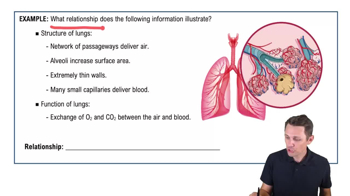
 3:06
3:06