뒤로

Chapter 3 Outline FlashCards

컨트롤 버튼이 '내비게이션' 모드로 변경되었습니다.
1/39
  • Basic processes common to all cells

    • Cell metabolism: includes anabolic, catabolic, and oxidation-reduction reactions.
    • Transport of substances: movement of molecules across membranes.
    • Communication: signaling between cells.
    • Cell reproduction: process of cell division and growth.
  • Three basic components of most animal cells

    1) Plasma membrane, 2) Cytoplasm, and 3) Nucleus.
  • Functions of the plasma membrane

    Isolates internal cell structures, controls entry and exit of substances, and defines intracellular fluid (ICF) from extracellular fluid (ECF).
  • Components of cytoplasm

    Cytosol (intracellular fluid) and organelles suspended within it.
  • Role of the cytoskeleton

    Supports cell shape, holds organelles in place, and provides a means of transport within the cell.
  • Nucleus structure and function

    Enclosed by nuclear envelope; contains most of the cell's DNA and is the primary site for making RNA.
  • Key properties of the phospholipid bilayer

    1) Hydrophilic heads face outward; 2) Hydrophobic tails face inward; forms a selective barrier between ECF and cytosol.
  • Fluid mosaic model of the plasma membrane

    Membrane is a fluid phospholipid bilayer with embedded proteins that move laterally, creating a mosaic of components.
  • Types of membrane proteins

    Integral proteins: span the membrane (transmembrane). Peripheral proteins: attached to one side of the membrane.
  • Role of cholesterol in the plasma membrane

    Stabilizes membrane fluidity during temperature changes.
  • Selective permeability of the plasma membrane

    Allows some substances to cross while blocking others, maintaining internal environment.
  • Factors determining substance movement across membrane

    1) Size of molecule, 2) Lipid solubility, 3) Presence of transport proteins.
  • Definition of diffusion

    Movement of molecules from an area of higher concentration to lower concentration.
  • Simple diffusion vs facilitated diffusion

    Simple diffusion: small nonpolar solutes pass directly through bilayer. Facilitated diffusion: charged or polar solutes cross via carrier or channel proteins.
  • Osmosis

    Passive movement of water across a membrane from higher solvent concentration to lower solvent concentration.
  • Tonicity effects on cells

    Isotonic: no net water movement.
    Hypertonic: water exits cell, cell shrinks.
    Hypotonic: water enters cell, cell swells and may burst.
  • Primary active transport

    Uses ATP to pump solutes against their concentration gradient, e.g., sodium-potassium pump.
  • Secondary active transport

    Uses energy stored in concentration gradients created by primary active transport to move other substances against their gradients.
  • Resting membrane potential

    Electrical potential across the plasma membrane at rest; inside of cell is more negative than outside.
  • Endocytosis types

    Phagocytosis: cell eating.
    Pinocytosis: cell drinking.
    Receptor-mediated endocytosis: selective uptake of molecules.
  • Exocytosis

    Process where vesicles fuse with plasma membrane to release large molecules outside the cell.
  • Membrane-bound vs nonmembrane-bound organelles

    Membrane-bound organelles include mitochondria, peroxisomes, and ER; nonmembrane-bound include ribosomes and cytoskeleton.
  • Mitochondria function and structure

    Produce most cellular ATP; have double membrane with inner folds called cristae; contain own DNA and ribosomes.
  • Peroxisomes function

    Use oxygen to carry out reactions producing hydrogen peroxide (H2O2) to break down toxins.
  • Ribosomes function and location

    Sites of protein synthesis; found free in cytosol or bound to rough ER.
  • Rough vs smooth endoplasmic reticulum

    Rough ER has ribosomes and synthesizes proteins for export; smooth ER synthesizes lipids, detoxifies chemicals, and stores calcium.
  • Golgi apparatus functions

    Modifies, sorts, and packages proteins and lipids from ER for secretion, membrane insertion, or lysosome delivery.
  • Cytoskeleton roles

    Maintains cell shape, enables movement, anchors organelles, and assists in intracellular transport.
  • Types of cytoskeletal filaments

    Microfilaments, intermediate filaments, and microtubules.
  • Cellular extensions formed by cytoskeleton

    Microvilli: increase surface area.
    Cilia: move fluid across cell surface.
    Flagella: propel entire cell.
  • Nucleus main structures

    Nuclear envelope, chromatin, and nucleolus.
  • Chromatin vs chromosomes

    Chromatin is loosely coiled DNA and proteins; chromosomes are tightly coiled chromatin visible during cell division.
  • Protein synthesis overview

    DNA is transcribed into mRNA, which is translated at ribosomes into proteins.
  • Stages of transcription

    Initiation, elongation, and termination.
  • Stages of translation

    Initiation, elongation, and termination.
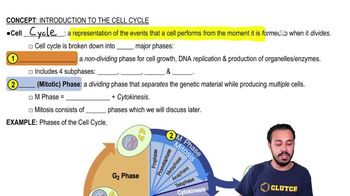
  • Cell cycle phases

    Interphase: cell growth and DNA replication.
    M phase: mitosis and cytokinesis (cell division).
  • Mitosis phases

    Prophase: chromosomes condense, nuclear envelope breaks down.
    Metaphase: chromosomes align at cell center.
    Anaphase: sister chromatids separate.
    Telophase: nuclear envelopes reform.
  • Cytokinesis

    Division of the cytoplasm to form two daughter cells.
  • Cell cycle checkpoints and cancer

    Checkpoints regulate division; failure can lead to uncontrolled division and tumor formation.