 뒤로
뒤로Chapter 4 Outline FlashCards
 03:32
03:32
이 집합의 용어 (29)
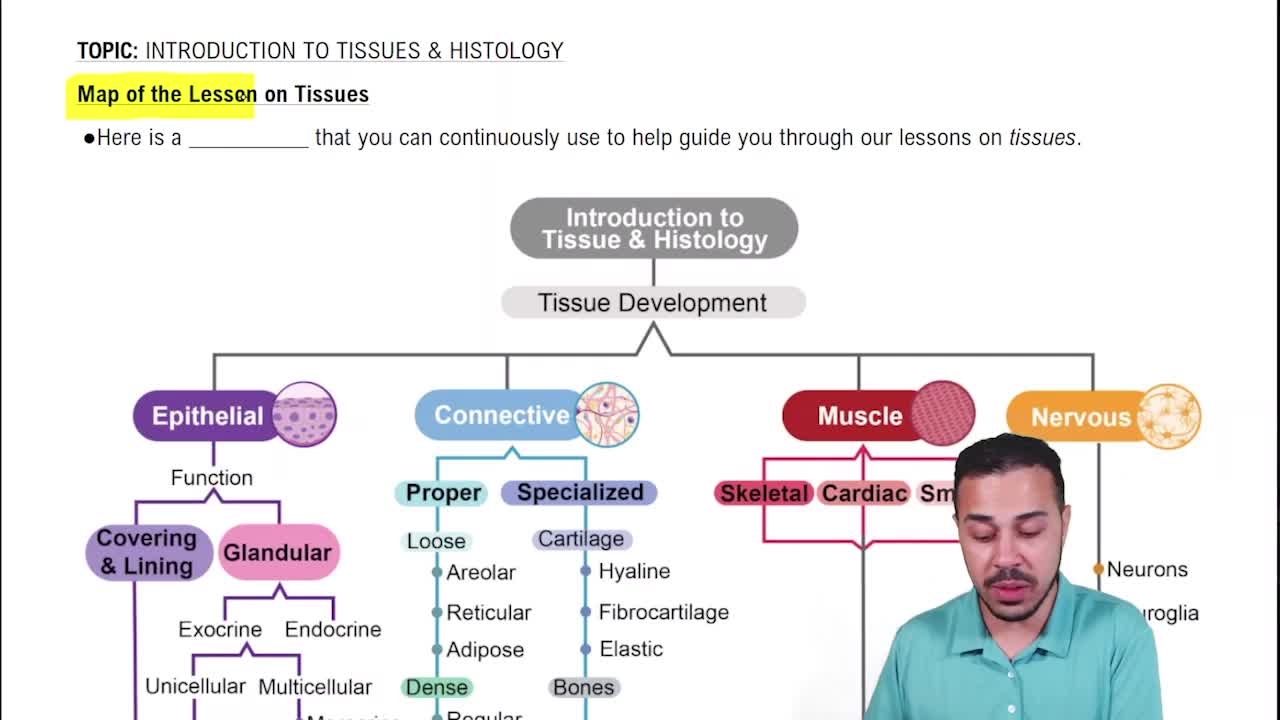
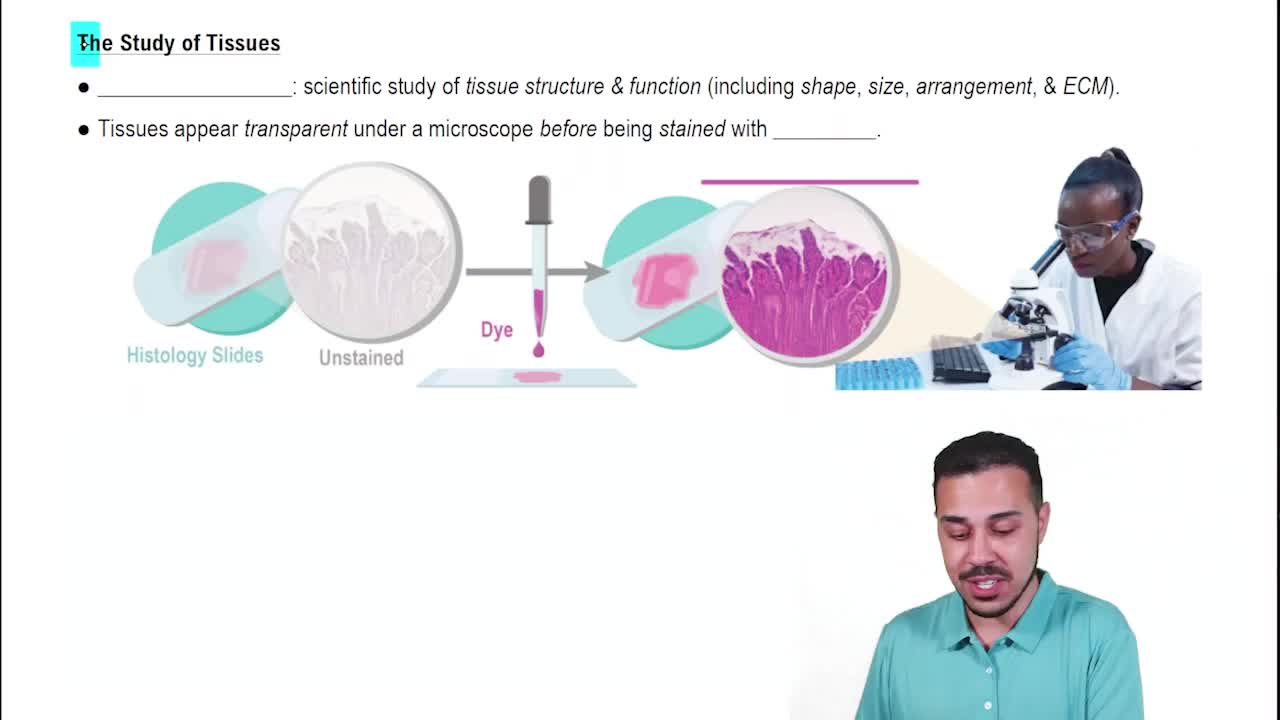
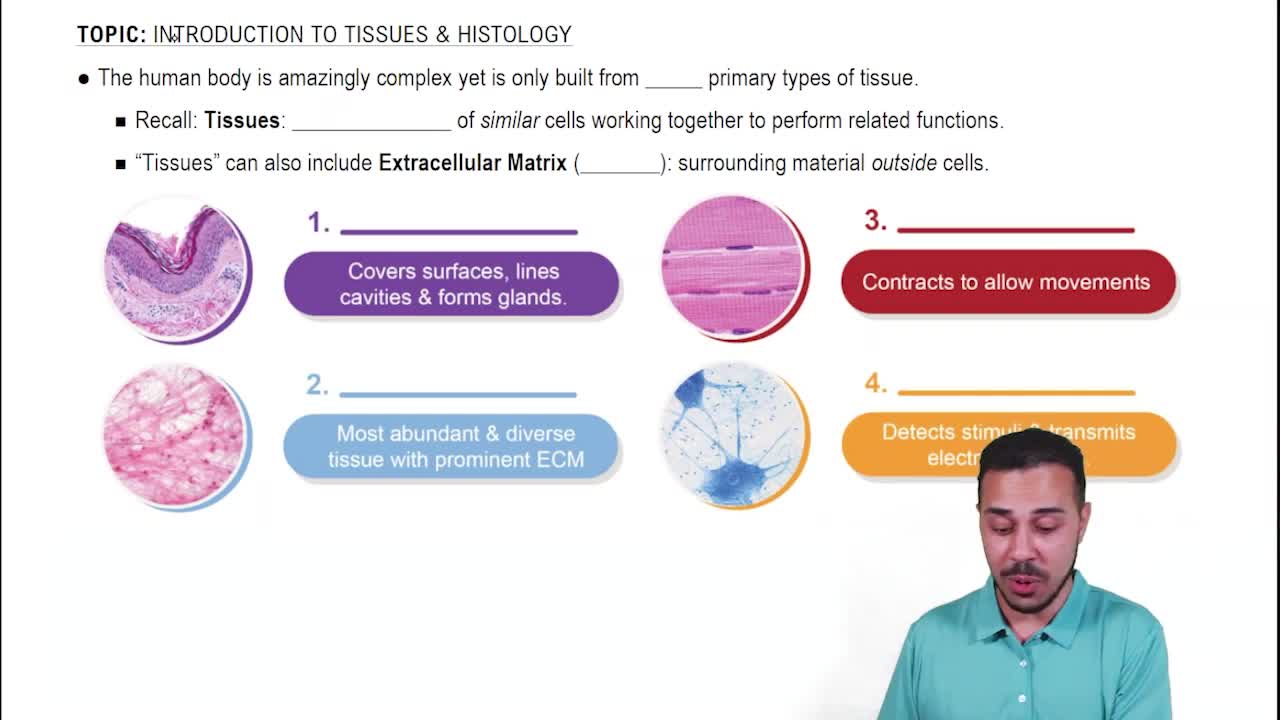
Histology is the study of tissues, which are groups of structurally and functionally related cells and their external environment that perform common functions.
1) Epithelial tissues: tightly packed sheets covering body surfaces and forming glands.
2) Connective tissues: bind, support, protect, and transport substances.
3) Muscle tissues: generate force by contracting.
4) Nervous tissues: generate, send, and receive messages.
1) Ground substance: fluid or gel with water, nutrients, ions, and macromolecules.
2) Protein fibers: collagen, elastic, and reticular fibers embedded in ground substance.
Provides strength to resist tensile and compressive forces, directs cell positioning, holds cells in place, and regulates cell development, mitosis, and survival.
Collagen fibers: strong, resist tension.
Elastic fibers: stretch and recoil.
Reticular fibers: form supportive meshworks.
Seal neighboring cells tightly to prevent passage of substances between them, maintaining distinct environments on each side.
Provide strong adhesion between cells, resisting mechanical stress by linking cytoskeletons.
Allow direct communication between adjacent cells through channels for ions and small molecules.
Tightly packed cells with little ECM, avascular, attached to underlying connective tissue by basement membrane composed of basal and reticular laminae.
Number of cell layers (simple or stratified) and cell shape (squamous, cuboidal, columnar).
Thin layer for rapid diffusion; found in alveoli of lungs, lining of blood vessels, and serous membranes.
Increase surface area to enhance absorption, especially in the small intestine.
Protects underlying tissues from abrasion and water loss; outer layers are dead and filled with keratin.
Found in moist areas subject to mechanical stress such as oral cavity, esophagus, vagina, and anus.
Lines urinary system organs; allows stretching by flattening apical cells when tissue is distended.
Endocrine glands secrete hormones directly into the bloodstream.
Exocrine glands release products onto body surfaces or into hollow organs via ducts.
Merocrine secretion: products released by exocytosis.
Holocrine secretion: entire cell disintegrates to release product.
Connecting and binding tissues, supporting body weight, protecting organs, and transporting substances (blood).
Resident cells that produce protein fibers and ground substance of the ECM.
Store triglycerides (fat) in cytoplasm as energy reserves and provide insulation and cushioning.
Disorganized collagen fibers resist tension in multiple directions; found in dermis and organ capsules.
Parallel collagen fibers resist tension in one direction; found in tendons and ligaments.
Chondroblasts: immature cells that produce ECM.
Chondrocytes: mature cells residing in lacunae.
Found in nose, trachea, larynx, and at ends of long bones.
Supports body, protects organs, provides muscle attachment, stores calcium, and houses marrow for blood cell production.
Skeletal muscle: striated, voluntary, multinucleated.
Cardiac muscle: striated, involuntary, branched, single nucleus.
Smooth muscle: non-striated, involuntary, spindle-shaped cells.
Specialized junctions containing gap junctions and desmosomes that allow coordinated contraction.
Neurons: excitable cells that transmit signals.
Neuroglial cells: support and protect neurons, capable of mitosis.
Provide structural support, supply nutrients, remove waste, and protect neurons.