 뒤로
뒤로Digestive System and Metabolism - Anatomy & Physiology
 4:06
4:06
이 집합의 용어 (26)
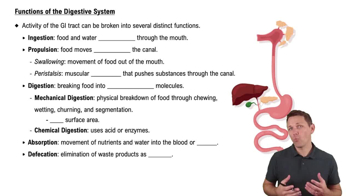
Ingestion: taking in food
Digestion: breaking food into nutrient molecules
Absorption: movement of nutrients into the bloodstream
Defecation: excretion of indigestible waste
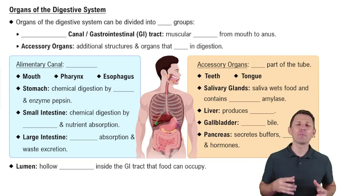
Alimentary canal: continuous, coiled hollow tube for ingestion, digestion, absorption, defecation
Accessory digestive organs: teeth, tongue, and large digestive organs that assist digestion
From innermost to outermost: mucosa, submucosa, muscularis externa, and serosa
Innermost moist membrane with surface epithelium (mostly simple columnar), lamina propria connective tissue, and a scant smooth muscle layer lining the lumen
Smooth muscle with an inner circular layer and an outer longitudinal layer responsible for peristalsis
Stores food, mixes it with gastric juice, initiates protein digestion, and delivers chyme to the small intestine
Intrinsic factor for vitamin B12 absorption, hydrochloric acid to activate enzymes, pepsinogen for protein digestion, mucus, and local hormones like gastrin
Duodenum, jejunum, and ileum ending at the ileocecal valve
Villi with capillaries and lacteals, microvilli forming brush border enzymes, and circular folds (plicae circulares)
Produced by the liver, bile emulsifies fats to aid digestion and absorption of fats and fat-soluble vitamins
Produces digestive enzymes for all food categories and secretes alkaline fluid to neutralize acidic chyme in the duodenum
Buccal phase: voluntary, food formed into bolus and pushed to pharynx
Pharyngeal-esophageal phase: involuntary, peristalsis moves bolus to stomach
Alternating waves of contraction and relaxation of muscularis externa that propel food through the digestive tract
Chewing in the mouth, churning in the stomach, and segmentation in the small intestine mixing food with digestive juices
Enzymatic breakdown of large molecules into building blocks: carbohydrates to monosaccharides, proteins to amino acids, fats to fatty acids and glycerol
End products of digestion enter mucosal cells and then blood or lymph capillaries for distribution
Absorbs water, vitamins, and ions; houses bacteria that produce vitamin K and B vitamins; forms and eliminates feces
Incisors: cutting
Canines: tearing
Premolars and molars: crushing and grinding
Mixture of mucus and serous fluids that moistens food, contains salivary amylase to begin starch digestion, and has lysozymes and antibodies to inhibit bacteria
All chemical reactions necessary to maintain life, including catabolism (breaking down molecules to release energy) and anabolism (building larger molecules)
Glycolysis in cytosol, citric acid cycle in mitochondria, and electron transport chain producing most ATP
Manufactures bile, detoxifies substances, produces blood proteins, regulates blood glucose via glycogenesis, glycogenolysis, and gluconeogenesis
LDL transports cholesterol to body cells and is considered 'bad' lipoprotein
HDL transports cholesterol from cells to liver for breakdown and is 'good'
Heat produced by the body at rest, influenced by surface area, gender, age, and thyroxine levels
Controlled by hypothalamus; heat loss via radiation and sweating; heat production via vasoconstriction and shivering
Triggered by feces in rectum causing relaxation of internal anal sphincter and voluntary relaxation of external anal sphincter to allow feces elimination