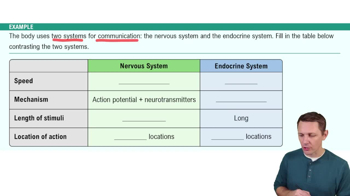
Endocrine cells secrete hormones directly into the bloodstream, while exocrine cells release substances through ducts to external or internal surfaces.
Main function of endocrine and nervous systems
Both systems preserve homeostasis by coordinating and regulating body activities through chemical and electrical signals.
Types of chemical signals used in cell communication
Cells communicate using hormones, neurotransmitters, paracrine signals, and autocrine signals.
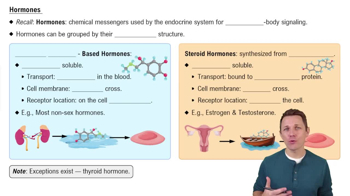
How do hydrophobic and hydrophilic hormones differ in target cell response?
Hydrophobic hormones bind to intracellular receptors affecting gene expression; hydrophilic hormones bind to membrane receptors triggering second messenger pathways.
What regulates hormone secretion primarily?
Hormone secretion is mainly regulated by negative feedback mechanisms.
Three stimuli that trigger hormone secretion
Hormone secretion can be triggered by humoral, hormonal, and neural stimuli.
Meaning of hierarchical pathways in endocrine control
Endocrine control involves hierarchical pathways where higher centers regulate hormone release through cascades, e.g., hypothalamus controls pituitary gland.
Role of the hypothalamus in neuroendocrine regulation
The hypothalamus regulates the pituitary gland by releasing hormones that control anterior pituitary and by producing ADH and oxytocin for the posterior pituitary.
Hormones released by the posterior pituitary
The posterior pituitary releases ADH (antidiuretic hormone) and oxytocin (OXT) produced by the hypothalamus.
Types of hormones secreted by the anterior pituitary
 뒤로
뒤로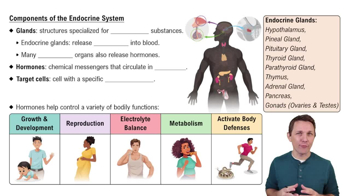
 7:06
7:06