 뒤로
뒤로Endocrine System and Hormones - Anatomy & Physiology
 7:06
7:06
이 집합의 용어 (22)
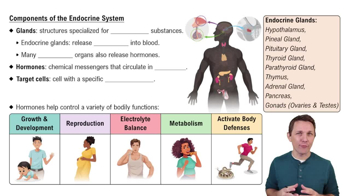
Include the pituitary, thyroid, parathyroid, adrenal glands, pineal gland, pancreas, gonads, and others located throughout the body.
Hormones act on distant targets via blood; paracrines act locally on different nearby cells; autocrines act on the same cell that secretes them.
Somatostatin from pancreatic cells inhibits insulin release from other pancreatic cells.
Prostaglandins from smooth muscle cells cause those same cells to contract.
Control reproduction, growth, development; maintain electrolyte, water, nutrient balance; regulate metabolism and energy; mobilize body defenses.
Produce hormones, lack ducts, release hormones into tissue fluid, have rich vascular and lymphatic drainage, and hormone cells arranged for maximum capillary contact.
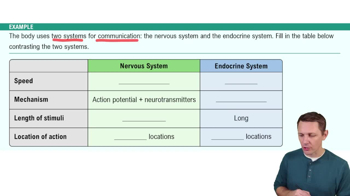
Nervous system acts rapidly and specifically via action potentials; endocrine system acts slower but longer-lasting via hormones in blood.
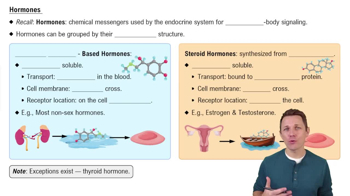
Hormones are either amino acid-based (peptides, amines) or steroids (lipid-soluble).
Hormones act via second messengers like cyclic AMP or by directly activating specific genes.
Controlled by humoral, neural, and hormonal stimuli.
Depends on hormone levels, receptor affinity, and number of receptors on the target cell.
Permissiveness, synergism, and antagonism describe how hormones influence each other's effects.
Controls the pituitary gland via the hypophyseal portal system (anterior pituitary) and neural connections (posterior pituitary).
Oxytocin regulates uterine contractions; antidiuretic hormone (ADH) regulates water balance.
Include growth hormone (GH), thyroid-stimulating hormone (TSH), adrenocorticotropic hormone (ACTH), follicle-stimulating hormone (FSH), luteinizing hormone (LH), and prolactin.
Thyroxine (T4) and triiodothyronine (T3) regulate metabolism; thyroxine formation requires iodine and thyroglobulin.
Regulates blood calcium by increasing intestinal absorption, kidney reabsorption, and bone calcium release.
Include aldosterone (electrolyte balance), cortisol (stress response), and adrenal androgens.
Secretes melatonin, which regulates sleep-wake cycles.
Insulin lowers blood glucose; glucagon raises blood glucose.
Testes produce testosterone; ovaries produce estrogen and progesterone; placenta produces hormones supporting pregnancy.
Heart (atrial natriuretic peptide), kidneys (erythropoietin), skin (cholecalciferol), adipose tissue (leptin), bone (osteocalcin), thymus (thymosins).