 뒤로
뒤로Fundamentals of Anatomy & Physiology - Chapter 1 & 2
 3:06
3:06
이 집합의 용어 (29)
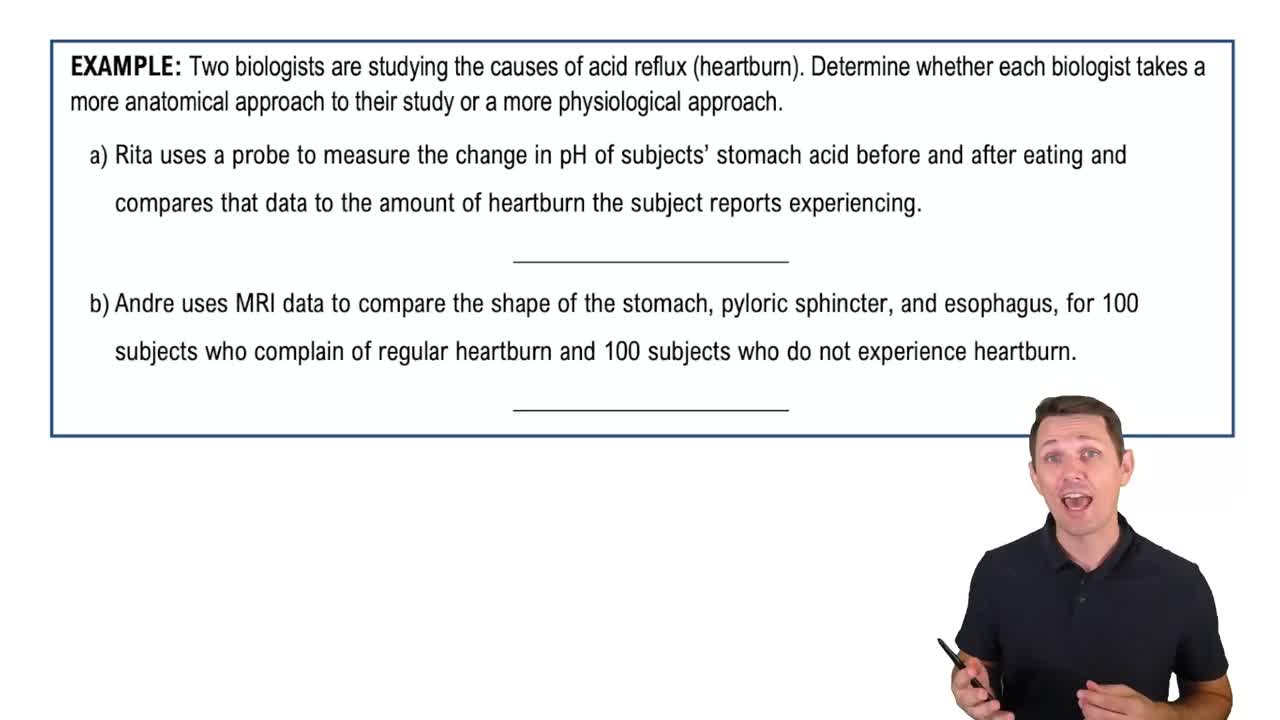
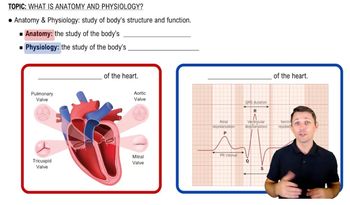
Anatomy describes the structures of the body, including what they are made of, where they are located, and associated structures.
Physiology is the study of the functions of anatomical structures, including individual and cooperative functions.
Chemical, Cellular, Tissue, Organ, Organ system, Organism levels.
Epithelium, Connective tissue, Muscle tissue, and Nervous tissue.
Integumentary, Skeletal, Muscular, Nervous, Endocrine, Cardiovascular, Lymphatic, Respiratory, Digestive, Urinary, Reproductive.
Protects against environmental hazards, helps regulate body temperature, and provides sensory information.
Homeostasis is the maintenance of a stable internal environment by all body systems working together to keep variables within normal ranges.
Receptor (detects stimulus), Control center (processes signal), Effector (carries out instructions).
Negative feedback negates the original stimulus to bring the body back to homeostasis and maintain normal range.
Positive feedback amplifies the original change, moving the body away from homeostasis temporarily to complete a process quickly.
The smallest stable unit of matter, composed of protons, neutrons, and electrons.
The number of protons (atomic number) and the arrangement of electrons in energy levels.
Isotopes are atoms of the same element with different numbers of neutrons; radioisotopes have unstable, radioactive nuclei.
Ionic bonds, covalent bonds, and hydrogen bonds.
Attractions between cations (positive ions) and anions (negative ions) formed by the transfer of electrons.
Strong bonds formed by sharing one or more pairs of electrons between atoms.
Polar bonds share electrons unequally, creating partial charges; nonpolar bonds share electrons equally.
Weak polar bonds between molecules based on electrical attractions between slight positive and negative charges.
The pH scale measures the hydrogen ion concentration of a solution, indicating acidity or alkalinity.
Acids donate H+ ions, bases accept H+ ions, and salts dissociate into ions other than H+ or OH-.
Buffers stabilize pH by neutralizing strong acids or bases, maintaining homeostasis.
Monomers are identical small molecules that join to form polymers, which are large macromolecules.
Carbon, hydrogen, and oxygen in a 1:2:1 ratio.
Monosaccharides are simple sugars; disaccharides are two monosaccharides joined; polysaccharides are long chains of sugars.
Hydrophobic molecules including fatty acids, eicosanoids, glycerides, steroids, phospholipids, and glycolipids.
Proteins are polymers of amino acids linked by peptide bonds, with four levels of structure: primary, secondary, tertiary, and quaternary.
Enzymes are protein catalysts that lower activation energy to speed up biochemical reactions without being consumed.
DNA and RNA store and process genetic information and direct protein synthesis.
Adenosine triphosphate (ATP) is the primary high-energy compound that stores and transfers energy in cells.