Skip to main content
Anatomy & Physiology
나의 코스
배우기
시험 준비
AI 튜터
학습 가이드
교과서적 해결책
플래시카드
탐험해 보세요
앱을 사용해 보세요
나의 코스
배우기
시험 준비
AI 튜터
학습 가이드
교과서적 해결책
플래시카드
탐험해 보세요
앱을 사용해 보세요
뒤로
GPCR Signaling Pathway Basics
카드를 뒤집기 위해 탭할 수 있습니다.
What is the role of the GPCR in the membrane?
카드를 뒤집기 위해 탭할 수 있습니다.
👆
What is the role of the GPCR in the membrane?
The GPCR acts as the
sensor
in the membrane that detects ligand binding.
진행 상황 추적
컨트롤 버튼이 '내비게이션' 모드로 변경되었습니다.
1/10
추천 영상
VideoThumbView.guidedCourse
2:59
Map of the Lesson on Cell Communication
2575
views
28
rank
이 집합의 용어 (10)
하이드의 정의
What is the role of the GPCR in the membrane?
The GPCR acts as the
sensor
in the membrane that detects ligand binding.
What is the function of the G protein in the GPCR pathway?
The G protein acts as the
middleman switch
inside the membrane, transmitting the signal from the GPCR.
What happens to the G protein when a ligand binds the GPCR?
The GPCR activates the G protein by helping it exchange
GDP for GTP
.
What is the next step after the G protein is activated?
The activated G protein activates an
effector protein
, such as adenylyl cyclase or phospholipase C.
What do effector proteins produce in the GPCR pathway?
Effector proteins produce
second messengers
like cAMP, IP3, and DAG to amplify the signal inside the cell.
What does 'activating downstream effectors' mean in the GPCR pathway?
It means the G protein passes the signal by turning on the next proteins in the pathway, not directly affecting DNA transcription or apoptosis.
Name two common effector enzymes activated by G proteins.
Adenylyl cyclase
and
phospholipase C
are common effector enzymes.
What are examples of second messengers produced in GPCR signaling?
Examples include
cAMP
,
IP3
, and
DAG
.
Does the G protein directly cause DNA transcription or apoptosis?
No, the G protein activates downstream effectors but does not directly cause DNA transcription or apoptosis.
What molecule does the G protein release to become active?
The G protein releases
GDP
and binds
GTP
to become active.
 뒤로뒤로
뒤로뒤로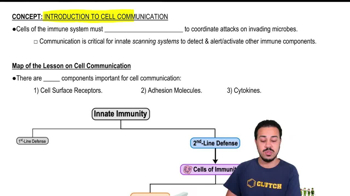
 2:59
2:59